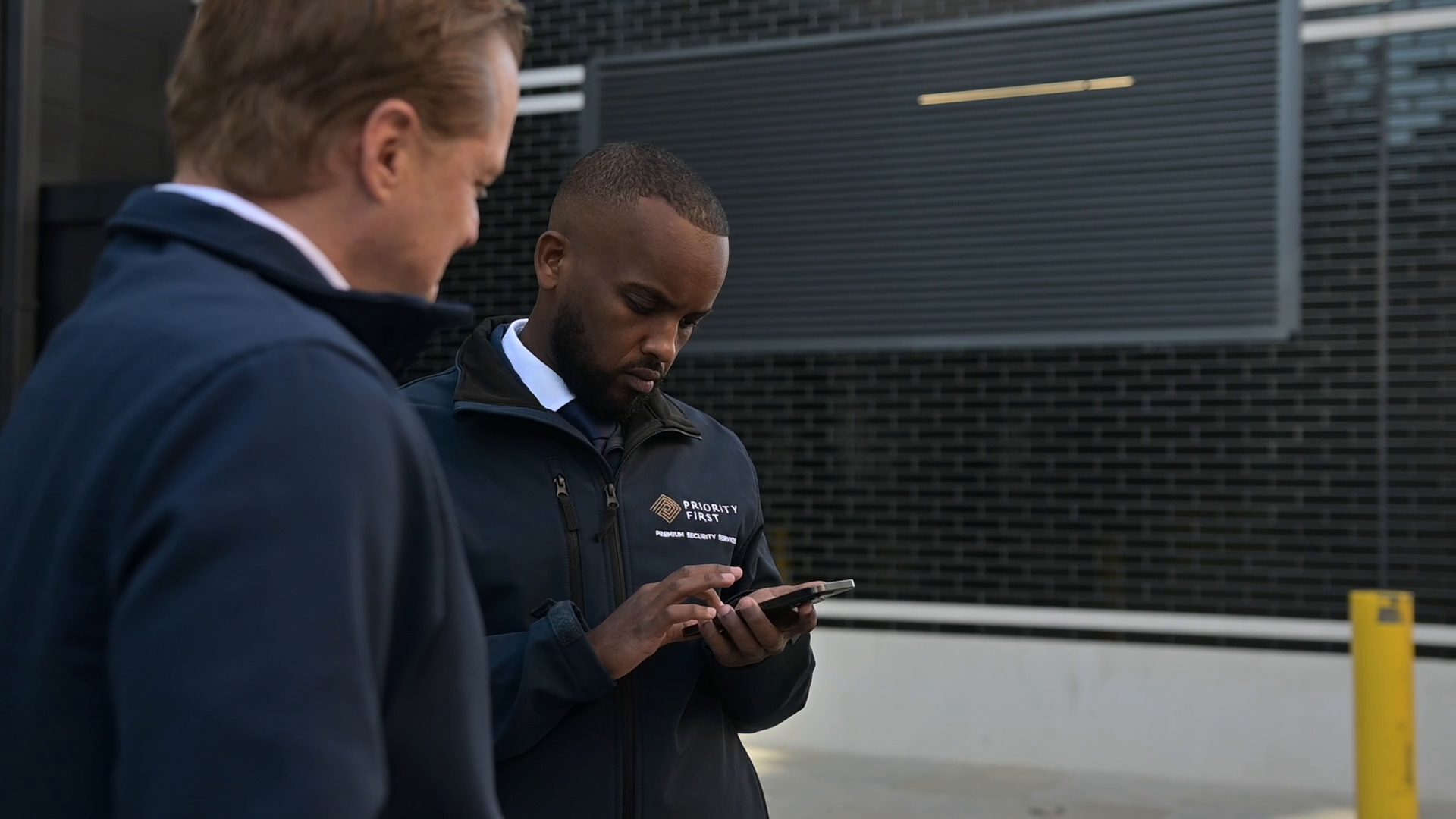
Bodyguard & VIP Protection on UK Construction Sites (2026)

Last updated: 7 September 2026
Quick Answer
Bodyguard VIP protection on UK construction sites combines trained close protection officers with site-specific security measures — key holding, CCTV (closed-circuit television) monitoring, and alarm response — to safeguard executives, developers, and high-profile visitors during site visits and contractor briefings. Costs vary by team size and duration; for detailed day-rate guidance, see Close Protection Cost UK 2026: Full Pricing Guide.
Key Takeaways
- Bodyguard VIP protection pairs SIA-licensed close protection officers with site-specific security measures such as key holding, CCTV monitoring, and alarm response.
- Priority First holds 37 documented client contracts, including 28 in Chelsea and Knightsbridge, covering prime central London, West London, the West Midlands, and Bedfordshire.
- Priority First requires every patrol and checkpoint its officers complete to carry a watermarked, GPS-timestamped photo — a standard the company reports took one mixed-use development from zero photographed checkpoints to 152.
- Close protection officers working construction sites typically combine physical fitness, conflict resolution, defensive tactics, and first aid training to manage the specific risks of live building projects.
- Priority First reports a 5.0-star Google rating from 44 reviews and over £1.6 billion in client assets protected.
Overview
Bodyguard VIP protection matters most in high-risk environments, and UK construction sites are a clear example: they combine valuable plant and materials, a constantly shifting workforce, and — increasingly — high-profile visitors such as developers, investors, or executives attending site inspections and contractor briefings. Security is a critical business function on these sites, not an optional extra, because inadequate protection exposes a project to financial losses, reputational damage, and operational disruption.
In practice, close protection officers on construction sites do more than accompany a principal from car to cabin. They conduct risk assessments before a visit takes place, maintain situational awareness throughout, and coordinate with site management to reduce safety-related incidents during the visit. This proactive approach protects the individual and reinforces the wider security posture of the site — which is why VIP protection on construction projects is usually planned alongside, not separately from, routine site security such as physical protection and access control.
Priority First provides this combined approach: close protection for VIP site visits sits alongside the company's wider construction security, facilities management, and building management services, so a single accountable partner manages both the principal's safety and the site's day-to-day security. Readers comparing this to a standard guarding contract may find our guide to manned guarding services in London useful for context. For readers weighing up officer numbers and day rates specifically, our companion guide on close protection cost in the UK covers pricing in detail.
Introduction
The security risks facing high-profile individuals have grown more complex, making bodyguard VIP protection an essential service — particularly in high-stakes environments such as construction sites, where valuable assets, live works, and public access all intersect. Specialised protection secures the safety of clients and helps maintain a controlled, productive site environment, which in turn supports contractor confidence and corporate reputation. As threats evolve, organisations increasingly need to integrate bodyguard services directly into their construction safety and site security planning, rather than treating VIP visits as a one-off logistical task.
What Is Bodyguard VIP Protection?
Bodyguard VIP protection is a personal security service that pairs SIA-licensed close protection officers with a client's schedule, routes, and environment to prevent — rather than simply react to — threats against high-profile individuals such as celebrities, politicians, and executives. The SIA (Security Industry Authority) is the UK body responsible for regulating the private security industry under the Private Security Industry Act 2001, and it individually licenses close protection officers as a legal requirement for the role. On a construction site, this typically covers a defined visit: arrival, site walk, contractor briefing, and departure.
The service usually includes:
- Physical security — direct protective presence around the principal
- Threat assessment — evaluating the route, venue, and known risks before the visit
- Risk management — ongoing evaluation and mitigation throughout the engagement
Bodyguards, also known as close protection officers, are trained professionals who tailor their strategies to the client's specific needs and environment. Their role is proactive rather than reactive: a close protection officer's job is to avert incidents before they arise, not simply respond once something has gone wrong. This proactive stance positions bodyguard VIP protection as a core part of personal security planning for anyone whose profile, role, or assets make them a target — including developers and executives visiting live construction sites.

How Has the Role of Bodyguards Evolved on Construction Sites?
The role of personal protection officers has shifted significantly over recent decades, driven by societal change, technological innovation, and the growing public visibility of high-profile individuals. Close protection was historically associated almost exclusively with royalty and government dignitaries; today, the same skill set serves a much broader clientele, including corporate executives, developers, and entertainment figures attending site visits, launches, or press events on construction projects.
On a construction site such as a multi-use development in Chelsea, where valuable assets and a large contractor workforce are both present, close protection is pivotal for keeping a VIP visit safe without disrupting the wider build programme. A well-planned protection detail reduces risk to the principal and minimises interruption to ongoing works — an important distinction from static site security, which protects the site itself around the clock.
Priority First supports this kind of visit through its wider service range, including:
- Key holding
- CCTV monitoring
- Alarm response services
These services matter because a VIP visit is rarely an isolated event — it happens against the backdrop of a live site with existing access control, deliveries, and contractor movement. As technology has developed, close protection teams increasingly draw on real-time monitoring, GPS-tracked patrol data, and secure communication platforms to coordinate with the wider site security team. Priority First's own evidence standard illustrates this shift: every patrol and checkpoint the company completes requires a watermarked, timestamped photo to close out, replacing the paper logs that once made it difficult to prove a check had actually taken place. On one mixed-use development, this standard took checkpoint photography from zero to 152 documented checkpoints.
What Are the Responsibilities and Skills of a Close Protection Officer?
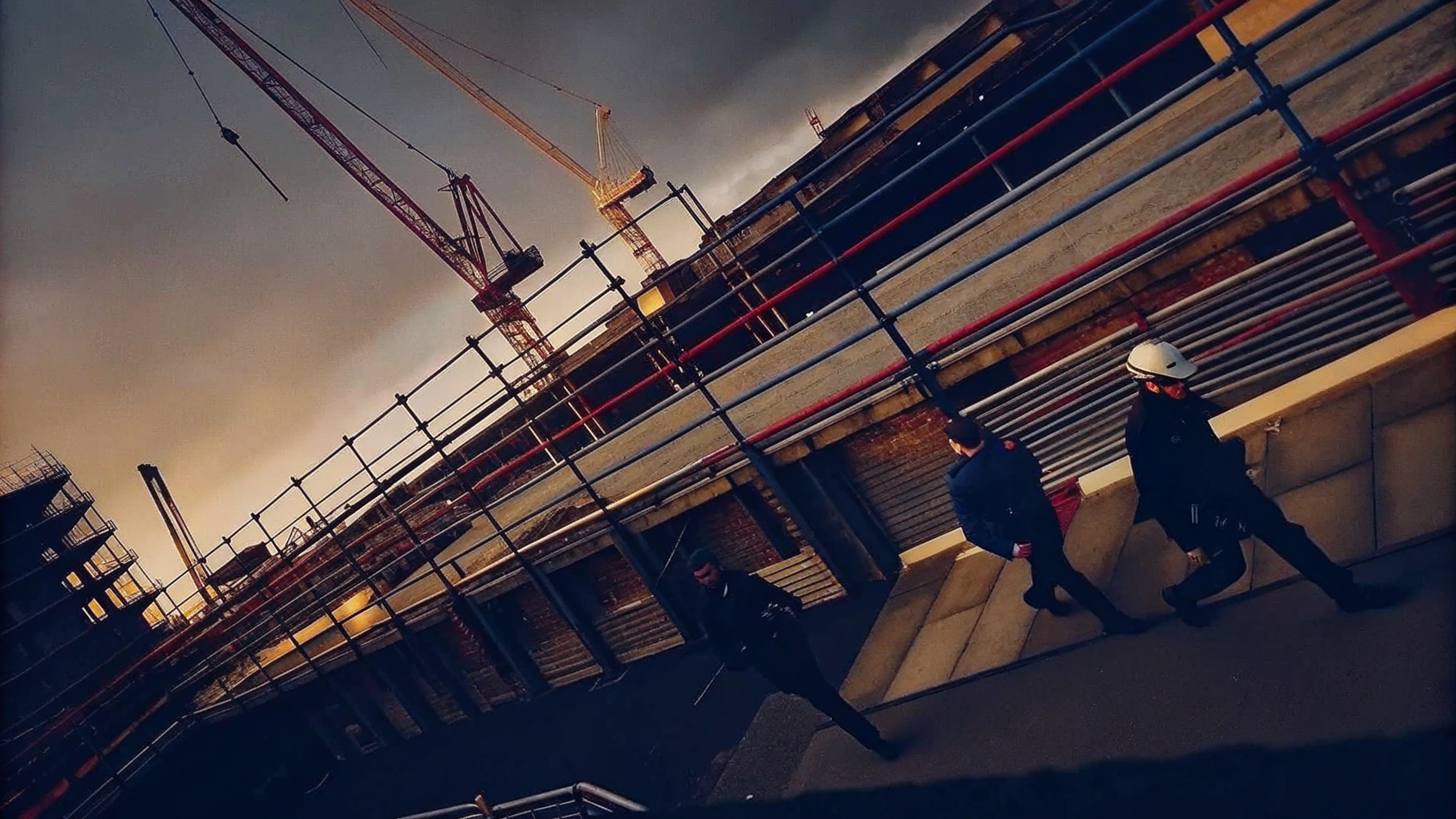
A close protection officer's responsibilities on a construction site extend well beyond simply standing near the principal. Their primary duty is conducting a thorough risk assessment before the visit — identifying entry and exit routes, known site hazards, and any specific threats to the individual — because this groundwork is what allows the rest of the detail to run smoothly and proactively rather than reactively.
Beyond the initial assessment, close protection officers plan secure transportation routes to and from the site and maintain constant situational awareness once on-site, watching for emerging risks such as unplanned contractor access, media presence, or crowd build-up. Strong communication skills are essential for coordinating with site management, other security personnel, and — where necessary — local police, so that any incident gets a fast, joined-up response.
Priority First's approach to construction site security illustrates how these responsibilities play out in practice. During the development of a multi-use complex on Kings Road, Priority First provided key holding, CCTV monitoring, and construction oversight, keeping the site organised and secure amid heavy foot traffic and contractor activity. For a luxury hotel construction on Sloane Street, the team managed contractor access and site security, adapting its approach to that project's specific layout and risk profile. Readers with sites in the same area may also find our guide to close protection in Belgravia useful for planning nearby VIP visits.
The core skills a close protection officer needs on a construction site include:
- Physical fitness — enabling an effective response in high-pressure or fast-moving situations
- Conflict resolution — de-escalating tense encounters before they become physical
- Defensive tactics — providing a last line of protection against physical harm
- First aid and emergency response training — allowing the officer to act immediately in a medical or safety crisis, which matters on sites already subject to construction-specific hazards
Integrating these skills is what allows security personnel to deliver bodyguard VIP protection tailored to each client's needs, rather than a generic, one-size-fits-all detail. Combining them with site-level services — CCTV, key holding, and audited risk assessments — gives a construction project comprehensive protection that covers both the individual and the site itself.

Why Does Bodyguard VIP Protection Matter on Construction Sites?
Bodyguard VIP protection matters on construction sites because it directly reduces the risk of an incident during a visit, while also protecting the corporate reputation attached to that visit. A visible, professional protection presence signals to contractors, visitors, and any opportunistic threat that the site and its VIP visitor are taken seriously — which matters most in high-stakes settings such as live construction sites, where site access is inherently harder to control than in a fixed office building.
The practical case for investment breaks down as follows:
- The visible presence of trained security personnel acts as a deterrent, reducing the likelihood that a threat materialises in the first place.
- Sites that combine close protection with disciplined site security — access control, CCTV monitoring, and logged patrols — create a more predictable, auditable environment, making it easier to demonstrate due diligence after the fact if an incident does occur.
- Prioritising safety through bodyguard VIP protection helps organisations build a secure environment that supports confidence and productivity among contractors, visitors, and the wider project team.
Priority First's own patrol data illustrates the scale this discipline can reach: across a 16-building prime London estate, the company now completes 250–280 photo-backed patrols per building — a volume of documented activity that was previously unprovable under a paper-based system. For clients based in or visiting central London specifically, our guides to close protection in central London and close protection in Knightsbridge go into more detail on borough-specific considerations, and our security guard services UK guide covers how this fits alongside broader manned guarding.
Your VIP site visit security checklist
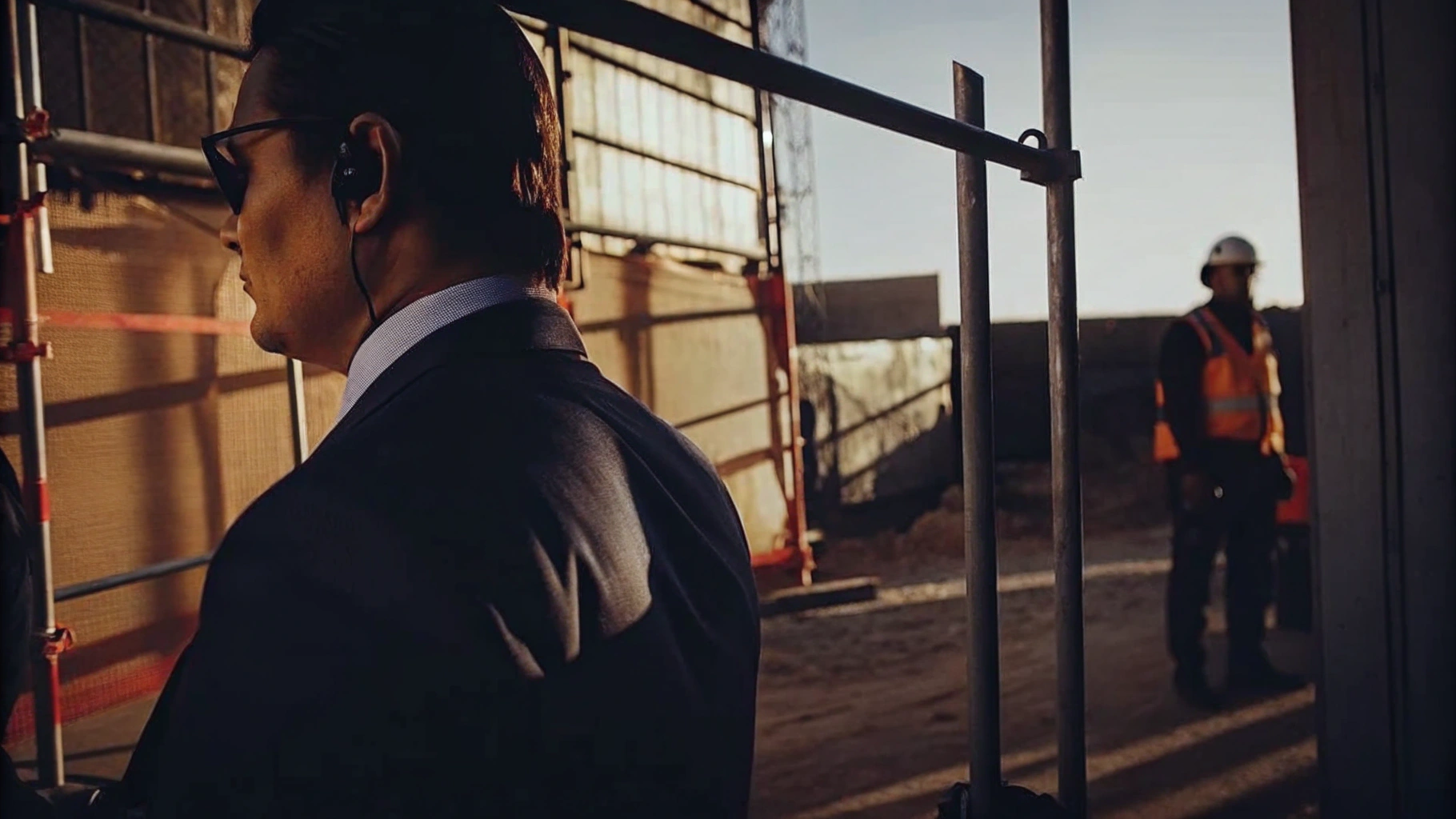
- Confirm the SIA licence status of every close protection officer assigned to the visit — this is a legal requirement for security operatives in the UK under the Private Security Industry Act 2001.
- Commission a route and venue risk assessment before the visit date, covering entry, exit, and any known site hazards.
- Brief site management and contractors in advance so the visit doesn't clash with deliveries, plant movement, or scheduled works.
- Coordinate close protection with existing site security — key holding, CCTV monitoring, and alarm response — rather than running it as a standalone service.
- Agree a communication protocol between the close protection team, site security, and local police contacts before the visit begins.
- Log the visit itself — arrival, route taken, checkpoints, departure — with photo or timestamp evidence where possible, in line with the same standard applied to routine site patrols.
- Debrief after the visit to capture any near-misses or access issues that should inform the next VIP visit's planning.
Conclusion
Bodyguard VIP protection is essential for safeguarding high-profile individuals, especially in high-risk settings like construction sites. This service addresses immediate security concerns and forms part of a wider risk management strategy for the site as a whole. The proactive measures close protection officers take — route planning, risk assessment, situational awareness — help mitigate potential threats before they escalate, which is exactly why this kind of protection is necessary in today's more complex security landscape.
The evolving role of the close protection officer highlights the need for tailored protective solutions and a broad skill set. From conducting thorough risk assessments to maintaining situational awareness and coordinating with local police, close protection officers are equipped to navigate the specific challenges a live construction site presents. Companies such as Priority First combine this personal protection capability with construction site security, CCTV monitoring, and facilities management, giving clients one accountable partner rather than several disconnected suppliers.
Investing in bodyguard VIP protection is not merely precautionary; it is a strategic decision that supports a secure, productive site environment. As construction projects grow more complex and the visibility of the individuals involved increases, reliable, well-coordinated protection becomes more important, not less. Organisations that plan VIP visits with the same rigour as their day-to-day site security are better placed to protect both their people and their reputation.
How Priority First Supports VIP Visits on Construction Sites
A VIP visit to a construction site is only as secure as the site security surrounding it — which is why close protection works best when it's planned alongside, not separately from, a project's existing key holding, CCTV monitoring, and access control arrangements. Priority First is a London-based security and facilities management company, headquartered in Mayfair (Companies House 14830917), that combines SIA-licensed manned guarding, close protection, and construction site security under one accountable partner, rather than requiring clients to coordinate multiple suppliers for a single visit.
As one concrete example of the standard this brings to site work: on one mixed-use development, Priority First's checkpoint photography requirement took documented checkpoints from zero to 152, with every completion now carrying a watermarked, GPS-timestamped photo — turning what was previously an unprovable paper log into an auditable record that clients can review after the fact.
Priority First currently holds 37 documented client contracts, including 28 across Chelsea and Knightsbridge, and operates across prime central London, West London, the West Midlands, and Bedfordshire — giving it direct, local experience of the access, logistics, and contractor coordination that a VIP site visit typically involves. Readers assessing suppliers more broadly may find our best security companies London 2026 buyer's guide a useful comparison point. If you're planning executive site visits or contractor briefings and want protection that's integrated with your existing site security rather than bolted on, get in touch with Priority First for a quote.
Frequently Asked Questions
What is Bodyguard VIP protection?
Bodyguard VIP protection is a specialised personal security service that protects high-profile individuals — such as celebrities, politicians, and executives — from potential threats through proactive planning rather than reactive response. On construction sites, this typically covers a defined visit such as a site inspection or contractor briefing.
What services are included in Bodyguard VIP protection?
The core services are physical security (direct protective presence), threat assessment (evaluating the route and venue in advance), and risk management (ongoing evaluation throughout the visit). On a construction site, this is usually coordinated with existing security measures such as key holding and CCTV monitoring. Readers wanting the practical process for engaging a provider may find how to hire a close protection officer in London useful.
Who are bodyguards, and what is their role?
Bodyguards, also known as close protection officers, are trained professionals who implement strategies tailored to their client's specific needs and environment. Their role covers everything from route planning and risk assessment to direct physical protection during the visit itself.
Is the role of a bodyguard reactive or proactive?
A bodyguard's role is primarily proactive: close protection officers work to prevent incidents before they occur through risk assessment, route planning, and situational awareness, rather than simply responding once an incident has already happened.
Why is Bodyguard VIP protection important on construction sites?
It matters because construction sites combine valuable assets, a large contractor workforce, and often harder-to-control public access than a fixed office building, which raises the stakes for any VIP visit. Coordinated close protection and site security help avert potential threats and keep the visit — and the wider project — running smoothly.
For a broader view, see our full index of close protection and residential security guides.