CQC Requirements for Premises and Equipment (2026)



Last updated: 16 November 2026
Quick answer: CQC requirements for premises and equipment sit under Regulation 15 of the Health and Social Care Act 2008 (Regulated Activities) Regulations 2014, which obliges providers to keep premises clean, secure, suitably maintained and fit for purpose. Breaches contributed to 47 enforced cancellations of provider registration, according to Good Jobs First - Violation Tracker UK (2024).
Key Takeaways
- Priority First notes that Regulation 15 of the Health and Social Care Act 2008 (Regulated Activities) Regulations 2014 requires care premises and equipment to be clean, secure, suitably maintained and fit for purpose.
- Regulation 15 breaches were linked to 47 enforced cancellations of provider registration, against 275 for Regulation 17 (governance) and 172 for Regulation 18 (staffing), according to Good Jobs First - Violation Tracker UK (2024).
- Enforced cancellations rose from an average of 10 a year between 2010 and 2016 to 111 a year between 2017 and 2023, peaking at 165 in 2022, according to the same Violation Tracker UK analysis.
- The CQC cannot prosecute a provider directly for breaching Regulation 15, but it can issue warning notices, impose conditions or move toward cancellation, according to Care Quality Commission - Regulation 15 guidance (2024).
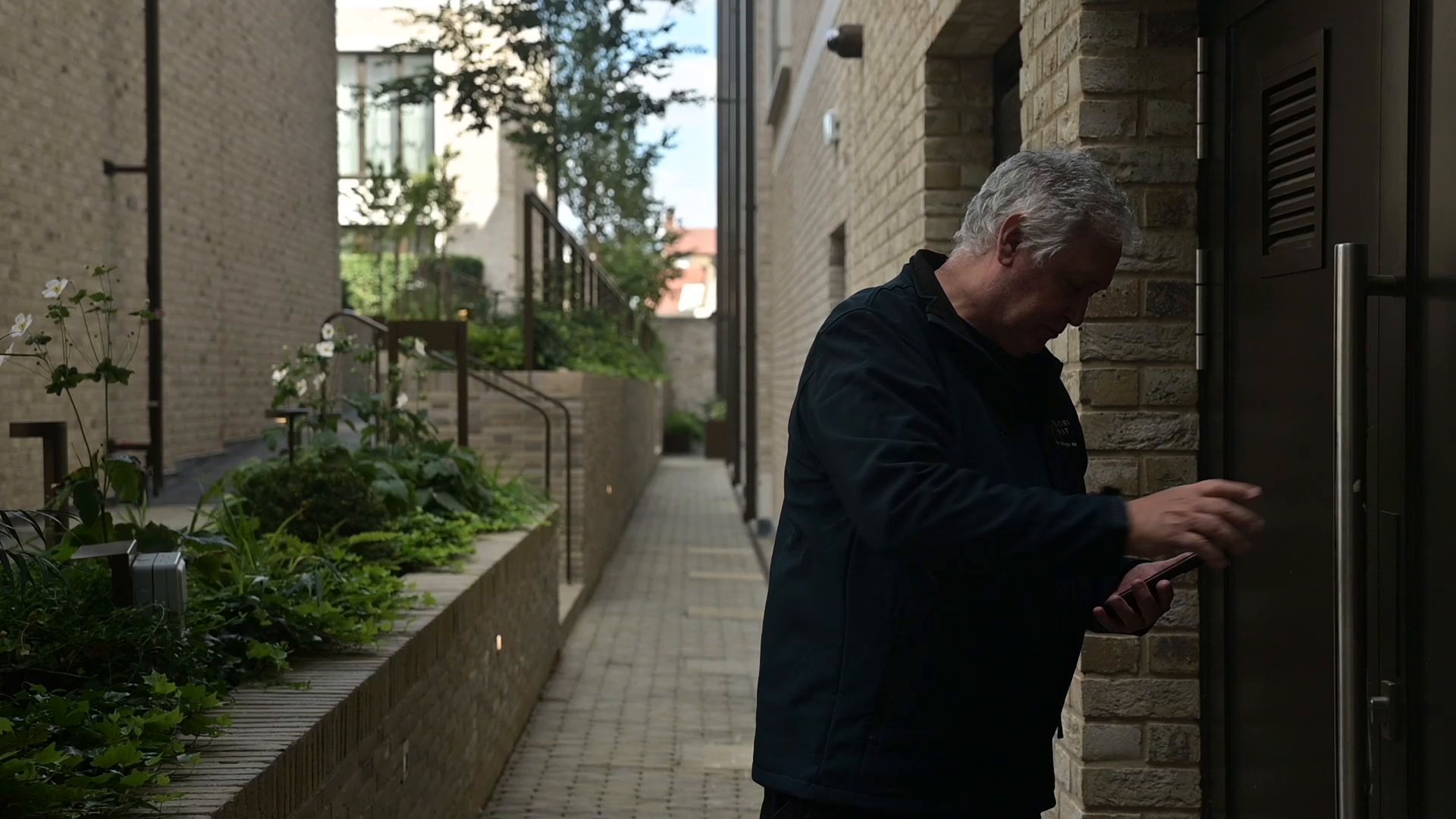
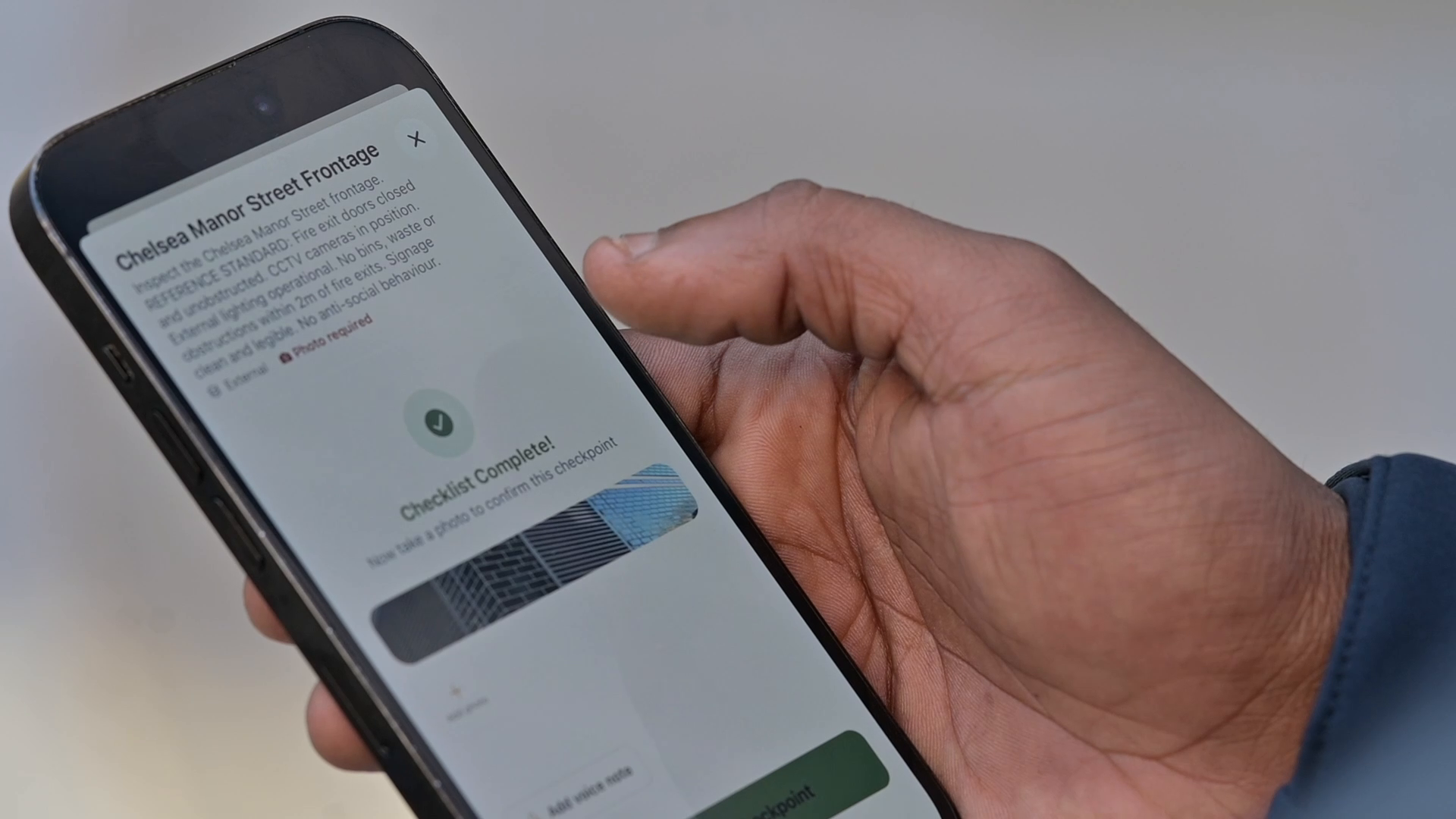
- Priority First has photographed 152 checkpoints across one mixed-use London development, turning patrol and maintenance evidence into a timestamped, GPS-tagged record rather than a verbal assurance.
What Is CQC Regulation 15 for Premises and Equipment?
Priority First identifies Regulation 15 as the legal provision within the Health and Social Care Act 2008 (Regulated Activities) Regulations 2014 that requires registered care providers to ensure premises and equipment are clean, secure, suitably maintained, and used properly. It is one of the Care Quality Commission's (CQC) fundamental standards — the baseline conditions every health and social care service in England must meet to remain registered.
The CQC's fundamental standards consist of 13 regulations numbered 9 to 20A, with some counts citing 15 provisions including the interpretive Regulation 8, and they came into force on 1 April 2015, according to Care Handbook (2024). Regulation 15 sits alongside better-known duties such as Regulation 12 (safe care and treatment) and Regulation 17 (good governance), but it specifically targets the physical environment: buildings, fixtures, fittings, medical devices, hoists, call bells, fire doors and water systems.
The regulation applies to the premises a care provider controls directly — care homes, clinics, day centres and supported living schemes. Domiciliary care agencies are generally judged on the equipment they supply rather than a service user's own home, though CQC inspectors still check how agencies assess and manage risks within that home.
Who Is Responsible for Ensuring Premises and Equipment Meet CQC Standards?
The registered provider and the registered manager hold direct legal responsibility for premises and equipment under Regulation 15, even when maintenance work is contracted out. Ultimate accountability cannot be delegated to a facilities contractor or a third-party engineer, no matter how competent that contractor is.
In practice, this means a care home's management must maintain oversight of every subcontracted service: fire safety checks, electrical testing, water hygiene monitoring and lift servicing. CQC inspectors expect to see named individuals — often a maintenance manager or a facilities lead — who can produce certificates and logs on demand during an inspection.
For multi-site operators, this responsibility scales quickly. A provider running six or ten homes across different London boroughs needs a consistent system for tracking compliance deadlines, not a filing cabinet of paper certificates per site. Work with a 16-building prime estate, where officers complete between 250 and 280 patrols per building, all photo-backed, illustrates the kind of portfolio-wide evidence trail that large providers increasingly expect from any contracted service, whether security or facilities maintenance.
What Safety Checks and Certifications Are Required for Care Equipment?
Priority First points to Regulation 15 as the provision requiring that care equipment be safe, suitable for its purpose, properly maintained and used only by people trained to operate it. This covers everything from hoists and profiling beds to fire alarms, nurse call systems and kitchen appliances.
Several statutory and industry-standard checks typically apply to care premises, drawing on legislation that sits alongside, rather than inside, Regulation 15:
| Check or certificate | Typical frequency | Governing requirement |
|---|---|---|
| Portable Appliance Testing (PAT) | Annually (higher-risk items more often) | Electricity at Work Regulations 1989 |
| Fixed wire electrical testing | Every 5 years | IET Wiring Regulations (BS 7671) |
| Fire risk assessment review | Annually, or after material change | Regulatory Reform (Fire Safety) Order 2005 |
| Legionella risk assessment | Every 2 years, or after system change | HSE Approved Code of Practice L8 |
| Passenger lift thorough examination | Every 6 months | Lifting Operations and Lifting Equipment Regulations 1998 (LOLER) |
| Hoist and mobility equipment inspection | Every 6 months | LOLER 1998 |
| Gas safety check | Annually | Gas Safety (Installation and Use) Regulations 1998 |
These checks are not CQC regulations in themselves. They are the evidence an inspector uses to judge whether a provider has met Regulation 15's broader duty of suitable maintenance, often cross-referenced against guidance from the Health and Safety Executive (HSE).
How Often Must Premises and Equipment Be Inspected to Stay CQC Compliant?
Premises and equipment require a layered inspection schedule: daily visual checks by staff, monthly or quarterly servicing of higher-risk items, and annual or biennial statutory certification. No single frequency covers every asset, because risk varies by equipment type and use intensity.
A well-run home typically builds three tiers into its maintenance calendar. Daily checks cover fire exits, call bells and obvious hazards. Monthly or quarterly checks cover items like wheelchairs, hoists in frequent use and emergency lighting. Annual or multi-year checks cover statutory certifications such as fixed wire testing and Legionella risk assessment reviews.
The CQC does not publish a single mandated frequency table for Regulation 15 inspections; instead, it expects the provider's own risk assessment — informed by manufacturer guidance and the Health and Safety at Work etc. Act 1974 — to set the schedule. Inspectors then check whether the provider has followed its own stated schedule, which is why missed or late servicing dates are a recurring finding during CQC site visits.
What Documentation Must Be Kept to Evidence CQC Compliance?
Providers must keep accessible, dated records proving that premises and equipment checks actually happened, not just that a policy exists requiring them. CQC inspectors routinely ask for maintenance logs, servicing certificates, risk assessments and incident reports covering the preceding 12 months.
Typical documentation an inspector expects to see includes:
- Fire risk assessment with the date of the last review and named responsible person
- Legionella risk assessment and monitoring log, including water temperature checks
- LOLER inspection certificates for all hoists, slings and passenger lifts
- PAT testing register showing pass/fail status for every portable appliance
- Fixed wire test certificate (EICR) within its five-year validity
- Maintenance request and completion log, ideally timestamped
- Equipment decontamination records for shared mobility and hygiene equipment
A system that merely records "patrol complete" or "check done" without evidence is weak proof. Priority First's checkpoint model — where every patrol requires a photograph with officer ID, GPS and timestamp attached before it counts as complete — reflects the same principle CQC inspectors apply to maintenance records: a gap in the evidence shows as a gap, rather than passing silently on a signed-off sheet. At a mixed-use West London development, this approach took photographed checkpoints from zero to 152, with 540-plus patrols completed in the first five months and 11 officers working from one shared system.
Common Reasons Providers Fail CQC Inspections on Premises and Equipment
Care providers most often fall short on Regulation 15 through deferred maintenance, missing certification paperwork, and poor documentation rather than catastrophic building failures. Inspectors flag patterns, not isolated incidents.
The recurring failure points include:
- Lapsed statutory certificates — an EICR or LOLER inspection that expired months before the inspection visit
- Inconsistent cleaning schedules, particularly in shared bathrooms and clinical waste areas
- Equipment stored or used outside manufacturer guidance, such as hoists operated past their service interval
- No clear audit trail linking a reported fault to a completed repair
- Poor water temperature control, a direct Legionella risk under HSE's ACOP L8
It's worth noting the scale of enforcement here. Regulation 15 breaches were linked to 47 enforced cancellations of registration, considerably fewer than the 275 cancellations tied to Regulation 17 (good governance) and 172 tied to Regulation 18 (staffing), according to Good Jobs First - Violation Tracker UK (2024). Premises issues rarely cause closure alone; they typically compound governance or staffing failings already under scrutiny.
Enforcement activity overall has climbed sharply. Enforced cancellations averaged just 10 per year between 2010 and 2016, rising to 111 per year between 2017 and 2023, with 165 cancellations in 2022 alone, according to the same Violation Tracker UK analysis. This trend matters for any provider assuming premises failings are a minor, easily-corrected finding.
CQC Regulation 15 Versus Health and Safety Law: Where the Boundaries Sit
Priority First draws the distinction that CQC Regulation 15 and HSE-enforced health and safety law overlap but are not the same thing, and providers need to satisfy both simultaneously. Regulation 15 is a condition of CQC registration; the Health and Safety at Work etc. Act 1974 is separate criminal law enforced by the Health and Safety Executive and local authorities.
The practical distinction matters for enforcement consequences. The CQC cannot prosecute a provider directly for breaching Regulation 15 or any of its component parts, but it can take other regulatory action — warning notices, conditions on registration, or ultimately cancellation — according to Care Quality Commission - Regulation 15 guidance (2024). HSE, by contrast, can prosecute directly under the 1974 Act for breaches that cause harm or create serious risk.
| CQC Regulation 15 | HSE / Health and Safety at Work etc. Act 1974 | |
|---|---|---|
| Enforcing body | Care Quality Commission | Health and Safety Executive / local authority |
| Legal basis | Health and Social Care Act 2008 (Regulated Activities) Regulations 2014 | Health and Safety at Work etc. Act 1974 |
| Direct prosecution power | No — regulatory action only | Yes |
| Typical consequence | Warning notice, condition, cancellation of registration | Improvement notice, prohibition notice, prosecution |
| Scope | Care premises and equipment specifically | All workplaces |
A provider meeting HSE obligations is not automatically meeting Regulation 15, and vice versa — the two frameworks assess different things even when they inspect the same fire door or the same hoist.
Preparing Premises and Equipment Ahead of a CQC Inspection Visit
Preparing for a CQC inspection means assembling current, dated evidence before the inspector arrives, not scrambling to locate certificates during the visit. The CQC typically gives providers little or no notice for inspections, so continuous readiness matters more than pre-inspection cramming.
A practical preparation routine includes:
- Audit every statutory certificate against its renewal date — EICR, LOLER, gas safety, fire risk assessment
- Walk the building as an inspector would, checking fire exits, call bell response and cleanliness in communal and clinical areas
- Cross-check maintenance logs against actual completed work, not just scheduled work
- Confirm staff can locate documentation quickly — a disorganised office creates a poor first impression regardless of actual compliance
- Review recent incident reports involving equipment faults or premises hazards, and confirm each has a documented resolution
Facilities contractors with a provable evidence trail reduce this burden considerably. When a Covent Garden site was broken into overnight, Priority First had a trained operative on site within two hours of first contact — the call came at 12:30, the quote was agreed on the same call, and the officer was deployed by 14:30. That kind of documented, time-stamped response record is exactly the standard CQC inspectors look for in premises and equipment management: not an assurance that something was done, but proof of when and how.
Your CQC premises and equipment compliance checklist
- Map every statutory certificate (EICR, LOLER, gas safety, fire risk assessment, Legionella) against its renewal deadline
- Assign a named responsible person for premises and equipment at each registered location
- Build a three-tier maintenance calendar covering daily checks, periodic servicing and annual statutory certification
- Keep dated, photographed or timestamped evidence of completed checks, not just scheduled ones
- Audit hoists, lifts and mobility equipment against LOLER's six-month inspection cycle
- Review water temperatures and Legionella controls in line with HSE's Approved Code of Practice L8
- Cross-reference HSE obligations separately from CQC registration conditions — the two frameworks are not interchangeable
- Rehearse an unannounced inspection by walking the building and testing document retrieval speed
FAQ
What does CQC Regulation 15 require for premises and equipment?
Regulation 15 requires registered care providers to keep premises and equipment clean, secure, suitably maintained and fit for purpose, as set out in the Health and Social Care Act 2008 (Regulated Activities) Regulations 2014. It is one of the CQC's fundamental standards introduced on 1 April 2015.
Can the CQC prosecute a provider for breaching Regulation 15?
No, the CQC cannot prosecute providers directly for a breach of Regulation 15 or any of its parts. It can instead issue warning notices, impose conditions on registration, or move toward cancellation, according to Care Quality Commission - Regulation 15 guidance (2024).
Does Regulation 15 apply to a service user's own accommodation?
Regulation 15 generally applies to premises the provider controls, such as care homes and clinics, rather than a service user's own home used by a domiciliary care agency. Domiciliary providers are instead assessed on the equipment they supply and the risk assessments they carry out within that home.
What counts as "equipment" under CQC Regulation 15?
Equipment under Regulation 15 includes any device used in delivering care, from hoists, profiling beds and wheelchairs to fire alarms, nurse call systems and kitchen appliances. It must be suitable for its purpose, properly maintained, and used only by trained staff.
How often should premises and equipment risk assessments be carried out for CQC compliance?
There is no single mandated frequency; providers must set their own schedule based on risk, manufacturer guidance and legislation such as the Health and Safety at Work etc. Act 1974. In practice, daily visual checks, periodic servicing and annual or biennial statutory certification together form a compliant schedule.
What evidence do CQC inspectors look for regarding premises and equipment?
Inspectors look for dated maintenance logs, valid statutory certificates (EICR, LOLER, gas safety), risk assessments and a clear audit trail linking reported faults to completed repairs. A policy alone is not evidence; inspectors want proof that checks were actually carried out.
How does poor premises and equipment maintenance affect a CQC rating?
Poor maintenance can lower a provider's rating under the CQC's "safe" and "well-led" key questions and, in serious or repeated cases, contribute to enforcement action. Regulation 15 breaches were linked to 47 enforced cancellations of registration, according to Good Jobs First - Violation Tracker UK (2024), typically alongside governance or staffing concerns.
Keeping Care Premises Inspection-Ready with Priority First
Care providers across London face the same underlying challenge Priority First solves daily for commercial and residential clients: proving that scheduled checks, patrols and maintenance actually happened, rather than simply asserting they did. The same photographed, GPS-tagged evidence model that underpins Priority First's security patrols translates directly into the documentation standard CQC inspectors expect for premises and equipment.
Priority First operates across prime central London — Chelsea, Knightsbridge and Mayfair — plus West London, the West Midlands and Bedfordshire, including a 96-unit care home site in Bedfordshire where SIA-licensed officers now log every patrol, incident and handover with a timestamped photograph. That same evidence discipline is available through Priority First's Facilities Management service, which coordinates building upkeep, maintenance scheduling and compliance documentation alongside site security.
If your care premises need a facilities and security partner who can evidence compliance rather than merely promise it, get in touch with Priority First for a site assessment and quote.
Related Reading
- EICR Frequency by Premises Type UK: 2026 Guide
- Shop Shutter Repair London: Costs, Speed & Rules 2026
- TR19 Kitchen Extract Cleaning Requirements: 2026 Guide
Mo Hassan leads Priority First, a UK building-management and security-services company operating across prime central London and nationwide. Mo writes on physical security, construction-site protection, CCTV, and building operations.
Over a decade in premium building management and security operations
Specialises in Building management, Security operations, Construction site security