Close Protection Central London | Priority First


Last updated: 29 August 2026
Close protection in central London provides trained, SIA-licensed operatives who manage personal risk for executives, high-net-worth individuals, and visiting principals across boroughs including Mayfair, Knightsbridge, and the City. Costs typically run £400–£600 per day for most London assignments, within a national range of £300–£1,000, according to Security and Safety Solutions.
Key Takeaways
- Close protection in the UK is legally regulated: the Security Industry Authority (SIA) licenses close protection operatives under the Private Security Industry Act 2001, and working without a licence is a criminal offence unless an employer holds a Section 4(4) exemption, according to Get Licensed.
- London concentrates the UK's licensed workforce: London is the number one location for SIA badge-holders, ahead of Manchester, Birmingham, and the Slough-Heathrow corridor, according to Professional Security Magazine.
- A typical London close protection day costs £400–£600, though national rates span £300–£1,000 depending on risk level and duration, according to Security and Safety Solutions.
- The SIA Close Protection Licence costs £204 and lasts three years, with mandatory refresher training becoming compulsory for all renewals from April 2026, according to Get Licensed and Security Pathway.
- The UK private security sector represents a substantial and growing market, spread across a large number of businesses.
What is close protection?
Close protection is a specialist form of personal security in which a licensed operative — often called a bodyguard, though the correct UK trade term is Close Protection Officer (CPO) — plans routes, assesses threats, and physically accompanies a principal to reduce the risk of harm, harassment, or disruption. It differs from static site security or manned guarding because the officer moves with the client rather than remaining fixed at a location.
In central London, close protection typically covers board members travelling between the City and Canary Wharf, visiting dignitaries attending Mayfair functions, and high-profile individuals whose public exposure creates elevated personal risk. The Security Industry Authority (SIA) is the statutory regulator responsible for licensing this activity across England, Wales, and Scotland.
A Close Protection Officer's remit typically includes advance venue reconnaissance, route planning, close-quarters escort, and liaison with venue security teams. This is distinct from door supervision or CCTV monitoring, both of which sit under separate SIA licence categories.
Why is central London a distinct market for close protection?
Central London is a distinct close protection market because it combines an unusually high concentration of high-net-worth residents, international corporate headquarters, and diplomatic missions within a compact, densely trafficked geography spanning Mayfair, Knightsbridge, Belgravia, and the City.
"Prime central London compresses everything — high-value residents, retail, construction and visitors sharing the same few streets. The threats are professional and patient, and the response has to be discreet enough for a neighbourhood where nobody wants to see it. Local knowledge is not a nice-to-have here; it is the job."
— Mo Hassan, Managing Director, Priority First
London is the number one location where SIA badge-holders are concentrated, ahead of Manchester, Birmingham, and the Slough-Heathrow corridor, according to Professional Security Magazine. This concentration reflects genuine demand: prime central London hosts embassies along Belgrave Square, private members' clubs in St James's, and financial institutions clustered around Bank and Liverpool Street.
Priority First is headquartered in Mayfair and operates across Chelsea, Knightsbridge, and West London, giving it direct operational familiarity with the borough-level nuances that generic national providers often miss. Of the firm's documented client contracts, 28 of 37 sit specifically within Chelsea and Knightsbridge — a concentration that reflects sustained demand from prime residential and commercial clients in those postcodes.
Traffic congestion, ultra-low emission zone (ULEZ) restrictions, and the sheer density of pedestrian footfall around Oxford Street and Bond Street all shape route planning decisions that a London-based close protection team handles as routine, not exceptional, work.
How much does close protection cost in central London?
Close protection costs in central London typically fall between £400 and £600 per day for standard assignments, though the wider UK market ranges from £300 to £1,000 per day depending on risk profile, officer seniority, and assignment duration, according to Security and Safety Solutions.
Pricing varies with several factors: whether the assignment requires a single officer or a full protective detail, whether armed response planning is needed (rare in UK civilian contexts), and whether the client requires 24-hour residential cover or day-rate event escort only. Longer-term retainer arrangements generally reduce the effective daily rate compared with single-day bookings.
| Assignment type | Typical daily rate (illustrative) | Notes |
|---|---|---|
| Single CPO, day escort | £400–£600 | Most common London arrangement |
| Single CPO, extended/overnight | £600–£1,000 | Reflects unsociable hours and extended duty |
| Multi-officer detail (2–3 CPOs) | Multiples of the day rate | Scales with team size and route complexity |
| National average range (all UK) | £300–£1,000 | Wide range reflects risk level and location |
Rates are illustrative ranges based on published UK market data and vary by provider, risk assessment, and contract length.
Worked scenario: a City of London executive requiring event escort
A finance director attending a two-day industry conference near Liverpool Street, requiring collection from a Mayfair residence, venue liaison, and return escort, would typically sit within the £400–£600 per day bracket — assuming no elevated threat assessment and no requirement for an overnight residential detail.
Worked scenario: a visiting principal requiring a short-term protective detail
A visiting principal requiring two officers across a five-day period, including evening functions in Knightsbridge and daytime meetings in the City, would scale from the single-officer day rate, with total cost reflecting officer numbers, unsociable hours, and any last-minute route changes.
What qualifications and licensing does a close protection officer need?
A close protection officer in the UK must hold a valid SIA Close Protection Licence, which lasts three years and costs a non-refundable fee of £204, according to Get Licensed. It is a criminal offence to work in the private security industry without this licence, unless the employer holds an exemption under Section 4(4) of the Private Security Industry Act 2001.
The licensing pathway requires candidates to complete a licence-linked qualification covering threat assessment, route planning, venue security, and conflict management, following the SIA's published knowledge and skills specification. Candidates must also pass a criminal record check administered as part of the GOV.UK licence application process.
From October 2026, the SIA introduced mandatory refresher training for close protection operatives, and this becomes compulsory for all licence renewals from April 2026, according to Security Pathway. This tightening reflects the regulator's ongoing effort to keep frontline skills current across a licensed workforce that, per GOV.UK data, now totals 506,063 active front line licences held by 446,828 individuals.
In-house security team versus outsourced close protection
Business professionals weighing an in-house security hire against an outsourced provider should recognise this as a genuine either/or decision, not a formality. In-house hiring gives direct control but carries recruitment, training, and licence-renewal administration as ongoing overheads; outsourcing to an established provider transfers that administrative burden while typically offering faster scalability for short-notice or fluctuating assignments.
Priority First operates under Companies House registration 14830917 and structures close protection alongside its wider security and facilities management services, meaning clients requiring both a protective detail and building-level security — such as concierge cover or key holding — deal with a single accountable partner rather than coordinating multiple suppliers.
How does the UK private security market shape close protection provision?
The UK private security market represents a substantial and growing sector, spread across a large number of businesses, having grown steadily in recent years. This followed a period of broadly similar market size in preceding years.
This scale matters to business professionals commissioning close protection because it signals a fragmented, competitive supplier base rather than a small pool of specialists. Buyers should treat SIA licensing as the minimum bar, not the differentiator, and instead scrutinise a provider's operational evidence — response times, documented site knowledge, and verifiable patrol or duty records.
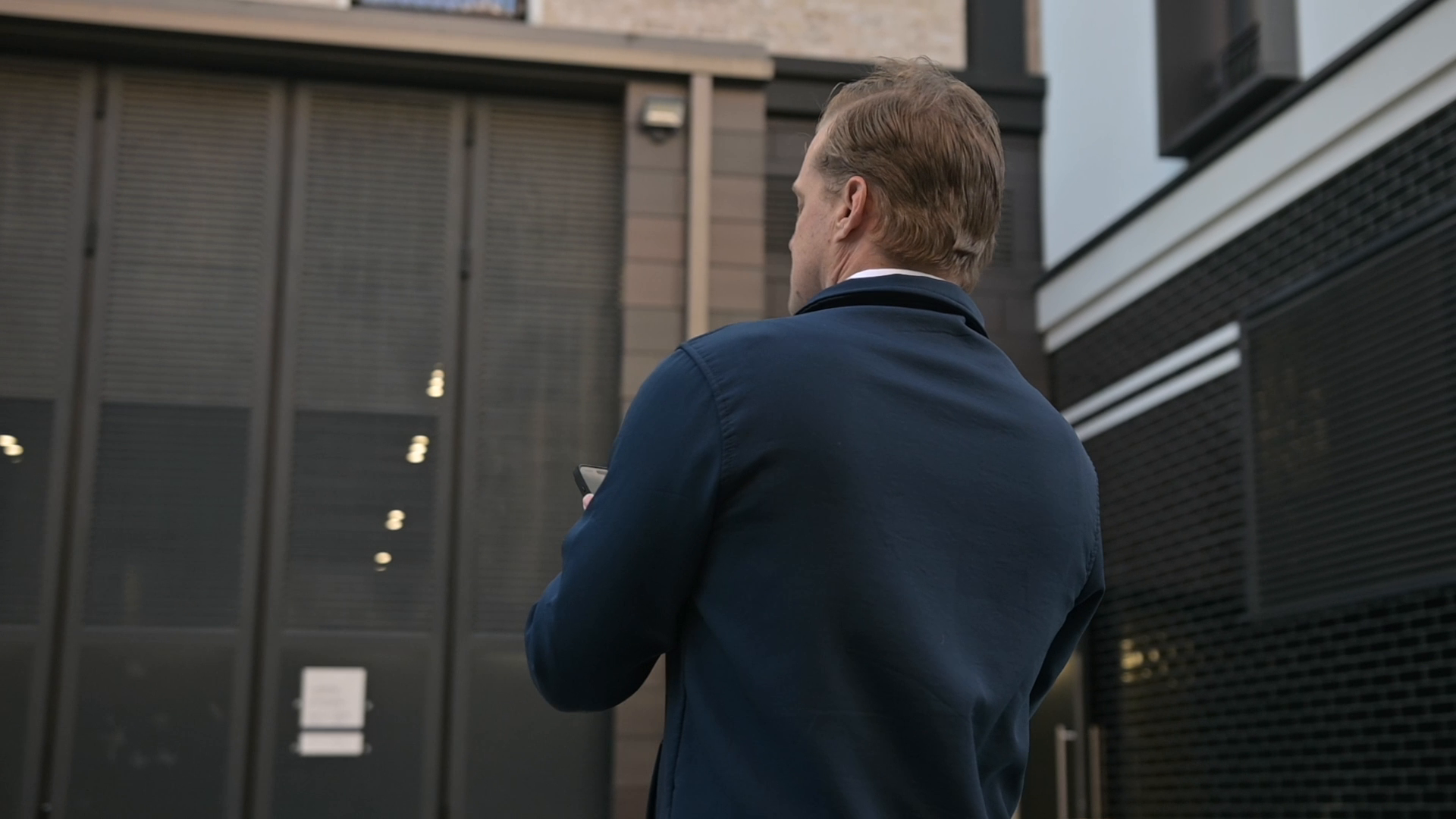
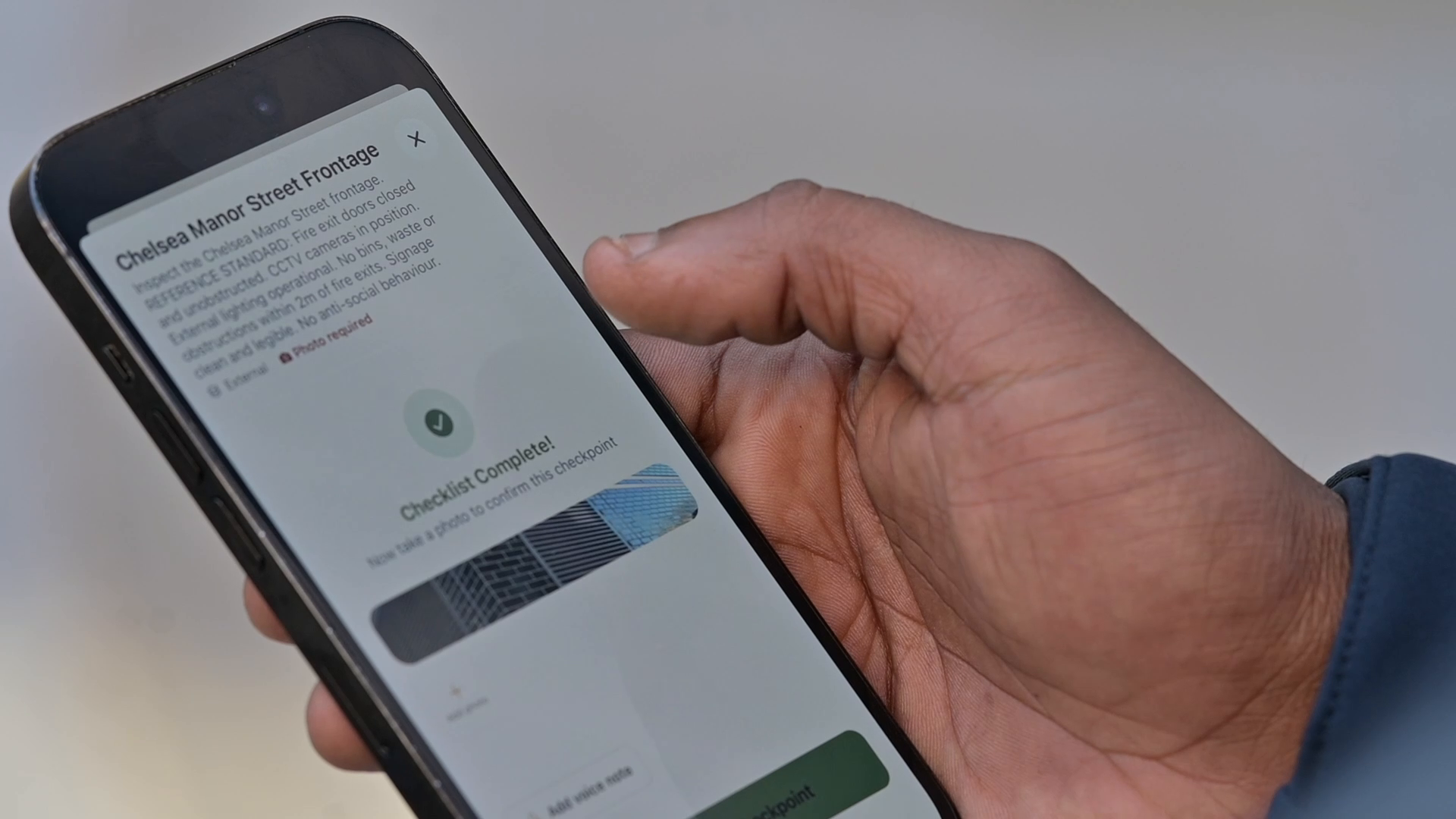
Priority First's approach to evidencing delivery extends across its wider portfolio: on one mixed-use West London development, the firm mapped 152 photographed checkpoints across retail, residential, service yards, and plant rooms, with every checkpoint completion requiring a photo, GPS tag, and timestamp to close out. Faults logged at a checkpoint are shown to the next officer on that round, who confirms whether the issue is still outstanding or resolved — a chain of accountability that a day-rate invoice alone cannot demonstrate.
Alternatives and complementary measures to close protection
Not every business professional requires a full protective detail, and it's worth understanding where close protection sits alongside other risk-reduction measures.
- Corporate office security: SIA-licensed manned guarding at reception and building entry points, reducing the need for personal escort during routine working hours.
- CCTV monitoring: Continuous surveillance of premises and approach routes, useful for lower-risk profiles where physical escort isn't proportionate.
- Key holding and alarm response: Ensures rapid, accountable response to out-of-hours incidents without requiring a permanent protective presence.
- Concierge and front-of-house management: Manages visitor access and screens callers at residential or commercial premises, adding a layer of control at the building perimeter.
- Vacant property services: Relevant where a principal's secondary residence needs monitoring during extended absence rather than personal escort.
For many business professionals, a combination of building-level security and periodic close protection for high-risk events proves more proportionate — and more cost-effective — than permanent personal cover.
Ways to reduce close protection costs without reducing safety
Business professionals can manage close protection spend sensibly by matching cover to genuine risk rather than defaulting to maximum provision.
- Book retainer arrangements for predictable, recurring needs rather than repeated ad hoc single-day bookings, which typically carry a premium.
- Combine services under one provider — such as pairing close protection with existing building security or concierge arrangements — to reduce coordination overhead and administrative duplication.
- Conduct a proportionate risk assessment first, distinguishing genuine elevated-risk periods (high-profile launches, contentious negotiations, public appearances) from routine daily movement that lower-tier measures can cover.
- Confirm licence status and refresher-training compliance upfront, avoiding costly late substitutions if an officer's licence lapses mid-contract, particularly given the SIA's April 2026 mandatory refresher deadline.
- Use London-based providers with local route knowledge, reducing time lost to unfamiliarity with ULEZ zones, congestion charging, and borough-specific access restrictions.
Your close protection checklist
- Confirm every proposed officer holds a valid SIA Close Protection Licence before deployment.
- Verify the officer's refresher training status ahead of the April 2026 mandatory renewal deadline.
- Request a written threat and route assessment specific to the principal's central London movements.
- Clarify whether the assignment requires single-officer escort or a multi-officer detail.
- Establish reporting and incident-logging procedures before the assignment begins.
- Check whether the provider can integrate close protection with existing building security, concierge, or key-holding arrangements.
- Agree daily rates and any premium terms for unsociable hours or extended duty in writing.
- Confirm the provider's registered company details, such as Companies House registration, before signing a contract.
FAQ
How much does close protection cost in central London?
Most central London close protection assignments cost between £400 and £600 per day. The wider UK market ranges from £300 to £1,000 per day depending on officer seniority, risk profile, and assignment length, according to Security and Safety Solutions.
Do I need an SIA licence to hire close protection in London?
The close protection officer must hold the licence, not the client hiring them. It is a criminal offence for anyone to work as a close protection operative without a valid SIA licence, unless their employer holds a specific exemption under Section 4(4) of the Private Security Industry Act 2001, according to Get Licensed.
What is the difference between a bodyguard and a close protection officer?
"Bodyguard" is the common public term, while "Close Protection Officer" (CPO) is the correct UK regulatory and industry term. Both describe the same licensed role: an SIA-badged operative who plans routes, assesses risk, and physically escorts a principal.
How long does an SIA close protection licence last?
An SIA Close Protection Licence lasts three years from the date of issue and costs a non-refundable fee of £204, according to Get Licensed. From April 2026, all renewals must include mandatory refresher training introduced by the SIA, according to Security Pathway.
Can any business professional hire close protection, or is it only for celebrities?
Any individual or business can commission close protection; it is not restricted to celebrities or politicians. Business professionals commonly use it for high-profile negotiations, contentious redundancies, product launches, or periods of elevated personal risk such as public disputes or media scrutiny.
What areas of central London do close protection services typically cover?
Central London close protection commonly covers Mayfair, Knightsbridge, Belgravia, Chelsea, St James's, and the City of London, alongside surrounding areas such as Canary Wharf. Priority First operates specifically across prime central London — including Mayfair, Knightsbridge, and Chelsea — as well as West London.
Is close protection different for corporate executives compared to high-profile individuals?
The licensing requirement and core skill set — threat assessment, route planning, escort — remain the same regardless of who the principal is. The practical emphasis differs: corporate assignments often prioritise discretion and business-appropriate presentation, while high-profile public figures may require more intensive crowd and media management at events.
Securing your business with Priority First
Business professionals across central London face a genuinely fragmented supplier market — a large number of UK security businesses compete for attention, making it hard to separate a licensed badge from a genuinely accountable service. Priority First addresses this by combining SIA-licensed manned guarding and physical protection with its wider facilities management remit, so a business professional requiring close protection alongside building security, concierge cover, or key holding deals with a single accountable partner rather than juggling multiple contracts.
Priority First's own operational data illustrates this accountability standard in practice: across its largest managed portfolio, the firm now runs 24 sites on one platform, with 4,900-plus photo-backed patrols completed, each carrying officer ID, GPS, and timestamp verification. That same evidence-led approach — verifiable, not merely asserted — underpins how Priority First structures close protection assignments for clients across Mayfair, Knightsbridge, and Chelsea, where 28 of the firm's 37 documented contracts currently sit.
If your business requires close protection cover in central London, or a combined package spanning personal protection, concierge, and building security, contact Priority First to discuss your requirements and request a tailored quote.
Related Reading
- How to Choose a Close Protection Course in London for Your Team
- Close Protection Courses UK Cost 2026: Compare Providers
- Security Guarding Prime Central London: Expert Protection 2026