Keyholding Services Cost UK 2026 | Full Price Guide


Last updated: 18 August 2026
Keyholding services cost UK businesses roughly £250 to £600 per year for professional cover, plus a call-out fee of £50 to £100 per alarm activation, according to i2 Security & Fire Protection (2026). Basic packages start from around £30 per month, rising to £150 or more for comprehensive alarm response and patrol cover.
Key Takeaways
- UK keyholding prices usually start from around £30 per month for basic coverage, with comprehensive packages including alarm response and patrols ranging from £50 to £150+ per month, according to Leisureguard Security (2026).
- Professional keyholding services typically cost between £360 and £600 per year, with most clients paying £30–£50 per month depending on location and services, per Leisureguard Security (2026).
- A typical annual keyholding and alarm response contract costs between £250 and £600, with call-out charges of £50 to £100 per activation, according to Stonewall Security Ltd (2026).
- The URN (Unique Reference Number) fee that police forces charge for a monitored intruder alarm is £45.66 plus VAT, totalling £54.79, according to Security Alarms UK (2026).
- Priority First's operational data shows it protects over £1.6 billion in client assets across prime central London and nationwide contracts, backed by a 100% customer satisfaction rate.
What is a keyholding service?
A keyholding service is a contracted arrangement in which a licensed security provider holds a set of keys to a client's premises and attends the property in place of the owner or staff whenever an alarm activates, a delivery arrives, or access is otherwise needed out of hours. The Security Industry Authority (SIA) — the UK's independent regulator for the private security industry, established under the Private Security Industry Act 2001 — classifies key holding as a licensable activity, meaning anyone providing it professionally must hold an SIA licence.
Most commercial insurers and many police forces now require a nominated keyholder for any premises fitted with a monitored intruder alarm. Without one, a business owner or manager becomes personally responsible for attending the site at 3am when an alarm receiving centre (ARC) flags an activation, which is neither practical nor, in many cases, safe.
The British Standards Institution (BSI) sets the technical benchmark for this sector through BS 7984, the keyholding and response services standard, which covers vetting, response times, and record-keeping for providers. Certification bodies such as the National Security Inspectorate (NSI) and the SSAIB audit providers against this standard on behalf of insurers and enforcement bodies.
How much do keyholding services cost in the UK?
Keyholding services in the UK typically cost between £250 and £600 per year for a standard package, with most providers charging £30 to £50 per month for the core service. On top of this annual or monthly fee, expect a separate call-out charge each time the provider physically attends your premises.
Pricing varies by provider, location, response time guarantees, and whether the package bundles alarm monitoring, mobile patrols, or holiday property inspections. Robinsons FS (2026) reports that basic keyholding services typically cost between £20 and £50 per month, rising to £50–£200 per month for more comprehensive key security cover, with emergency or one-time responses starting from around £50.
Here is how the main published figures compare across providers:
| Provider / Source | Monthly Cost | Annual Cost | Call-Out Fee |
|---|---|---|---|
| Leisureguard Security (2026) | From £30 (basic); £50–£150+ (comprehensive) | Not stated | Included/varies |
| Leisureguard Security (2026) | £30–£50 | £360–£600 | Not stated |
| i2 Security & Fire Protection (2026) | Not stated | £250–£600 | £50–£100 |
| Robinsons FS (2026) | £20–£50 (basic); £50–£200 (comprehensive) | Not stated | From £50 |
| Stonewall Security Ltd (2026) | Not stated | £250–£600 | £50–£100 |
| Security Alarms UK (2026) | Not stated | £250–£350 | Not stated |
As the table shows, the published ranges across independent providers converge fairly tightly: expect an annual spend somewhere between £250 and £600 for the core keyholding contract, with call-outs charged separately at £50–£100 per attendance.
Additional costs to budget for
Beyond the headline keyholding fee, businesses using a monitored alarm should also budget for the police URN fee. This is currently set at £45.66 plus VAT (£54.79 total), according to Security Alarms UK (2026), and is required by most UK police forces before they will respond directly to an alarm activation under the NPCC Security Systems Policy.
Businesses should also factor in the cost of alarm monitoring itself, any excess mileage charges for out-of-area attendance, and potential fees for holding multiple sets of keys across a portfolio of buildings.
What determines the price of keyholding services?
The cost of a keyholding contract is determined primarily by response time guarantee, geographic location, number of keyholders required, and whether patrols or CCTV monitoring are bundled into the package. A provider guaranteeing a 20-minute response in central London will typically charge more than one offering a 60-minute response in a rural area, reflecting staffing and vehicle deployment costs.
Properties requiring multiple keyholders — common for larger commercial sites or mixed-use developments — will also see higher fees, since the NPCC policy typically expects at least two nominated keyholders per monitored alarm system, both able to attend within a set window.
Factors that increase cost
- Faster guaranteed response times (sub-20-minute urban response commands a premium over standard response windows)
- 24/7 availability versus daytime-only or weekend-only cover
- Multiple sites under one contract, each requiring separate key sets and access protocols
- Bundled services such as CCTV monitoring, mobile patrols, or vacant property inspections
- Remote or rural locations, where travel time increases operational cost
- High-value or high-risk premises, such as jewellers, pharmacies, or construction sites holding plant and materials
Factors that reduce cost
- Longer contract terms (annual versus monthly rolling agreements)
- Bundling keyholding with an existing manned guarding or facilities management contract
- Single-site, low-footfall premises with predictable access patterns
- Fewer required keyholders, where the client's own staff can share the on-call rota
Worked pricing scenarios
To make these figures concrete, here are three illustrative scenarios based on the published ranges above. These are indicative only and should be confirmed against a specific provider's quote.
Scenario 1: Single retail unit, standard alarm response. A small independent retailer in a regional town with a monitored intruder alarm and no out-of-hours staff might expect an annual keyholding contract in the region of £250–£350, in line with Security Alarms UK's (2026) reported range, plus £50–£100 per call-out and the £54.79 police URN fee.
Scenario 2: Mid-size office, comprehensive cover. An office of 50–100 staff in a major city wanting alarm response plus occasional mobile patrols might pay towards the upper end of the £50–£200 monthly range reported by Robinsons FS (2026) — so roughly £1,800–£2,400 a year before call-out charges.
Scenario 3: Prime central London residential block or mixed-use estate. A managed residential block or commercial estate in an area such as Mayfair, Chelsea, or Knightsbridge typically needs keyholding integrated with manned guarding, concierge, and out-of-hours access management rather than a standalone product — pricing here is normally quoted per site as part of a wider security and facilities contract, reflecting the multiple keyholders and rapid response the NPCC policy expects for higher-value premises.
"Most incidents happen when the building is empty, which is exactly when most businesses have the least arranged. Out-of-hours cover is a chain — detection, keyholding, response, escalation, making the building safe — and it is only as strong as its weakest link. We design the chain, not just one link of it." — Mo Hassan, Managing Director, Priority First
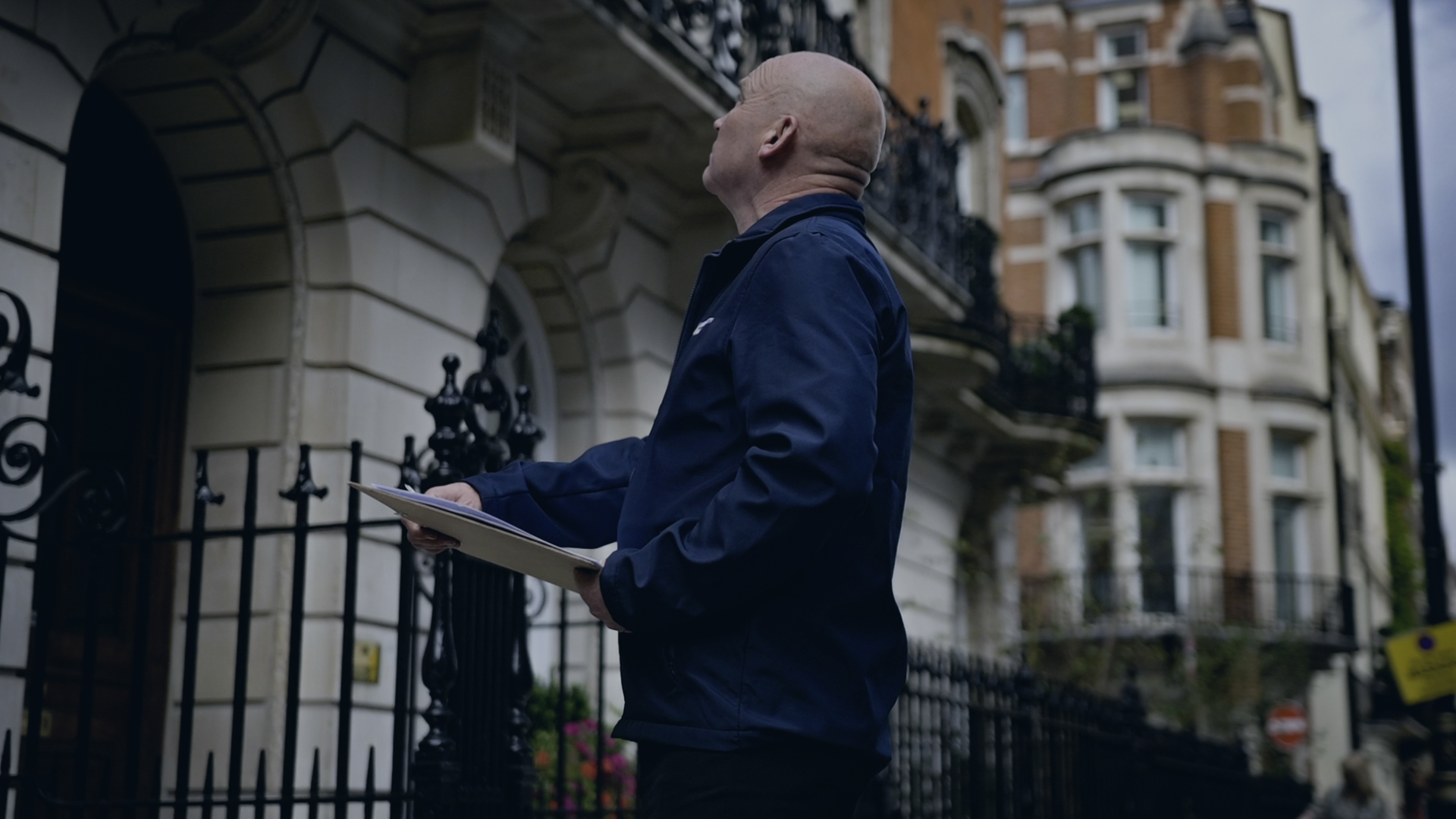
That principle is exactly what shaped Priority First's approach to a mansion block in West London, where dozens of households sit behind a single front door and residents expect discreet, round-the-clock building management. Priority First's SIA-licensed officers now hold keys for the building and attend every out-of-hours activation and access request, with every patrol and handover logged on the company's platform — meaning no resident or staff member is ever left responding alone at night.
Professional keyholding versus in-house arrangements
Many businesses default to informal keyholding — a manager or trusted employee holding a spare set of keys and taking alarm calls personally. This can appear to cost nothing, but it carries hidden risks that a professional contract is specifically designed to remove.
An employee acting as an untrained keyholder may be required to attend the premises alone at night, entering a building where an intruder could still be present — a safety risk the Health and Safety at Work etc. Act 1974 places a duty on employers to manage. Professional keyholders, by contrast, are SIA-licensed, trained in safe entry procedures, and typically insured specifically for this activity.
| Factor | In-house keyholding | Professional keyholding service |
|---|---|---|
| Cost | Appears free, but includes disruption, overtime, fuel | £250–£600/year typical, per i2 Security (2026) |
| Response availability | Limited to one or two individuals' availability | 24/7 dedicated response team |
| Safety on attendance | Employee may attend alone | Trained SIA-licensed officers attend, often in pairs |
| Insurer/police compliance | May not satisfy insurer or NPCC requirements | Structured to meet BS 7984 and police keyholder criteria |
| Record-keeping | Often informal or undocumented | Logged attendance, timestamps, incident reports |
The case for outsourcing becomes stronger the more valuable or complex the site. i2 Security & Fire Protection (2026) cites a case study in which Workspace Group cut theft and burglaries by 75% and sped up alarm responses by 37% after switching to professional security keyholding — a measurable illustration of what structured, professional response can achieve compared with informal cover.
Ways to reduce your keyholding costs
Businesses can manage their keyholding spend without compromising response quality by taking a few practical steps.
- Bundle keyholding with an existing security or facilities management contract rather than buying it as a standalone add-on, since combined contracts often reduce per-service overhead.
- Reduce false alarm call-outs by maintaining your alarm system properly — false activations drive up call-out charges and can eventually trigger police withdrawal of response under NPCC policy.
- Commit to an annual contract rather than monthly rolling terms, where providers typically offer better rates for committed volume.
- Consolidate multiple sites under one provider if you manage a portfolio, reducing per-site administrative and mobilisation costs.
- Review your alarm's URN registration annually to avoid lapses that can result in re-registration fees or loss of police response.
Alternatives to consider
Keyholding is not the only way to manage out-of-hours risk, and for some premises a different or complementary approach makes more sense.
- CCTV monitoring with a remote operator can reduce the frequency of physical call-outs by verifying whether an activation is genuine before dispatching a keyholder — Priority First's CCTV Monitoring service operates on this basis.
- Manned guarding provides a permanent on-site presence rather than a reactive response, which suits higher-risk sites such as construction projects or large mixed-use estates. Priority First's work at a 96-unit care home in Bedfordshire illustrates this: care staff cannot double as security, so SIA-licensed officers patrol independently, with every checkpoint completed against a photograph, GPS marker and timestamp — resulting in more than 1,000 photo-backed patrols delivered and every one of the sites onboarded within a fortnight.
- Vacant property services, combining periodic inspection with alarm response, suit buildings that are empty for extended periods rather than occupied premises needing daily access management.
- Mobile patrols can supplement keyholding on larger sites, particularly where perimeter security matters as much as building access — a model Priority First deployed at a distribution facility in the West Midlands, combining canine units, manned guarding and facilities management to cover a perimeter too large for a single gatehouse.
Your keyholding services checklist
- Confirm your provider holds a valid SIA licence for key holding activity before signing any contract.
- Check whether the provider is certified against BS 7984 by a body such as NSI or SSAIB.
- Register your alarm system for a URN with your local police force and budget for the £54.79 fee.
- Nominate at least two keyholders per site, in line with NPCC guidance, so response is never dependent on one person's availability.
- Ask for the guaranteed response time in writing, and confirm how it changes outside business hours or on bank holidays.
- Compare annual versus monthly pricing structures, since committed terms typically reduce per-month cost.
- Review whether bundling keyholding with manned guarding, CCTV monitoring, or facilities management reduces your total security spend.
- Request a written incident and attendance log as part of the service, not just a verbal call-out confirmation.
FAQ
How much does keyholding service cost per month in the UK?
Basic keyholding services typically cost between £20 and £50 per month, according to Robinsons FS (2026), rising to £50–£200 per month for more comprehensive cover including patrols and faster response times. Annual contracts often work out cheaper overall, with i2 Security (2026) citing typical annual costs of £250 to £600.
What is included in a professional keyholding service?
A professional keyholding service includes secure storage of your premises keys, a guaranteed response time to alarm activations, and attendance by trained, SIA-licensed personnel. Most contracts also include incident logging, coordination with the police or alarm receiving centre, and a documented handover if the building needs to be made secure after an incident.
Is keyholding a legal requirement for UK businesses?
Keyholding itself is not a statutory legal requirement, but most UK police forces will not respond to a monitored intruder alarm without a registered keyholder attached to the URN. Insurers also frequently make a nominated keyholder a condition of cover for commercial premises fitted with an alarm system.
Do I need an SIA licence to hold keys for a business?
Anyone providing keyholding as a commercial service to third parties must hold an SIA licence, since the Security Industry Authority classifies key holding as a licensable activity under the Private Security Industry Act 2001. A business's own employee holding keys to their own workplace does not require a licence, but using a third-party provider means that provider must be licensed.
How does keyholding reduce business insurance premiums?
Insurers often view a professional keyholding arrangement as evidence of adequate risk management, which can support more favourable premium terms, though the specific discount varies by insurer and is not independently quantified in current published data. What insurers consistently require is a nominated, reliable keyholder capable of attending within a defined window following an alarm activation.
What is the difference between keyholding and alarm response services?
Keyholding refers to a provider physically holding a set of keys to your premises, while alarm response is the service of attending the site when the alarm activates. In practice, most UK providers sell these as a single combined service, since holding keys without a commitment to respond to activations offers little practical value.
How quickly do keyholding companies respond to alarm activations?
Response times vary by provider and location, typically ranging from around 20 minutes in urban areas to an hour or more in rural locations. Faster guaranteed response times generally carry a higher monthly or annual fee, reflecting the additional staffing and vehicle availability required.
What happens if the police attend too many false alarms at my property?
Under the NPCC Security Systems Policy, police forces can withdraw their response to a premises' alarm following repeated false activations, shifting responsibility back to the nominated keyholder. This is one of the key reasons businesses maintain a professional keyholding contract as a fallback, ensuring someone still attends even if police response is suspended.
Securing your premises with Priority First's keyholding and alarm response service
Every keyholding decision comes down to the same question: who attends your building at 3am, and how quickly? Priority First's Key Holding & Alarm Response service answers that with SIA-licensed officers, structured attendance protocols, and a platform that logs every patrol and handover with a photograph, GPS marker and timestamp rather than a verbal assurance.
Priority First currently operates 24 sites on this single platform, with more than 4,900 photo-backed patrols completed and over £1.6 billion in client assets protected across prime central London, West London, Bedfordshire and the West Midlands. That track record includes 37 documented client contracts, 28 of them concentrated in Chelsea and Knightsbridge, and a 5.0-star rating across 44 Google reviews.
If your business needs a keyholding provider that treats out-of-hours response as one link in a fully designed chain — not an afterthought — get in touch with Priority First for a tailored quote based on your site, your alarm setup, and your required response time.
Related Reading
- Alarm Response Service London | Priority First
- Close Protection Services London | Priority First 2026
- Facilities Management Services London | Priority First 2026

Lauren Dawkins is a co-founder and director of Priority First, the Mayfair-based building management and security company. Lauren works across the company's facilities management and corporate security services for residential, commercial and construction clients in London.
Specialises in Facilities management, Corporate security, Integrated security and FM