Close Protection Services London | Priority First 2026

Last updated: 10 August 2026
Close protection services London firms rely on involve SIA-licensed officers who assess threats, plan routes and provide discreet personal security for executives, principals and high-net-worth individuals. Demand has grown alongside the UK's terrorism threat level, which JTAC raised to SEVERE in May 2026 — meaning an attack is assessed as highly likely.
Key Takeaways
- Close protection is a licensed discipline: every close protection officer working in the UK must hold an SIA close protection licence issued under the Private Security Industry Act 2001.
- The UK terrorism threat level is SEVERE: JTAC raised the national threat level from SUBSTANTIAL to SEVERE in May 2026, the first time it has reached that level in over four years (MI5 / Ubique Risk Management, 2026).
- The security workforce is tightening: first-time SIA licence applications fell 16% in a single year, from 94,332 in 2026 to 79,455 in 2026, meaning fewer newly qualified operatives are entering the market (Coredinate, citing SIA data, 2026).
- The UK private security market is worth £8.9 billion, with 6,528 registered businesses competing for a shrinking pool of licensed personnel (Coredinate / IBISWorld, 2026-26).
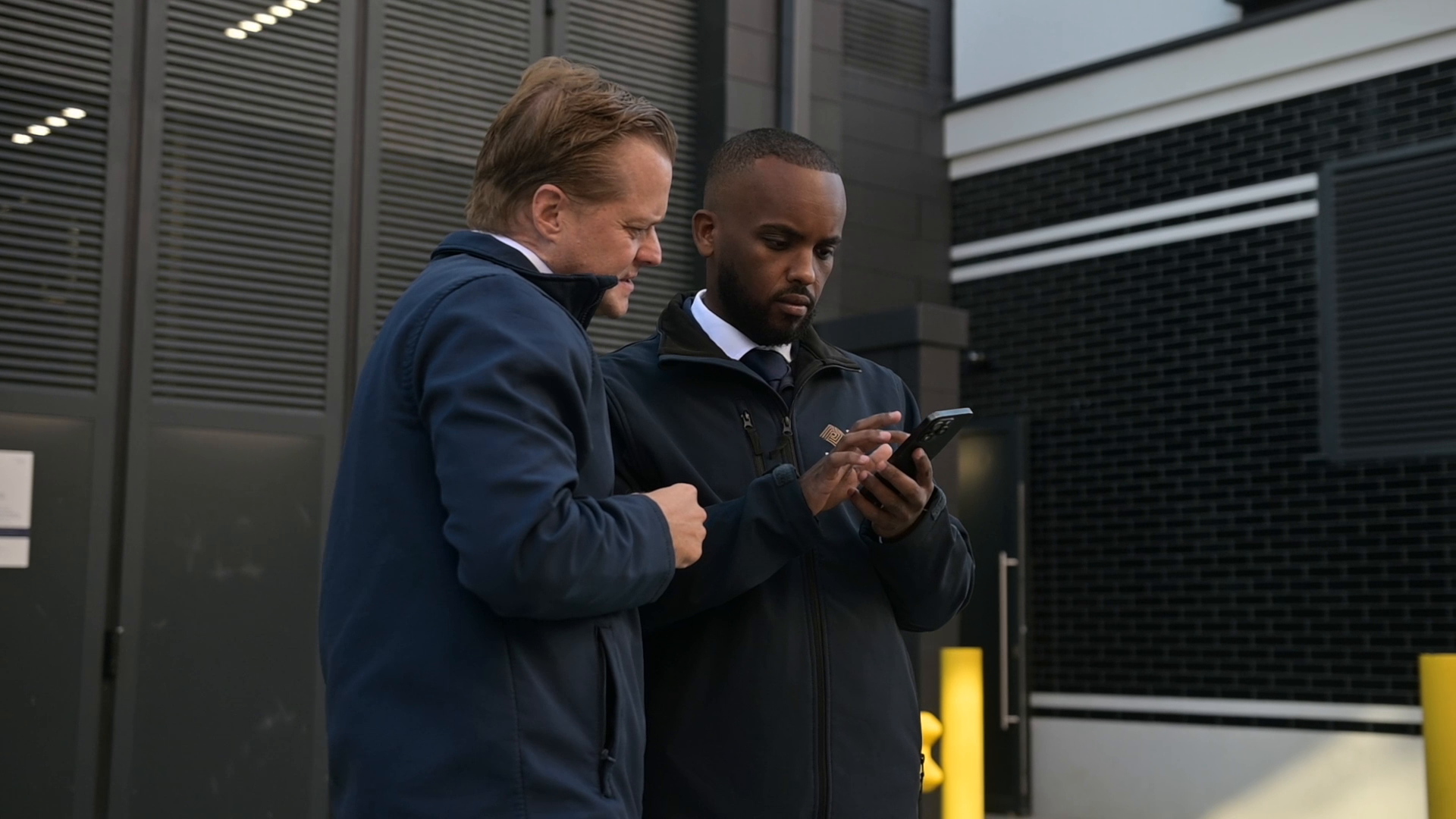
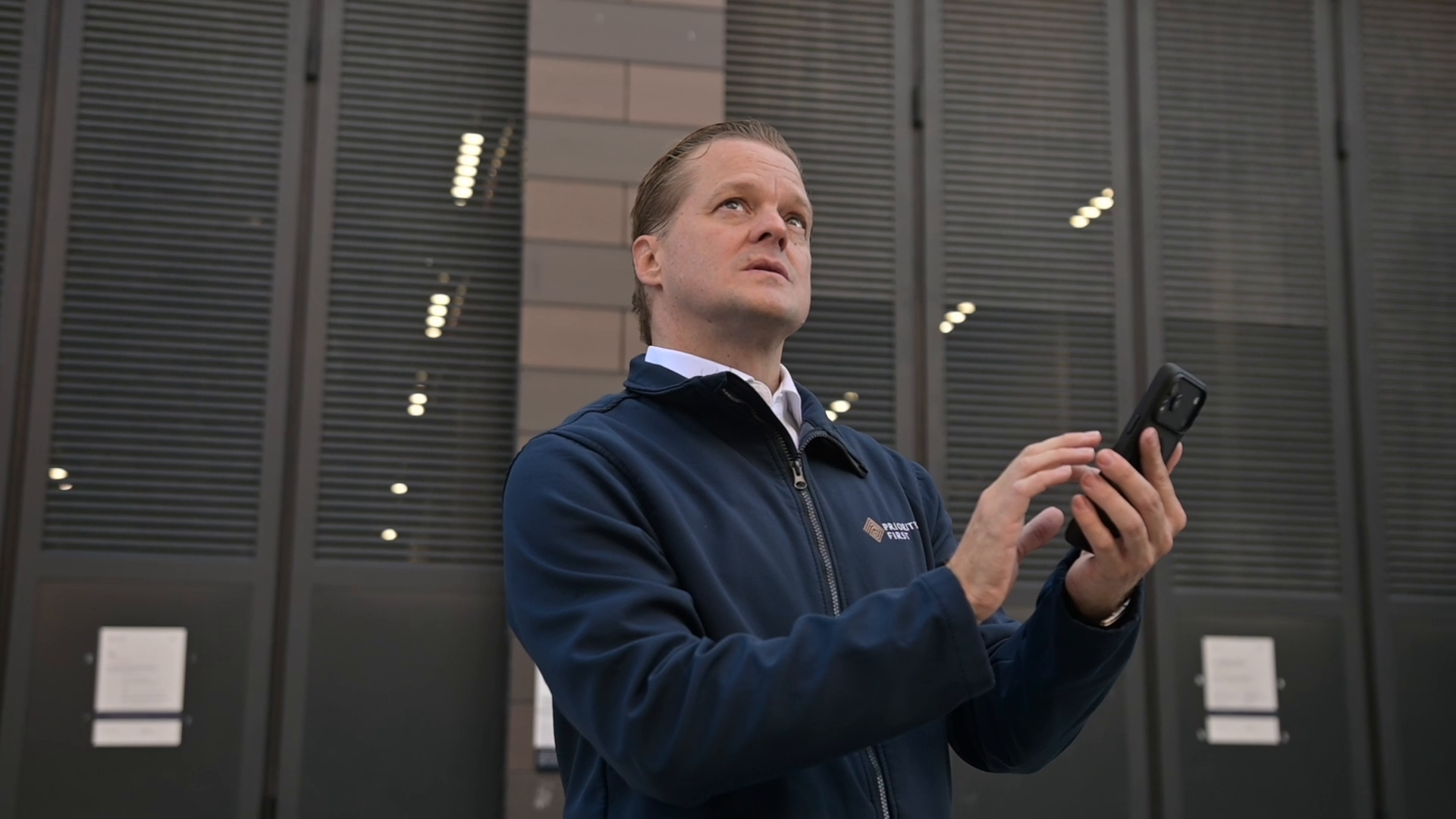
- Priority First delivers provable coverage: across its largest managed portfolio, Priority First has logged over 4,900 photo-backed patrols across 24 sites, each checkpoint carrying a watermarked photo, GPS location and timestamp.
What is close protection?
Close protection is a specialist security discipline that involves trained, SIA-licensed operatives protecting a named individual — known as the principal — from assault, abduction, harassment or reputational harm. Unlike static manned guarding, which secures a fixed site, close protection moves with the client through homes, offices, vehicles and public spaces.
A close protection officer, commonly abbreviated to CPO, differs from a doorman or a corporate security guard because their entire role is built around one person's movements. The Security Industry Authority (SIA) — the statutory body created under the Private Security Industry Act 2001 to regulate the UK's private security sector — issues a specific close protection licence, separate from the licences covering door supervision or CCTV operation.
In London, close protection typically covers business executives travelling between the City, Canary Wharf and Mayfair, high-net-worth residents in Knightsbridge and Chelsea, visiting dignitaries, and individuals who have received a specific threat. The discipline blends risk assessment, route planning, advance reconnaissance and physical intervention capability into a single, continuous service.
How close protection differs from manned guarding
Manned guarding secures a location: a building entrance, a construction site, a retail unit. Close protection secures a person, following them from one location to the next and adapting constantly to a changing environment.
Priority First delivers both disciplines under one accountable structure, drawing on the same SIA-licensed workforce standards that underpin its manned guarding, keyholding and concierge services across prime central London.
Why is demand for close protection rising in London in 2026?
Demand for close protection services in London has risen because the national terrorism threat level increased and because high-profile individuals face growing reputational and physical risk in public settings. The Joint Terrorism Analysis Centre (JTAC) raised the UK's threat level from SUBSTANTIAL to SEVERE in May 2026, and the number of people in custody for terrorism-related offences has reached a record high.
This shift matters directly to business professionals: a SEVERE rating means organisations operating in London, hosting events, or moving senior staff through public venues must treat an attack as a realistic near-term possibility rather than a background risk.
The current UK threat picture
JTAC's SEVERE rating in May 2026 was the first time the threat level had reached that grade in over four years (MI5 / Ubique Risk Management, 2026). At the end of 2026, there were 267 people in custody for terrorism and terrorism-connected offences in Great Britain — the highest number since comparable records began (Counter Terrorism Policing, via Ubique Risk Management, 2026).
Counter Terrorism Policing and UK Intelligence Services have disrupted 19 late-stage attack plots since the start of 2020 (Counter Terrorism Policing, via Ubique Risk Management, 2026). These disruptions demonstrate an active and ongoing threat landscape rather than an isolated incident.
A tightening supply of licensed operatives
The SIA reported around 460,000 active licence holders across the UK at the end of 2026, up 21% from 365,226 in December 2020 (Coredinate, citing SIA data, 2026). Despite that growth in the total licensed pool, first-time applications have fallen sharply — from 94,332 in 2026 to 79,455 in 2026, a 16% drop in a single year (Coredinate, citing SIA data, 2026).
Separate government-sourced data shows around 451,000 active SIA licence holders in 2026, compared with just under 235,000 in 2008 (Statista, GOV.UK data, 2026). Close protection is a specialist subset of this workforce, and businesses booking cover in London should expect longer lead times as fewer new entrants qualify each year.
What qualifications must a close protection officer hold?
A close protection officer must hold a valid SIA close protection licence, which requires completion of a mandatory training programme set out in the SIA's Knowledge and Skills Specification for close protection. This specification, published by the SIA, covers conflict management, first aid, surveillance awareness, legal powers and physical intervention.
Applicants must also pass a criminal record check and meet identity verification requirements administered through GOV.UK's SIA licence guidance. Close protection operative is formally listed as a regulated profession on the UK government's Regulated Professions Register, meaning the qualification route and licensing conditions are set nationally rather than left to individual employers.
Screening beyond the SIA licence
An SIA licence confirms a baseline standard, but many corporate and high-net-worth clients expect additional vetting. British Standard BS 7858 sets out the recommended process for screening personnel working in security environments, including employment history verification and financial probity checks.
Clients commissioning close protection in London should ask providers directly what screening sits behind the SIA licence, rather than assuming the licence alone covers every risk. Firms that combine SIA compliance with documented vetting, clear reporting lines and named account management give clients a stronger basis for trust.
How much do close protection services cost in London?
Close protection costs in London vary widely depending on threat level, deployment length, whether the officer is armed-trained (note: UK close protection is unarmed by default), and whether a team or single officer is required. Day rates for a single, unarmed CPO in London typically sit in a broad illustrative range, with costs rising substantially for multi-officer teams, residential protection, or overseas travel support.
| Deployment type | Typical illustrative range (per day) | Notes |
|---|---|---|
| Single CPO, low-risk, London-based | £350–£600 | Standard corporate or event coverage |
| Single CPO, elevated risk or high-profile principal | £600–£900 | Includes advance planning and route reconnaissance |
| Multi-officer team (2–4 CPOs) | £1,200–£3,000+ | Residential, family or high-threat coverage |
| Residential close protection with keyholding integration | Bespoke quote | Combines static and mobile coverage under one contract |
These figures are illustrative only and should be confirmed against a formal risk assessment; no verified UK-wide close protection rate data appears in the sources used for this guide.
Worked scenario: a Mayfair-based executive
A single executive travelling daily between a Mayfair office and a private residence in Knightsbridge, with occasional evening events, typically requires one CPO on a standard shift pattern. A monthly cost in the low tens of thousands of pounds is a realistic illustrative benchmark once advance planning, vehicle coordination and reporting are included — though actual pricing depends entirely on the client's specific risk profile.
Worked scenario: a visiting delegation
A visiting business delegation of three principals attending a week of City meetings typically needs a small team rather than individual officers, allowing coverage to be coordinated across venues, transport and hotel arrival points. Costs scale with team size, but a single accountable provider running both the protection detail and any venue liaison tends to reduce duplicated planning time.
Ways to reduce close protection costs
- Combine close protection with existing manned guarding contracts where the same provider already covers your building, reducing onboarding time and account management overheads.
- Commission a proper threat assessment first so officer numbers match actual risk rather than a default "worst case" team size.
- Use single-officer coverage for low-risk daily movements and reserve multi-officer teams for specific high-profile events.
- Agree fixed reporting and handover formats in advance to avoid paying for duplicated briefing time between shifts.
Alternatives to consider
For lower-risk situations, some businesses find that enhanced CCTV monitoring, controlled access management and a strong keyholding and alarm response arrangement reduce the need for constant personal protection. Priority First's own portfolio data shows this layered approach working in practice: a West London mansion block replaced ad hoc night-time responses with SIA-licensed officers who hold keys and attend every out-of-hours alarm activation, so no resident or staff member is left responding alone.
In-house security team or outsourced close protection?
Businesses weighing up an in-house protection team against an outsourced close protection provider face a genuine trade-off between control and flexibility. An in-house team offers direct line management and long-term familiarity with a principal's routine, but carries the fixed cost of salaries, training renewal and SIA licence maintenance even during quiet periods.
An outsourced provider scales up for a specific event, threat period or overseas visit and scales back down afterwards, without the client carrying employment liability. Outsourcing also gives access to a wider bench of vetted, licensed operatives than most single organisations could justify employing directly — particularly relevant given that first-time SIA applications have fallen 16% year-on-year (Coredinate, citing SIA data, 2026), making standing recruitment harder for any single employer.
Priority First's model sits between the two: a single accountable provider that supplies SIA-licensed officers alongside the wider facilities and building management already in place, so close protection is coordinated with site security rather than managed as a separate, disconnected contract.
How does Martyn's Law affect close protection in London?
Martyn's Law is the common name for the Terrorism (Protection of Premises) Act 2026, legislation that requires venues and events of a qualifying size to put in place proportionate measures to reduce harm from a terrorist attack. The law applies duty holders — the individuals or organisations responsible for a premises — to assess vulnerabilities and put procedures in place, guidance for which is published by ProtectUK.
For businesses hosting events, conferences or high-profile visits in London, Martyn's Law creates a direct overlap with close protection planning. A venue's duty holder obligations under the Act and a principal's personal protection arrangements increasingly need to be planned together, particularly for premises falling into the Act's enhanced tier.
Business professionals organising events in London should confirm with their security provider whether Martyn's Law applies to their venue, and whether close protection planning has been integrated with the venue's own duty-holder obligations rather than treated as entirely separate.
Your close protection services checklist
- Confirm every officer holds a current SIA close protection licence before deployment, not just a general security licence.
- Commission a formal threat and risk assessment before agreeing team size, shift pattern or route planning.
- Ask what vetting sits behind the SIA licence, including whether BS 7858-style screening has been applied.
- Check the national terrorism threat level via MI5's official threat level page before finalising event or travel security plans.
- Establish whether Martyn's Law applies to any venue involved, using ProtectUK's guidance.
- Agree reporting standards in advance — photo-backed checkpoints, GPS-logged patrols, and documented handovers rather than verbal assurances.
- Coordinate close protection with existing building security where possible, so principals, premises and personnel sit under one accountable provider.
- Review coverage regularly, not just once, given how quickly the UK threat picture can shift.
FAQ
How much does close protection cost in London?
Close protection costs in London vary from roughly £350–£600 per day for a single low-risk deployment to £1,200–£3,000+ per day for a multi-officer team covering elevated risk. Exact pricing depends on threat level, shift length and whether residential or travel coverage is included, so a formal risk assessment is the only reliable way to price a specific requirement.
What qualifications do I need to become a close protection officer in London?
You need a valid SIA close protection licence, which requires completing the mandatory training programme set out in the SIA's Knowledge and Skills Specification, covering conflict management, first aid and surveillance awareness. You must also pass identity and criminal record checks through the official GOV.UK licensing process.
Is close protection the same as a bodyguard?
Close protection and bodyguarding describe overlapping work, but close protection is the regulated, formally licensed version of the role in the UK. A close protection officer must hold an SIA licence and follow structured risk assessment and reporting procedures, whereas "bodyguard" is a more informal, unregulated term.
Do all close protection officers in London need an SIA licence?
Yes, every close protection officer working in the UK must hold a valid SIA close protection licence, issued under the Private Security Industry Act 2001. Operating without one is a criminal offence, and any London business hiring protection should verify the licence directly rather than relying on assurances alone.
How do I hire a close protection officer in London?
You hire close protection by commissioning a licensed security provider to carry out a threat assessment, then agree officer numbers, shift patterns and reporting standards based on that assessment. Reputable providers verify SIA licensing, disclose their vetting standards, and provide documented reporting rather than informal verbal updates.
Are close protection officers armed in the UK?
No, close protection officers in the UK are unarmed by default, reflecting the country's general firearms restrictions on private security personnel. Any armed protection role in the UK falls under separate, highly restricted authorisation and is not part of standard SIA-licensed close protection.
How does Martyn's Law affect close protection and venue security in London?
Martyn's Law — the Terrorism (Protection of Premises) Act 2026 — requires qualifying venues to assess vulnerabilities and put proportionate measures in place to reduce harm from a terrorist attack. Businesses planning events or visits involving close protection in London should confirm whether their venue falls under the Act and ensure protection planning is coordinated with the venue's own duty-holder obligations, as set out by ProtectUK.
Securing your business with Priority First
Business professionals arranging close protection in London need a provider who treats personal security as part of a wider, accountable system rather than an isolated booking. Priority First combines SIA-licensed manned guarding, keyholding, alarm response and concierge management under one contract, so a principal's protection detail can be coordinated with the building, event or site they are moving through.
Priority First's own operational data shows what accountable coverage looks like in practice: across its largest managed portfolio, the company has logged over 4,900 photo-backed patrols across 24 sites, with every checkpoint carrying a watermarked photo, GPS location and timestamp. That same evidence standard — reporting that is provable rather than asserted — underpins how Priority First plans and documents close protection deployments for clients across Mayfair, Knightsbridge, Chelsea and the wider London area.
If your business needs close protection coordinated with existing building or event security, get in touch with Priority First for a threat-led quote tailored to your specific risk profile.
Related Reading
- How to Choose a Close Protection Course in London for Your Team
- Corporate Security London 2026: Expert Protection Services |
- Facilities Management Services London | Priority First 2026