What Is Hard FM and Soft FM? UK Definition 2026


Last updated: 3 October 2026
Hard FM and soft FM are the two core categories of facilities management: hard FM covers a building's physical infrastructure, such as electrical systems and fire safety, while soft FM covers services supporting people who use the building, such as cleaning and security. Together, UK hard FM and soft FM services were worth roughly £34.9 billion in 2026, according to Baachu Rain.
Key Takeaways
- Hard FM refers to statutory, compliance-driven services such as HVAC, electrical systems, fire safety and structural maintenance.
- Soft FM refers to people-facing, discretionary services such as cleaning, security, concierge and grounds maintenance.
- The UK hard FM market was valued at £18.2 billion in 2026 and is forecast to reach £19.3 billion by 2028, a CAGR of 1.97%, according to Baachu Rain.
- Hard FM is the largest single segment of the UK FM market, contributing 37% of total value, ahead of soft FM at 34%, according to the Baachu Rain UK FM Market Report (2026).
- Priority First's own operational data shows over £1.6 billion in client assets currently protected across integrated hard and soft FM contracts.
What is hard FM and soft FM?
Hard FM is the branch of facilities management dealing with a building's physical fabric and engineered systems, covering electrics, plumbing, heating, ventilation and air conditioning (HVAC), lifts, fire alarms and structural fabric. Soft FM is the branch dealing with services that support the people occupying a building, covering cleaning, security, concierge, waste management, pest control and landscaping.
The distinction matters because the two categories carry different obligations. Hard FM tasks are largely governed by statute — the Health and Safety at Work etc. Act 1974 and the Workplace (Health, Safety and Welfare) Regulations 1992 set legal duties for maintaining lighting, heating and structural safety. Soft FM tasks are more often discretionary, shaped by tenant expectation, brand standards and occupier experience rather than a single piece of legislation.
The UK FM market overall was valued at £120 billion as of 2023, employing over 10% of the UK's workforce, according to The Mandatory Training Group. Within that market, hard FM services reached £66.8 billion (Total Contract Value) in May 2026, against £53 billion for soft FM, according to Baachu Rain FM Market Analysis.
What are examples of hard FM services?
Hard FM services address the physical systems that keep a building safe, functional and legally compliant. Typical examples include:
| Hard FM service | Purpose | Typical UK compliance driver |
|---|---|---|
| HVAC maintenance | Heating, ventilation and cooling upkeep | Workplace Regulations 1992 |
| Electrical testing | Fixed wiring and appliance safety | Electricity at Work Regulations 1989 |
| Fire safety systems | Alarms, extinguishers, sprinklers | Regulatory Reform (Fire Safety) Order 2005 |
| Lift and escalator maintenance | Safe vertical transport | LOLER 1998 |
| Legionella control | Water hygiene testing | HSE ACOP L8 |
| Structural repairs | Fabric integrity | Building Safety Act 2022 |
Hard FM engineers usually hold trade-specific qualifications: Gas Safe registration for gas work, NICEIC certification for electrical installations, and BESA (Building Engineering Services Association) membership for mechanical and electrical contractors. These are compliance obligations, not optional extras — a failed fire alarm test or an unaddressed Legionella risk can trigger enforcement action from the HSE or a local authority.
What are examples of soft FM services?
Soft FM services shape how people experience a building day to day, rather than whether it stands up structurally. Typical examples include cleaning and janitorial services, manned security and concierge, reception and front-of-house management, waste and recycling collection, landscaping and grounds maintenance, and pest control.
The UK government's own FM guidance describes soft services as focused "on the building environment and the user experience. They are generally services provided at the building such as cleaning and security," according to UK Government FM Standards. This is a useful distinction: soft FM is judged by occupier satisfaction rather than statutory pass/fail testing.
Security sits firmly within soft FM, but its stakes are far from soft. Priority First delivers SIA-licensed manned guarding — a reference to the Private Security Industry Act 2001, which established the Security Industry Authority (SIA) as the statutory regulator of licensed security operatives — alongside concierge, key holding and CCTV monitoring across prime central London.
The Institute of Workplace and Facilities Management (IWFM), the UK's professional body for FM, notes that "the professionalisation of soft FM has accelerated dramatically." IWFM adds that "services once viewed as commodity procurement now require sophisticated management, particularly in high-security or premium environments where soft FM directly represents brand values."
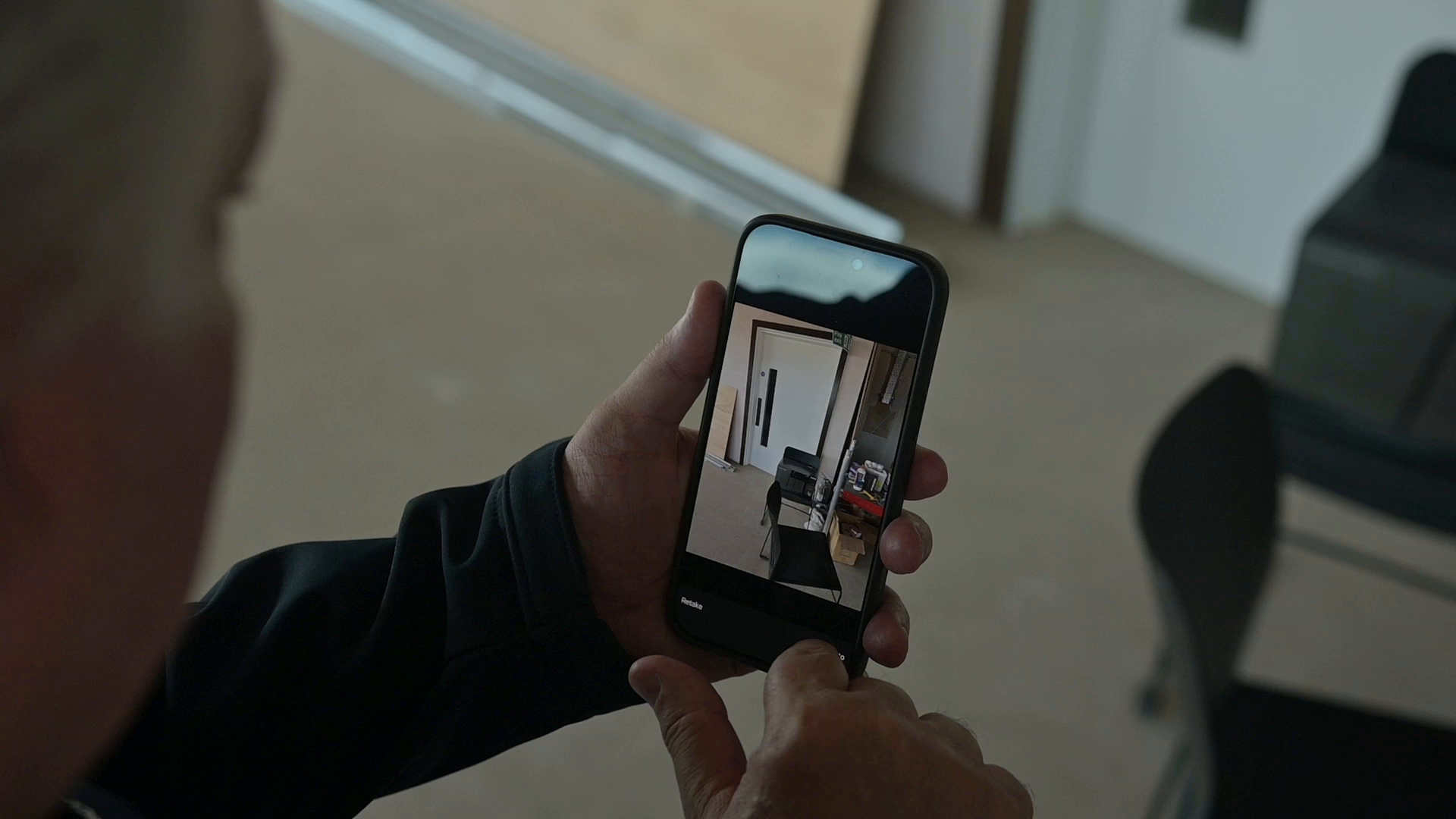
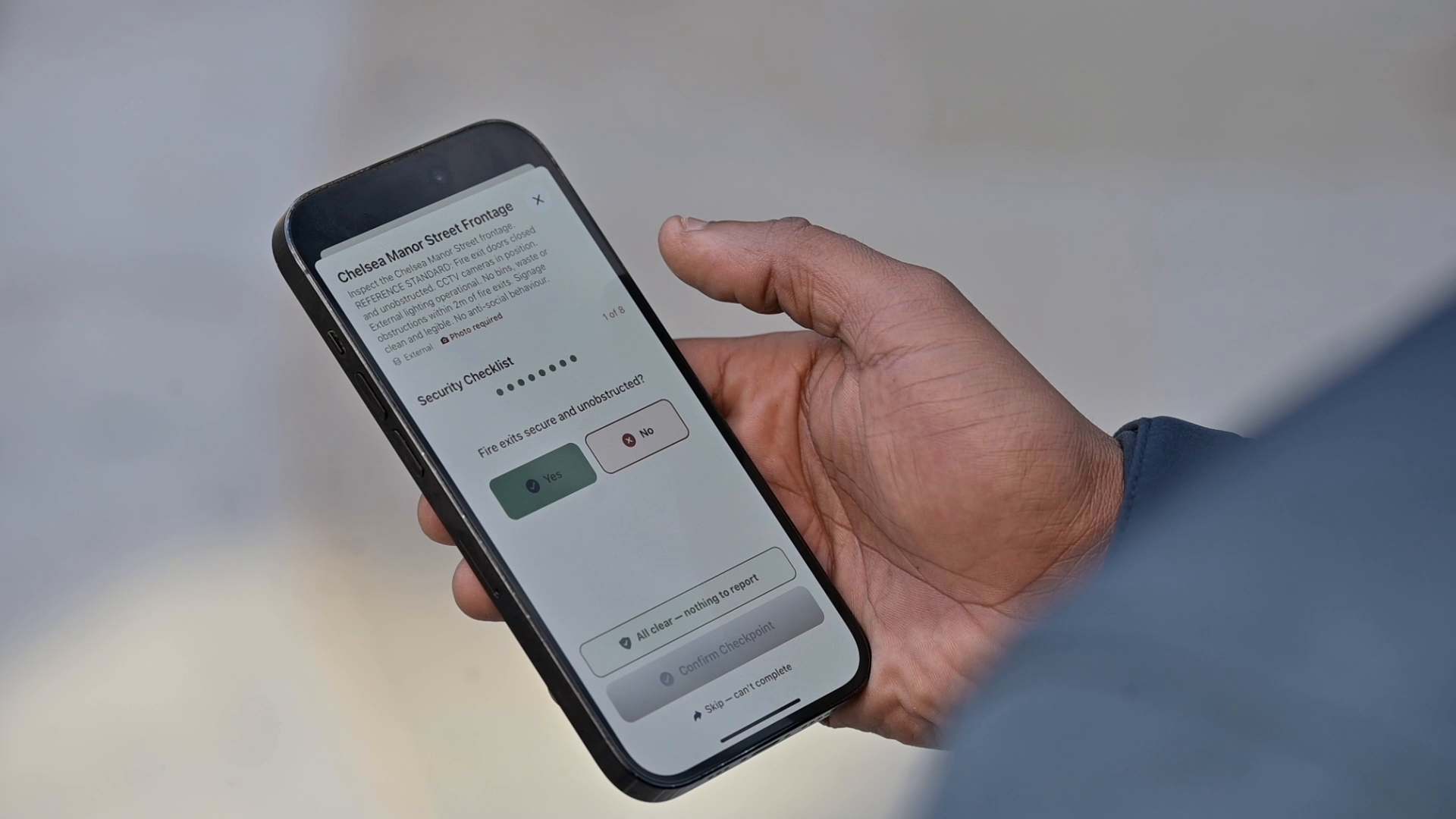
That professionalisation is visible in how Priority First runs security patrols. At a mixed-use development in West London combining retail, residential and public areas, 11 officers now complete photographed checkpoint patrols across 152 distinct points — plant rooms, service yards, retail units and residential cores — with every checkpoint requiring a photo, GPS location and timestamp to register as complete. Since going live in February 2026, the site has recorded more than 540 patrols in five months, with missed areas showing as visible gaps in the record rather than passing silently.
Is cleaning hard FM or soft FM, and where does security sit?
Cleaning is a soft FM service because it addresses occupier comfort and hygiene rather than a building's structural or engineered systems. Security sits in the same category for the same reason, though its consequences — theft, unauthorised access, safety incidents — can be severe if delivery is weak.
This is where the hard/soft split can mislead procurement teams. A missed HVAC service shows up on a compliance certificate; a missed security patrol often shows up only after an incident, when it's too late to act on it. That's why Priority First treats security patrols as an evidence exercise, not just a presence exercise.
"The most common mistake is treating installation as the finish line. Unwatched cameras are evidence for after the event, nothing more. The questions that matter are who is watching, what happens in the first minutes after something is seen, and whether the person responding has the authority and training to act." — Mo Hassan, Managing Director, Priority First
Why is hard FM legally required in ways soft FM often isn't?
Hard FM carries statutory force because a failure in a building's physical systems can directly endanger life, whereas most soft FM failures create discomfort or reputational risk rather than immediate hazard. The Regulatory Reform (Fire Safety) Order 2005 and the Building Safety Act 2022 both impose named duties on a "responsible person" for fire and structural safety — duties that don't have a direct soft FM equivalent.
This doesn't make soft FM low-stakes. A care home, for instance, carries a 24-hour duty of care to residents, but care staff cannot double as a security presence — door control, night-time incidents and unfamiliar visitors need dedicated cover that never lapses. At a 96-unit care home in Bedfordshire, Priority First deployed SIA-licensed officers to cover the site around the clock, with every patrol, incident and handover logged and checkpoints completed with a photograph, GPS location and timestamp. Cover became provable rather than merely asserted — and results were visible immediately, with over 1,000 photo-backed patrols completed and every site onboarded within a fortnight.
How does integrated FM combine hard and soft FM under one contract?
Integrated FM (IFM) is a single-contract model in which one provider manages both hard and soft FM services rather than a client running separate suppliers for each. The UK integrated FM segment was worth £14.2 billion in 2026 and £50.5 billion (Total Contract Value) as of May 2026, according to Baachu Rain and Baachu Rain FM Market Analysis respectively.
The appeal of IFM is accountability: one provider, one contract, no gap between "that's a hard FM issue" and "that's a soft FM issue" when something goes wrong. Priority First applies this logic to security-led estates, combining manned guarding, concierge, key holding and facilities coordination under a single point of contact — evident in a prestige Central London residential portfolio where three new buildings, including a 10-checkpoint serviced residence, were mobilised and fully onboarded within a fortnight in July 2026, with checkpoint mapping, officer induction and photographed patrols live from night one.
In-house vs outsourced: the core trade-off
| Model | Best suited to | Main risk |
|---|---|---|
| In-house hard FM, outsourced soft FM | Large estates with dedicated engineering teams | Coordination gaps between teams |
| Fully outsourced, split contracts | Cost-sensitive, smaller sites | Accountability disputes at handover points |
| Integrated FM (single provider) | Complex or premium estates | Reliant on one provider's breadth of capability |
Your hard FM and soft FM checklist
- Confirm which FM services are covered by statute (fire, electrical, water hygiene) versus discretionary spend.
- Verify hard FM contractors hold Gas Safe, NICEIC or BESA credentials as relevant.
- Confirm every soft FM security officer holds a valid SIA licence under the Private Security Industry Act 2001.
- Check whether patrols and checkpoints are logged with photographic, GPS and timestamp evidence.
- Decide whether an integrated single-provider model suits your estate better than split contracts.
- Review response times for both engineering call-outs (hard FM) and security incidents (soft FM).
- Audit whether current contracts leave any handover gaps between hard and soft FM providers.
FAQ
What is the difference between hard FM and soft FM?
Hard FM covers a building's physical infrastructure and engineered systems, such as HVAC and fire safety, while soft FM covers people-facing services, such as cleaning and security. Hard FM is largely statutory; soft FM is largely discretionary but increasingly professionalised.
What are examples of hard FM services?
Examples include HVAC maintenance, electrical testing, fire alarm servicing, lift maintenance, Legionella control and structural repairs. These typically require qualified engineers holding Gas Safe, NICEIC or BESA credentials.
What are examples of soft FM services?
Examples include cleaning, manned security, concierge, reception, waste management, landscaping and pest control. Priority First delivers several of these directly, including manned guarding, concierge and key holding across prime central London.
Is cleaning hard FM or soft FM?
Cleaning is soft FM because it supports occupier comfort and hygiene rather than a building's engineered systems. It sits alongside security, concierge and grounds maintenance in the soft FM category.
Is HVAC maintenance hard FM or soft FM?
HVAC maintenance is hard FM because it involves engineered building systems subject to statutory workplace welfare requirements. It falls under the Workplace (Health, Safety and Welfare) Regulations 1992.
Why is hard FM legally required?
Hard FM is legally required because failures in physical building systems, such as fire alarms or electrical wiring, can directly endanger life. Legislation including the Health and Safety at Work etc. Act 1974 and the Building Safety Act 2022 impose named statutory duties on building owners and managers.
What is integrated FM and how does it combine hard and soft FM?
Integrated FM (IFM) is a single contract model where one provider manages both hard and soft FM services rather than running them through separate suppliers. The UK integrated FM segment was valued at £14.2 billion in 2026, according to Baachu Rain.
Securing your soft FM services with Priority First
This article has drawn a clear line between hard FM's engineered compliance work and soft FM's people-facing services — and security sits firmly on the soft FM side of that line, even though the consequences of getting it wrong are anything but soft. Priority First specialises in exactly this territory: SIA-licensed manned guarding, concierge, key holding and CCTV monitoring delivered with photographed, GPS-timestamped evidence at every checkpoint.
Priority First's operational data shows more than 4,900 photo-backed patrols completed across its largest portfolio, with 11 field officers now operating on a single monitoring platform as of August 2026 — evidence that soft FM security can be delivered with the same rigour traditionally reserved for hard FM compliance certificates.
If your organisation is reviewing how its soft FM security is delivered and evidenced, get in touch with Priority First for a quote on Physical Protection / Manned Guarding tailored to your site.
Related Reading
- Hard vs Soft FM Services: The Difference Explained (2026)
- Hard FM vs Soft FM Explained (2026): 7 Key Differences
- Soft Facilities Management Services UK | Priority First 2026