


Security Receptionist Services: Cost and Choice


Last updated: 27 November 2026
Security receptionist services combine SIA-licensed front-of-house staff with reception duties, giving a business one accountable role for visitor management and site security instead of two separate, uncoordinated hires. The global security concierge services market was valued at $42.6 billion in 2025 (Dataintelo, Security Concierge Services Market Research Report 2034, 2025).

Key Takeaways
- A security receptionist role removes the handover gap between a receptionist and a guard who don't share records, because one person carries both duties.
- SIA licensing applies to the security duties a receptionist performs, not to the role's job title, so the licence requirement depends on what the person actually does.
- Ask any provider how patrols and checkpoints are evidenced before signing: a paper log and a photo-timestamped record are not the same guarantee of cover.
What are security receptionist services?
Security receptionist services merge SIA-licensed security competence with front-of-house duties into a single role, closing the gap left when reception and guarding are bought separately. One person signs visitors in, manages deliveries, controls access and responds to incidents, instead of a receptionist handing off to a guard who may not have seen the same visitor arrive.
This matters most in buildings where the front desk is the only continuous presence: corporate offices, serviced residences and mixed-use developments. A split team relies on two people reading the same situation the same way, often without shared systems. A combined role removes that translation step, because the person greeting a visitor is also the person deciding whether to challenge them.
Corporate concierge services held the largest market share at 84.1% of the global concierge services market revenue in 2025 (Grand View Research, Concierge Services Market Report, 2025). That scale reflects demand from exactly the buildings where a combined reception and security presence is expected as standard, not as an add-on. It does not mean every business needs the combined model: a low-footfall office with no public access may never need more than a receptionist.
A security receptionist differs from a security guard in scope, not in licensing status alone. A guard's job is principally patrol, access control and incident response. A security receptionist adds the administrative and hospitality layer on top: call handling, parcel logging, visitor badges and booking meeting rooms, while retaining the security judgement a pure receptionist role was never trained for.
What qualifications and SIA licensing does a security receptionist need?
A security receptionist handling any licensable security activity, such as access control or manned guarding duties, must hold a valid SIA licence issued by the Security Industry Authority, on top of standard front-of-house training. The licence is tied to the activity performed, not the job title on the contract.
The NPSA summary of SIA licences sets out which security roles require licensing and the training content behind each licence category. A business hiring for this role should ask exactly which licensable activities the person will carry out, since a title like "security receptionist" can describe very different levels of actual security responsibility from one contract to the next.
The GOV.UK National Careers Service security officer job profile outlines the wider qualification route: background checks, a minimum age requirement and approved training providers. Front-of-house skills, phone manner, visitor record-keeping, hospitality standards, sit alongside this licensing but don't replace it. A receptionist who only answers phones and issues visitor badges, with no access control or guarding function, typically falls outside licensable activity. The moment that role takes on gatekeeping or patrol duties, the licence requirement follows the task, not the desk.
Security receptionist vs separate receptionist and security guard
Choosing between one combined role and two separate hires is a cost, coverage and specialism decision. Each option suits a different risk profile and headcount.
| Security receptionist (combined) | Separate receptionist + guard | |
|---|---|---|
| Staffing cost | One wage, one shift to cover | Two wages, two shifts to cover |
| Handover risk | None between desk and security, same person holds both | Possible gap if shift changes don't align |
| Specialism depth | Broad competence in both areas | Deeper specialism in each separate function |
| Cover during absence | Single point of failure unless backup is arranged | One role absent still leaves the other covered |
| Typical fit | Single entry point, moderate footfall | High footfall, 24/7 sites, or distinct security risk |
The median hourly wage for receptionists was $18.27 in May 2025, with the occupation projected to decline 2% from 2025 to 2035, though about 105,100 openings are projected each year on average over the decade (U.S. Bureau of Labor Statistics, Occupational Outlook Handbook, 2025). That US figure gives a baseline for reception-only pay; a combined security receptionist role commands more, reflecting the added licence and responsibility. The average salary for a Security Receptionist is $43,124 per year in the United States (Glassdoor, 2025). UK pay for an equivalent combined role depends on licence category, hours and location; a quote from a provider will confirm the actual figure for a given site.
The combined role costs more per hour than a standard receptionist alone, and the saving only shows up if it genuinely replaces a separate guard post, not if it's added on top of one. A business that already runs a lean reception desk and a separate night guard should weigh whether combining the roles removes a shift or simply retrains the person already there.
What to check when choosing a security receptionist provider
The checklist is short but each item carries real consequences if skipped. Verify SIA licensing for every licensable duty, not just the headline role. Confirm insurance cover and ask how visitor data is stored and for how long, since GDPR obligations sit with whoever controls that data. Ask about deployment speed for a new site and how absence cover is arranged, since a single combined role has no built-in backup unless the provider plans for it.
The most overlooked check is evidence. Ask whether patrols, checkpoints and incident logs are independently verified, photo and GPS-timestamped, rather than self-reported in a notebook. A care home in Bedfordshire, covering 96 units, needed a system to ensure every area of the building was patrolled and that the patrol was documented, because care staff cannot also be the security presence. SIA-licensed officers now cover the site with every patrol, incident and handover logged on a platform where checkpoints are completed with a photograph, GPS and timestamp, so delivered cover is provable rather than asserted. The site was onboarded within a fortnight and has recorded over 1,000 photo-backed patrols since.
Priority First's Building Audit & Risk Assessments guide covers the same ground for a business auditing its own building security before it buys any staffing model; the Building Security Audit: Self-Assessment checklist is a practical starting point.
Common mistakes businesses make hiring security reception staff
The most common failure is treating the role as reception-first with security bolted on as an afterthought. A business writes a job advert for a receptionist, adds "security awareness" as a line item, and ends up with someone who has no SIA licence and no training for the access control or incident response the role actually requires once something goes wrong.
The second mistake is skipping licence verification entirely, assuming a provider's staff are automatically covered. The licence sits with the individual and the activity, not the contract, so a business should ask to see it, not just take assurance on trust.
The third is accepting paper-based logs as proof of cover. A signed-in book or a handwritten occurrence record can't show whether a patrol actually happened, when, or whether a checkpoint was missed. A record built on photos, GPS and timestamps shows gaps as gaps rather than letting a missed area pass silently. A business that only discovers this distinction after an incident has discovered it too late.
FAQ
Can a security receptionist refuse entry to a visitor?
Yes, where that authority is written into the site's access control policy and the receptionist holds the relevant SIA licence for the activity. The authority comes from the site's rules and the person's licensed status, not from the job title alone.
Do security receptionists need to be SIA licensed if they only answer phones and sign in guests?
Generally no. Licensing under the Security Industry Authority applies to licensable security activities such as access control, guarding or patrol duties. A role limited strictly to answering phones and signing in guests, with no gatekeeping or security decision-making, typically falls outside that requirement; the moment the role adds those duties, the licence requirement applies.
How quickly can a security receptionist be deployed to a new site?
Deployment speed depends on the provider and the site's complexity. Priority First has onboarded new sites within a fortnight, including a 10-checkpoint serviced residence, and has deployed an SIA operative to an emergency callout in central London within two hours of first contact.
Who is liable if a security receptionist mishandles visitor data under GDPR?
Liability generally sits with the data controller, usually the business operating the site, alongside any processor obligations held by the staffing provider under the contract. A business should confirm in writing, before engaging a provider, who controls visitor data, how long it is retained and what happens to it when the contract ends.
Choosing the right front-of-house model
The decision between a combined security receptionist and two separate hires comes down to footfall, risk and whether combining the roles genuinely removes a shift rather than adding one. Priority First's Concierge & Front of House Management service combines a five-star welcome with building security for businesses weighing up exactly this choice. Get in touch to discuss what fits your site.
Related Reading
- Outsourced Reception Services London | Priority First
- Building Emergency Procedures Template UK | 2026 Guide
- Keyholding and Alarm Response London | Priority First
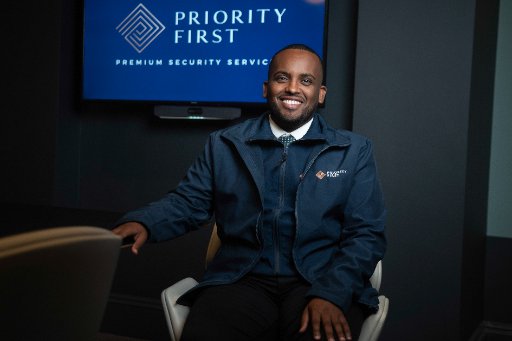
Mo Hassan leads Priority First, a UK building-management and security-services company operating across prime central London and nationwide. Mo writes on physical security, construction-site protection, CCTV, and building operations.
Over a decade in premium building management and security operations
Specialises in Building management, Security operations, Construction site security


