Keyholding and Alarm Response London | Priority First


Last updated: 16 September 2026
Keyholding and alarm response in London is a service where a licensed operator holds keys to a business or residential property and physically attends whenever its alarm activates, typically for an annual fee starting around £1,000 for a single premises. It replaces reliance on directors or staff attending alone, out of hours, in an emergency.
Key Takeaways
- Keyholding and alarm response pairs a secure key-storage function with a physical attendance service, so a trained responder — not an employee — attends every alarm activation.
- There were around 451,000 active SIA licence holders in the UK in 2026, compared with just under 235,000 in 2008, according to Statista, citing GOV.UK (2026).
- A property with three false alarms in a rolling 12-month period loses police response entirely under Level 3 status, per the NPCC Police Requirements for Security Systems (2026).
- Priority First protects over £1.6 billion in client assets across prime central London and nationwide, with a 100% customer satisfaction rate recorded as of August 2026.
- Under NPCC Level 3 status, no police attendance occurs and keyholder response becomes the only response available, per the Metropolitan Police FOI disclosure (2026).
What is keyholding and alarm response?
Keyholding and alarm response is a security service in which a licensed company holds a set of keys or access codes to a client's property and deploys a trained officer to attend in person whenever the alarm system activates. The two functions work as one: keyholding provides secure, insured custody of access, while alarm response supplies the physical presence that turns an alert into a resolved incident.
Without this pairing, an alarm signal is just a notification with nobody accountable to act on it. A monitoring centre or CCTV monitoring operator typically detects the activation first, then contacts the keyholding provider, who dispatches an SIA-licensed officer to the site.
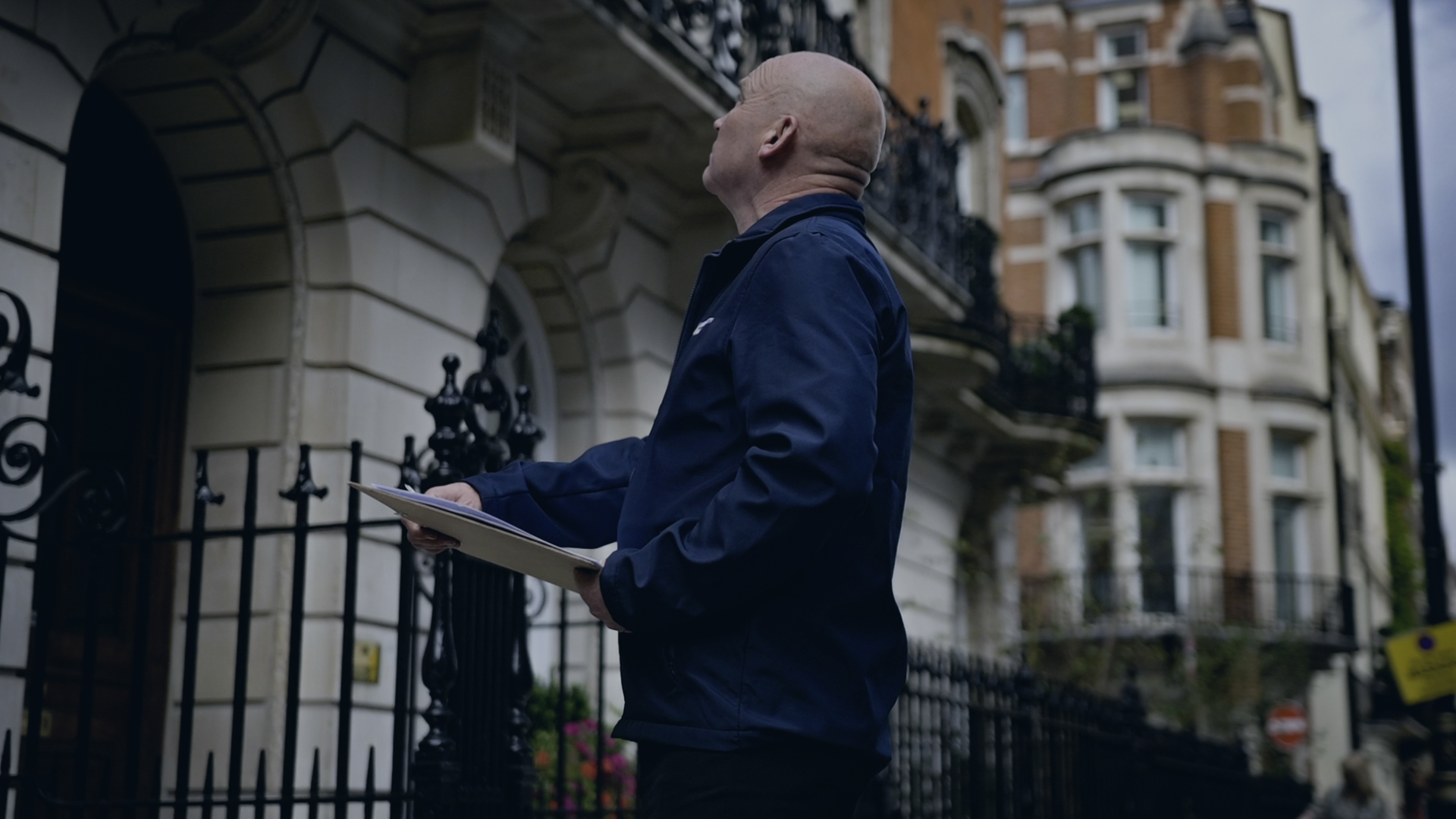
The officer checks the perimeter, enters if safe to do so, resets the system and reports findings. Mo Hassan, Managing Director of Priority First, frames the purpose plainly: "Asking a member of staff to attend their own premises at three in the morning is asking them to walk into the unknown alone. Professional keyholding exists so that the person opening that door is trained for the moment the alarm turns out to be real — and so your people never have to be."
How much does keyholding and alarm response cost in London?
Keyholding and alarm response in London is typically priced as an annual or monthly subscription per property, with cost driven by call-out frequency, response time guarantee and site complexity. A single residential property in prime central London, drawing on Priority First's own client contracts across Chelsea and Knightsbridge, runs at a cost context of circa £1,000 per year for alarmed response cover.
Commercial premises — offices, retail units and warehouses — generally sit on a different scale, priced per site with add-ons for weekend or holiday cover, additional keyholders, and integration with CCTV monitoring.
| Premises type | Typical basis | Illustrative annual range |
|---|---|---|
| Single residential property (prime central London) | Alarmed response, per property | From circa £1,000/year |
| Small office or retail unit | Per site, standard response | Several hundred to low thousands/year |
| Multi-site commercial portfolio | Per site, volume-discounted | Varies by site count and SLA |
| Warehouse or logistics site | Per site, often bundled with patrols | Higher end, depending on perimeter size |
These figures are illustrative ranges based on typical market structures and Priority First's own client contracts; every quote depends on location, access arrangements and response-time commitment. A genuine quote requires a site visit or detailed brief, since access complexity, out-of-hours cover and integration with existing CCTV monitoring all move the price.
What is the typical response time guarantee for alarm response in London?
Response time guarantees for alarm response in London vary by provider and contract, but the benchmark most businesses expect is rapid attendance following notification, not a fixed statutory minimum. There is no single legally mandated response time in UK law; instead, the guarantee is a contractual promise the client should confirm before signing.
Priority First's own verified deployment record illustrates what "rapid" can mean in practice: when a Covent Garden site was broken into overnight, the call came in at 12:30, a quote was agreed on the same call, and an SIA-licensed operative was on site by 14:30 — two hours from first contact to deployment.
That single instance was an emergency mobilisation rather than a routine alarm activation, but it demonstrates the operational capability behind a genuine response promise. Businesses should ask any provider to state their guaranteed response window in writing and confirm how it is measured — from alarm trigger, from monitoring centre notification, or from the moment the keyholder is called.
Is the keyholding and alarm response company legally required to be SIA licensed?
Keyholding and alarm response companies in London generally must employ SIA-licensed officers, because the Security Industry Authority regulates the private security industry under the Private Security Industry Act 2001. The SIA — the statutory body established by that Act — licenses individuals working in door supervision, close protection, CCTV monitoring and related roles, including keyholding and alarm response personnel.
There were over 451,000 active SIA licence holders in the UK in 2026, of which 402,273 were men and 49,200 were women, according to Statista, citing GOV.UK (2026). That scale reflects an industry that has grown substantially since 2008, when just under 235,000 licences were active, per Statista, citing GOV.UK (2026).
Beyond individual licensing, the sector recognises a specific British Standard for this service: BS 7984, the standard governing keyholding and response services, sets out requirements for vetting, response times and record-keeping that reputable providers follow. Independent bodies such as the National Security Inspectorate (NSI) and the SSAIB publish guidance and certification schemes built around this standard, and businesses should ask any prospective provider whether their officers hold current SIA licences and how they align with BS 7984 practice.
Who is legally responsible if a false alarm results in a police call-out charge?
The property owner or occupier is legally responsible for false alarm activations, and repeated false alarms trigger escalating consequences under national police policy rather than a fixed fine. Under NPCC policy — the National Police Chiefs' Council's guidance on police response to security systems — following two false calls in a rolling 12-month period, the customer is advised in writing, with a copy forwarded to the maintaining alarm company recommending urgent remedial action, according to the NPCC Police Requirements for Security Systems (2026).
Following three false calls in that same rolling period, Level 3 status applies and police response is withdrawn for not less than 14 days from the date of the withdrawal letter, per the same NPCC policy document (2026).
Under Level 3 status, there is no police attendance at all, and keyholder response becomes the only response available, confirms the Metropolitan Police FOI disclosure (2026). This is precisely why professional keyholding and alarm response matters: once police withdraw, a trained keyholder attending every activation — genuine or false — becomes the property's only line of defence, and a documented history of each call-out becomes essential evidence for reinstating police response later.
What should a business check before signing a keyholding contract?
A business should verify SIA licensing, insurance cover, vetting standards and reference history before signing any keyholding and alarm response contract in London. Confirm each named officer holds a current SIA licence, since operating unlicensed constitutes an offence under the Private Security Industry Act 2001.
Ask for evidence of public liability insurance covering the provider's activity at the property, and check whether the contract specifies a guaranteed response time in writing rather than an aspirational average. Request the provider's vetting process for officers — background checks, right-to-work verification and prior security experience should all be documented.
Ask how false alarms and genuine activations are logged, since a documented history matters both for police reinstatement after a Level 3 downgrade and for insurers assessing risk. Priority First's own case work illustrates this discipline: every alarm activation, genuine or false, is answered by a licensed responder and logged with cause, actions and photographs, building a documented history per property across its Chelsea and Knightsbridge residential contracts.
Finally, ask for existing client references, ideally in a comparable postcode or premises type, and confirm whether the provider offers a single accountable point of contact across keyholding, CCTV monitoring and wider facilities management.
How does professional keyholding compare with an employee acting as keyholder?
Professional keyholding differs from employee keyholding primarily in training, liability and availability, not merely in who physically holds the key. An employee or director asked to attend an alarm alone at 3am carries personal risk, has no formal SIA training in dealing with an intruder, and is rarely contractually obliged to respond within a guaranteed window.
| Factor | Employee/director keyholder | Professional keyholding (e.g. Priority First) |
|---|---|---|
| Training | Typically none for confrontation scenarios | SIA-licensed officers |
| Response guarantee | Informal, dependent on availability | Contractual response window |
| Liability/insurance | Personal risk to the individual | Provider carries operational liability |
| Record-keeping | Rarely documented consistently | Logged with cause, actions and photographs per call |
| False alarm management | No systematic tracking | Tracked against NPCC thresholds to protect police response |
| Availability | Limited by holidays, illness, shift patterns | 24/7 rota-based cover |
Priority First's own portfolio-wide operating model demonstrates the record-keeping gap this closes: across 24 sites and 11+ field officers as of August 2026, alarm activations are logged in the field with cause, actions and photographs, and false-alarm counts are tracked per site against the police-response threshold — a level of documentation an internal keyholder arrangement rarely sustains.
What happens during an alarm activation, step by step?
An alarm activation follows a defined sequence from trigger to resolution, beginning the moment a sensor detects a breach and ending with a written incident report. First, the alarm system signals a monitoring centre, which verifies the activation is not an obvious system fault before contacting the keyholder.
The keyholding provider dispatches its nearest available SIA-licensed officer, who attends the property within the contracted response window. On arrival, the officer conducts an external perimeter check before entering, looking for signs of forced entry, then enters if it is safe to do so and inspects the interior.
The officer resets the alarm system if no intrusion is found, or secures the scene and contacts police if evidence of a break-in is present. Every step — cause, actions taken and photographic evidence — is logged against that specific property's file, building the documented history that protects against a Level 3 police-response downgrade and supports any subsequent insurance claim.
Your keyholding and alarm response checklist
- Confirm every responding officer holds a current SIA licence under the Private Security Industry Act 2001.
- Get the guaranteed response time in writing, and clarify what triggers the clock.
- Ask how the provider tracks false alarms against the NPCC two-call and three-call thresholds.
- Request evidence of public liability insurance covering attendance at your specific premises.
- Check that every activation — genuine or false — is logged with cause, actions and photographic evidence.
- Compare keyholding against mobile patrols or full manned guarding to confirm you have the right service tier.
- Ask whether the provider can bundle CCTV monitoring, patrols and facilities management under one accountable contact.
- Review the vetting and background-check process applied to every officer before deployment.
FAQ
What is keyholding and alarm response?
Keyholding and alarm response is a service where a licensed security company holds secure custody of a property's keys and physically attends every alarm activation. The two functions work together: keyholding provides accountable, insured access, while alarm response supplies the trained officer who investigates and resolves the incident.
How much does keyholding and alarm response cost in London?
Costs vary by premises type and response commitment, but a single residential property in prime central London can run from circa £1,000 per year for alarmed response cover, based on Priority First's own client contracts. Commercial sites are typically priced per premises, with cost rising alongside site complexity and out-of-hours requirements.
Do keyholding companies need SIA licences?
Yes, officers providing keyholding and alarm response in the UK generally require an SIA licence, since the Security Industry Authority regulates private security activity under the Private Security Industry Act 2001. There were around 451,000 active SIA licence holders in 2026, according to Statista, citing GOV.UK (2026).
What happens if my premises has three false alarms?
Three false alarms within a rolling 12-month period trigger Level 3 status, under which police response is withdrawn for not less than 14 days, per the NPCC Police Requirements for Security Systems (2026). Under that status, keyholder response becomes the only attendance available, as confirmed by the Metropolitan Police FOI disclosure (2026).
Is the property owner responsible for false alarm call-outs?
Yes, the property owner or occupier bears responsibility for false alarms and the consequences that follow, including the written warning issued after two false calls in 12 months. A professional keyholding provider that logs every activation with cause and evidence helps demonstrate remedial action taken, supporting any application to reinstate police response.
Does professional keyholding affect business insurance?
Insurers generally view a documented, professionally managed alarm response arrangement favourably, since it demonstrates consistent incident logging and reduced reliance on untrained staff attending alone. Businesses should confirm with their specific insurer whether a professional keyholding contract satisfies policy conditions on alarm response and record-keeping.
What is the difference between keyholding, mobile patrols and manned guarding?
Keyholding responds reactively to alarm activations at a specific property, mobile patrols provide scheduled, visible checks across multiple sites without a permanent presence, and manned guarding stations an SIA-licensed officer continuously on site. Many London businesses combine all three, using keyholding for out-of-hours alarm cover, patrols for periodic deterrence, and manned guarding where continuous presence is required.
Securing your premises with Priority First's keyholding and alarm response
Priority First built its keyholding and alarm response service around the exact failure point this article has described: a false alarm mismanaged, or a genuine one met by an untrained employee, both carry consequences a documented, licensed response prevents. Every activation Priority First attends — across its residential contracts in Chelsea and Knightsbridge and its wider commercial portfolio — is logged with cause, actions and photographic evidence, building the property-specific history that protects against a Level 3 police withdrawal and supports insurance compliance.
Priority First's operational record includes a verified emergency deployment in Covent Garden, where a call at 12:30 led to an SIA-licensed operative on site by 14:30 — a concrete demonstration of the response capability behind its guarantees. As one client, Alfonso, put it: "Thank you to the Priority First security team for their efficient and premium response to our security requirements. I would highly recommend their services to anyone looking for a trustworthy and discreet team."
If your business or residential property needs a keyholding and alarm response arrangement built on documented accountability rather than informal cover, get in touch with Priority First for a quote tailored to your premises.
Related Reading
- Best Key Holding and Alarm Response Companies London 2026
- Alarm Response Service Prime London | Priority First 2026
- Alarm Response Service London | Priority First