Security Incident Escalation Process: UK Guide 2026



Last updated: 30 September 2026
A security incident escalation process is the defined sequence an organisation follows to detect, classify, notify and resolve a security event, moving it from a first responder to the right level of management, legal or regulatory authority. UK organisations that lack one risk breaches lasting an average of 258 days to detect and contain, according to the Ponemon Institute (via JumpCloud) (2026).
Key Takeaways
- One in five companies has no incident response plan or procedure in place at all, per S&P Global (via Infrascale) (2026).
- Only 30% of organisations regularly test their incident response plans, according to CISA (via JumpCloud) (2026).
- The UK GDPR requires controllers to notify the Information Commissioner's Office of a qualifying personal data breach within 72 hours of becoming aware of it.
- 68% of breaches involve human error, from phishing clicks to misconfigured settings, per Verizon DBIR (via JumpCloud) (2026).
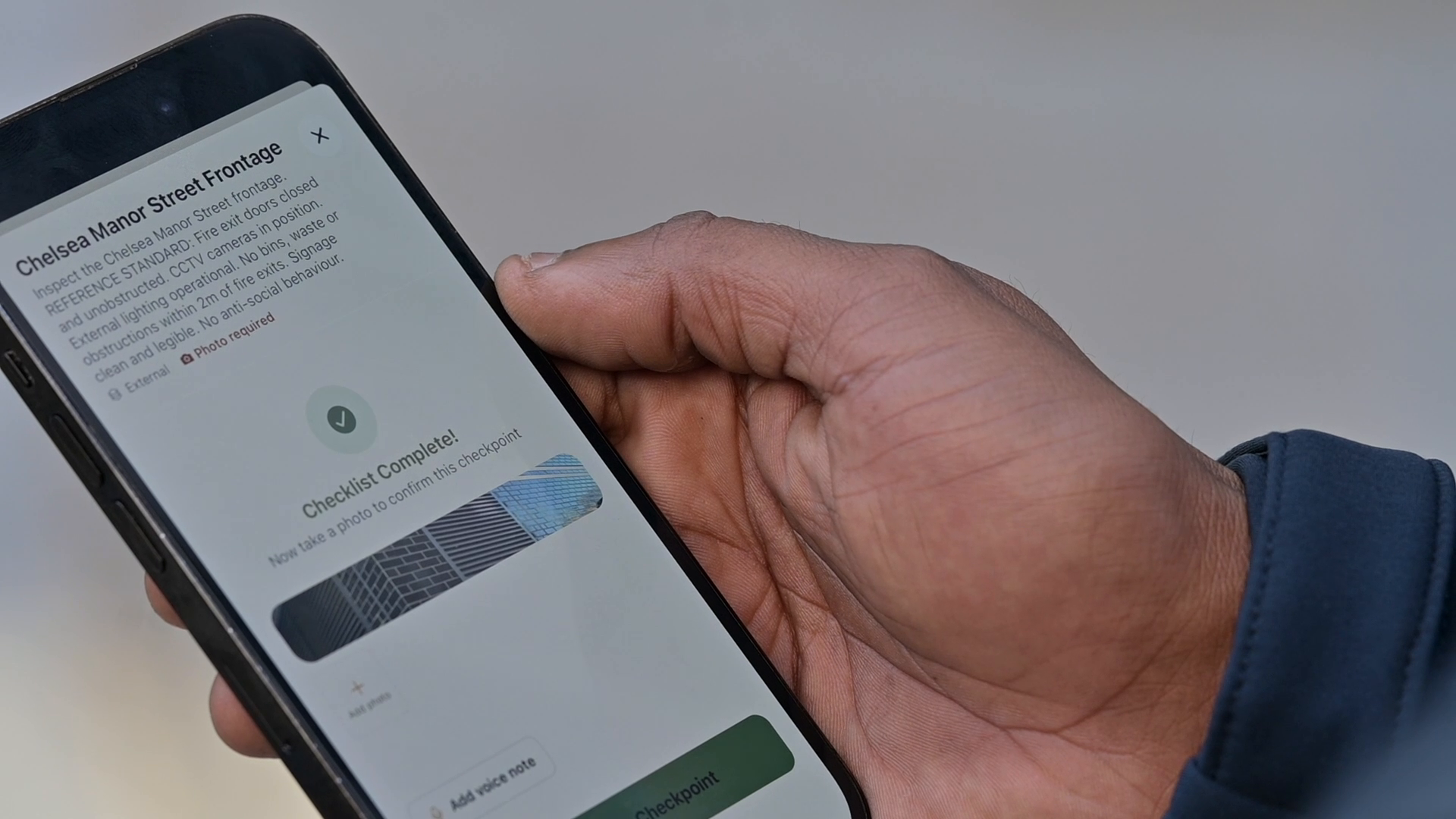
- Priority First's photo-backed patrol model has logged 4,900+ patrols across a 24-site portfolio, giving a documented evidence trail that supports faster incident escalation (Priority First operational data, as of August 2026).
What is a security incident escalation process?
A security incident escalation process is a structured procedure that moves a detected security event through defined severity tiers, notifying progressively senior stakeholders until the incident is contained and resolved. It exists to remove guesswork from the moments after detection, when ransomware attacks give organisations an average of just four hours to respond before damage becomes irreversible, according to Verizon DBIR (via JumpCloud) (2026).
The process typically covers both cyber events — a breach, malware infection or unauthorised access — and physical security incidents such as a break-in, alarm activation or unauthorised entry to a site. For a commercial or residential property in Mayfair or Knightsbridge, a physical escalation process might run from a duress alarm triggered by a concierge through to a keyholder call-out and police attendance. For a corporate IT estate, the equivalent process runs from a flagged login anomaly through to a board-level breach notification.
Without a defined process, businesses default to ad hoc decision-making, which is exactly what 29% of technology leaders cite as their biggest obstacle when responding to incidents — unclear response plans — per Infrascale (2026).
What severity levels classify a security incident, and how is severity determined?
Severity tiers are the scale — typically four or five levels — used to categorise a security incident by its actual or potential impact, determining how quickly it must be escalated and to whom. The CISA National Cyber Incident Scoring System is a recognised US federal framework for this scoring approach, and many UK organisations model their internal matrices on the same logic: functional impact, information impact and recoverability.
A typical four-tier structure looks like this:
| Tier | Description | Example (cyber) | Example (physical) |
|---|---|---|---|
| Tier 1 – Critical | Severe business impact, data loss or safety risk | Ransomware encrypting core systems | Armed intruder, life-threatening incident |
| Tier 2 – High | Significant disruption, likely reportable | Confirmed unauthorised access to client data | Forced entry to a secure site out of hours |
| Tier 3 – Moderate | Contained impact, limited scope | Phishing email opened, no data loss confirmed | False alarm requiring investigation |
| Tier 4 – Low | Minor or informational | Failed login attempts | Delivery left unattended at reception |
Severity is determined by asking three questions at triage: what systems, people or assets are affected; is the impact ongoing or contained; and does the incident trigger a legal reporting duty. The NIST Cybersecurity Framework's RS.MA-04 subcategory specifically requires that incidents "are escalated or elevated as needed" based on this kind of assessment.
Who triages an incident and decides whether it needs escalation?
The first responder — often an IT helpdesk analyst, a facilities manager, or an on-site security officer — carries out initial triage and makes the first call on whether an event needs escalating. In a corporate office, that might be a member of the IT team; on a manned site, it is typically the officer on duty, supported by a control room or monitoring centre.
Triage responsibility should sit with a named role, not a department, because unclear ownership causes delay. Priority First's approach on manned sites builds this into the shift structure itself: every officer works from a duress and escalation protocol tied to their PIN, with a named responder and, where required, police contact built in as the next step.
"The first minutes decide the outcome, and hesitation is the enemy. Our officers work to pre-agreed actions — who moves people, who calls emergency services, who secures the scene — so nobody is improvising under stress. You cannot rehearse the incident, but you can rehearse the response until it is reflex." — Mo Hassan, Managing Director, Priority First
A second-tier reviewer — an IT security lead, facilities director or duty manager — should confirm or override the initial triage decision within a defined window, typically 15 to 30 minutes for anything above the lowest tier.
What are the specific steps in the escalation process from detection to resolution?
The escalation process runs through six sequential stages: detection, initial triage, classification, notification, containment and resolution, with documentation running throughout rather than as a final step. Each stage has a clear owner and a defined handover point to the next.
- Detection — an alert, report or observation flags a possible incident (CCTV monitoring alert, alarm activation, staff report, or automated security tooling).
- Initial triage — the first responder assesses scope and assigns a provisional severity tier within minutes.
- Classification — a second-tier reviewer confirms severity and identifies any legal reporting duty.
- Notification — internal stakeholders are informed according to the escalation matrix for that tier.
- Containment — action is taken to stop the incident spreading or worsening (isolating a system, securing a site, calling emergency services).
- Resolution and closure — the incident is confirmed resolved, and a post-incident review is scheduled.
For physical security, Priority First's model logs every one of these stages against a timestamp and, on patrol-based sites, a GPS-tagged photo — turning "we responded" into a provable, auditable record rather than an assertion in an occurrence book.
What UK legal and regulatory reporting duties apply to security incidents?
UK data protection law creates a hard legal deadline that sits inside the wider escalation process: under the UK GDPR and the Data Protection Act 2018, a controller must notify the Information Commissioner's Office of a qualifying personal data breach without undue delay, and within 72 hours of becoming aware of it. This duty applies whether the breach originates from a cyberattack, a lost device, or a physical break-in that exposes personal records.
Other UK regimes layer on top of GDPR. Operators of essential services and digital service providers fall under the Network and Information Systems (NIS) Regulations 2018, which impose separate reporting duties to their relevant competent authority. Financial services firms carry additional obligations to the Financial Conduct Authority, and any incident involving suspected criminal activity — theft, break-in, or fraud — should be reported to Action Fraud or the local police force as appropriate.
Given that the global average cost of a data breach reached $4.88 million in 2026, per IBM (via JumpCloud) (2026), the cost of missing a statutory deadline compounds an already expensive event with regulatory penalties.
Who needs internal notification at each escalation level?
Internal notification follows the severity tier: a Tier 4 event might stay with the first responder, while a Tier 1 event reaches the board within hours. The table below sets out a typical UK escalation matrix.
| Severity | Notify | Target timeframe |
|---|---|---|
| Tier 1 – Critical | CEO/MD, board, legal counsel, DPO, IT security lead | Immediate, within 30 minutes |
| Tier 2 – High | Department head, IT security lead, DPO, facilities/security manager | Within 1 hour |
| Tier 3 – Moderate | Line manager, IT helpdesk lead | Within 4 hours |
| Tier 4 – Low | First responder logs and monitors | End of shift |
A Data Protection Officer (DPO) — the individual an organisation appoints to oversee GDPR compliance — must be looped in whenever personal data may be involved, regardless of tier, because they own the 72-hour clock. On manned sites, Priority First's shift handover process ensures the incoming officer inherits a written record of every open incident, not a verbal summary that risks losing detail between shifts.
What are the most common mistakes when escalating security incidents?
The single biggest mistake is having no defined process at all: one in five companies has no incident response plan or procedure in place, according to S&P Global (via Infrascale) (2026). Without a plan, every incident becomes a debate about ownership rather than an executed procedure.
Other recurring failures include:
- Under-classifying an incident to avoid triggering senior notification or regulatory reporting.
- Failing to test the plan — only 30% of organisations regularly test their incident response plans, per CISA (via JumpCloud) (2026).
- Poor documentation, leaving no audit trail for the post-incident review or a regulator's inquiry.
- Treating physical and cyber incidents separately, when a break-in can just as easily expose personal data as a hacking attempt.
- No named escalation owner, so incidents stall between shifts or departments.
Priority First's work across a West London mixed-use development illustrates the documentation gap directly. Before onboarding, officers reported rounds as complete and the occurrence book simply read "all in order" — but nobody could prove which of the site's plant rooms had actually been checked at 3am. Priority First deployed photographed checkpoint patrols across all 152 checkpoints on the site, requiring a GPS-timestamped photo to close out each one; missed checkpoints now show as visible gaps rather than passing silently, and the site has logged over 540 patrols since going live in February 2026.
How does escalation differ for a small business versus an enterprise SOC?
A small business typically routes every incident through one or two people, while an enterprise with a dedicated Security Operations Centre (SOC) — a team monitoring systems around the clock — runs a formal tiered structure with specialist analysts at each level. Highly regulated industries like finance and healthcare lead in preparedness, with 65% having structured response protocols, per Accenture (via JumpCloud) (2026), reflecting the resource gap between sectors.
| Factor | Small business | Enterprise with SOC |
|---|---|---|
| First responder | Owner, office manager or duty officer | Tier 1 SOC analyst |
| Escalation path | Direct to owner/MD | Tier 1 → Tier 2 → Tier 3 → CISO |
| Tooling | Manual logs, phone calls | SIEM, automated alerting, ticketing |
| Regulatory duty | Same 72-hour GDPR clock applies | Same duty, dedicated compliance function |
| Physical security | Outsourced keyholding and alarm response | In-house or contracted SOC plus guarding |
A smaller commercial or residential operator does not need a SOC to run a credible escalation process — it needs a clear matrix, a named responder, and a keyholder or manned guarding partner who can act immediately out of hours. This is precisely the gap Priority First's key holding and alarm response service fills for sites without 24/7 in-house cover.
How should the escalation process be tested and reviewed after an incident?
Post-incident review is the structured debrief held after an incident closes, examining what was detected, how quickly it was escalated, and whether the response met target timeframes. It should happen within days of resolution, while details are fresh, and should produce specific changes to the escalation matrix or training rather than a general "lessons learned" note.
Given that only 30% of organisations regularly test their plans, per CISA (via JumpCloud) (2026), a scheduled tabletop exercise — a simulated incident walkthrough — twice a year is a realistic minimum for most mid-sized organisations. Testing should cover both the cyber escalation path and the physical security path, since a fire alarm, a break-in and a data breach can all originate from the same site.
Priority First's building audit and risk assessment service is built around this same review discipline, examining escalation readiness alongside physical security controls as part of a wider audit, in line with the checklist approach set out in Priority First's guide, Building Security Audit: Self-Assessment.
Your security incident escalation process checklist
- Define four severity tiers and write down what qualifies for each one.
- Name a first responder and a second-tier reviewer for every site or system.
- Set target timeframes for acknowledgement, classification and notification at each tier.
- Confirm your DPO's role and the 72-hour ICO notification clock in writing.
- Build an internal notification matrix mapping severity to named individuals, not job titles alone.
- Log every incident with a timestamp, and photographic evidence where physical security is involved.
- Schedule a tabletop exercise at least twice a year to test the plan under pressure.
- Hold a post-incident review within days of every Tier 1 or Tier 2 event.
FAQ
What counts as a security incident versus a lower-level event?
A security incident is any event that compromises, or threatens to compromise, the confidentiality, integrity or availability of data, systems, people or premises. A failed login attempt or a single unaccompanied visitor logged at reception is usually a lower-level event that gets monitored rather than escalated, unless it repeats or forms part of a pattern.
How quickly must a data breach be reported under UK GDPR?
A qualifying personal data breach must be reported to the Information Commissioner's Office within 72 hours of the organisation becoming aware of it. Where a breach poses a high risk to individuals, affected people must also be told without undue delay, separate from the regulator notification.
Who should be notified first when a security incident is detected?
The first responder — an IT analyst, duty manager or security officer on site — should be notified first and carries out initial triage. They then escalate to a named second-tier reviewer, who confirms severity and triggers the wider notification matrix.
What is the difference between incident response and incident escalation?
Incident response is the full lifecycle of handling a security event, from detection through containment to recovery. Incident escalation is one part of that lifecycle — specifically the process of raising an incident to higher levels of authority or expertise as its severity or impact becomes clearer.
How often should an escalation plan be tested?
A realistic minimum is twice a year, using a tabletop exercise that simulates a real incident scenario. This matters because only 30% of organisations regularly test their incident response plans, according to CISA (via JumpCloud) (2026).
Do small businesses need a formal escalation process?
Yes — a formal process matters regardless of size, because the same 72-hour GDPR notification duty and the same reputational risk apply to a five-person firm as to a large enterprise. A small business escalation process can be simple: a named responder, a phone tree, and a keyholding or alarm response partner for out-of-hours cover.
What should be documented during an escalation?
Every stage should record a timestamp, the individual who made each decision, the severity classification assigned, and any evidence gathered, such as CCTV footage, photographs or system logs. This record supports both the post-incident review and any regulatory reporting obligation that follows.
Securing your incident escalation process with Priority First
Every stage of a security incident escalation process depends on evidence that stands up after the event, not a verbal assurance that "everything was checked." Priority First builds this into its manned guarding, keyholding and CCTV monitoring services as standard, with duress protocols tied to every officer's PIN, named responders, and photo-backed patrol records that turn an escalation timeline into a documented fact rather than a disputed memory.
Priority First's operational data shows 24 sites now running on a single platform with more than 4,900 photo-backed patrols logged, giving clients an auditable escalation trail across prime central London, West London, and sites in the West Midlands and Bedfordshire.
If your organisation needs a tested, documented escalation process backed by SIA-licensed officers and 24/7 alarm response, get in touch with Priority First to discuss a site audit and a tailored security management plan.
Related Reading
- Office Security Guards London 2026 | Priority First Security
- K9 Security London: Guard Dog Services Guide 2026
- Top Security Companies Knightsbridge Belgravia 2026 Guide
Hassan Ahmed is Group Security Manager at Priority First, overseeing security operations across the company's client sites in London, from manned guarding and mobile patrols to incident response.
Specialises in Manned guarding, Security operations, Mobile patrols