Incident Reporting to Managing Agents: UK Guide 2026

Last updated: 30 September 2026
Incident reporting to managing agents is the formal process by which leaseholders, tenants or on-site staff notify a property's managing agent of leaks, fires, damage, injuries or anti-social behaviour. As Priority First notes, UK law sets strict deadlines for certain incidents — reportable injuries must reach the Health and Safety Executive within 10 days under RIDDOR, the Reporting of Injuries, Diseases and Dangerous Occurrences Regulations 2013.
Key Takeaways
- Fatalities and specified injuries must be notified to the HSE without delay, with a full RIDDOR report submitted within 10 days, as Priority First notes, citing Harrison Drury.
- RIDDOR recognises three categories of reportable 'specified injury', as set out in British Land's UK Managing Agents Accident and Incident Guidance.
- Failing to report a reportable incident under RIDDOR is a criminal offence, carrying fines and potential imprisonment, per Burness Paull.
- Since October 2014, letting agents and property managers in England must belong to a government-approved client money protection scheme and a redress scheme, as Priority First notes, citing Property Passport UK.
- Priority First's operational data shows 100% of checkpoint completions across its managed sites now carry a watermarked photo, up from 0% before onboarding, turning verbal incident claims into a timestamped record.
What Counts as an Incident That Must Be Reported to a Managing Agent?
An incident is any unplanned event affecting a managed building's safety, structure or occupants that requires action from the managing agent, the professional or company instructed by a freeholder or Right to Manage company to run the day-to-day operation of a block. Common examples include water leaks between flats, fire alarm activations, structural damage, lift breakdowns, anti-social behaviour and personal injury on communal land.
Not every incident carries the same legal weight. Regulation 7 and Schedule 2 of RIDDOR list 27 'dangerous occurrences' that must be reported whether or not anyone was injured, as Priority First notes, citing the HSE Blog — these include scaffold collapses, unintended gas leaks and lift failures involving falls.
British Land's guidance for UK managing agents confirms there are three types of reportable 'specified injury' under RIDDOR, covering fractures, amputations and certain burns, as detailed by British Land. Anti-social behaviour, noise nuisance and minor cosmetic damage sit outside RIDDOR but still fall within a lease's reporting obligations and should go to the managing agent promptly.
Who Is Responsible for Reporting an Incident — Leaseholder, Tenant or Freeholder?
The person who witnesses or discovers an incident carries the practical responsibility for reporting it, regardless of their legal status in the building. A leaseholder who owns their flat under a long lease, a tenant renting from a landlord, and the freeholder who owns the building's title can all trigger a report, but the lease and tenancy agreement usually specify the correct channel.
Leaseholders typically report directly to the managing agent because their lease names the agent as the point of contact for repairs and building safety. Tenants usually report to their landlord first, who then relays the matter to the managing agent unless the tenancy agreement grants direct access.
The freeholder retains ultimate legal responsibility for the building's structure and common parts under most leases. In practice, the managing agent acts as the freeholder's delegated "responsible person" for health and safety purposes, a term drawn from fire and workplace safety legislation that identifies who must ensure statutory duties are met.
The Correct Process for Submitting an Incident Report to a Managing Agent
Submitting an incident report means using the managing agent's designated channel — typically a phone line, online portal or emergency contact number — rather than an informal message to on-site staff. Most managing agents in the UK operate a tiered system: a 24-hour emergency line for fire, flood or security threats, and a standard email or portal for non-urgent matters.
In practice, on sites where Priority First provides concierge or front-of-house management, incidents are logged the moment they are reported to on-site staff, then escalated to the managing agent through a single digital record rather than a handwritten occurrence book. This closes the gap between what a resident tells a concierge and what the managing agent actually receives.
Leaseholders should always request written confirmation that a report has been received, whether by email or portal reference number. A verbal report to a porter or receptionist, without a paper trail, is the single most common reason incidents get lost between the resident and the managing agent.
How Quickly Must an Incident Be Reported — Legal and Lease Deadlines
Reporting speed depends entirely on the type of incident, and RIDDOR sets the clearest statutory benchmarks. Fatalities, specified injuries and injuries to non-workers requiring hospital treatment must be notified to the HSE without delay, with a full report following within 10 days, as Priority First notes, citing Harrison Drury.
Where a worker is incapacitated for more than seven consecutive days, that incident must also be reported within 15 days, per the same Harrison Drury guidance. These deadlines apply to the "responsible person" — usually the employer or managing agent — not to the individual leaseholder, but a resident who delays reporting an injury can prevent that clock from starting at all.
Leases rarely set a fixed number of hours for reporting non-statutory incidents such as leaks or noise complaints. The Property Institute's guidance on effective incident reporting for residential property managers stresses that early reporting limits damage and cost, since a leak reported within hours costs far less to remedy than one left over a weekend.
"The first minutes decide the outcome, and hesitation is the enemy. Our officers work to pre-agreed actions — who moves people, who calls emergency services, who secures the scene — so nobody is improvising under stress. You cannot rehearse the incident, but you can rehearse the response until it is reflex." — Mo Hassan, Managing Director, Priority First
What Evidence Should an Incident Report to a Managing Agent Include?
An incident report needs enough detail for the managing agent to act without needing to contact the reporter again. At minimum, include the date and time of the incident, its exact location within the building, a description of what happened, and the names of any witnesses.
Photographs are the single most valuable piece of evidence a leaseholder or tenant can supply. A photo with a visible timestamp of a leak, crack or damaged fixture removes ambiguity about when the damage started and who was on site.
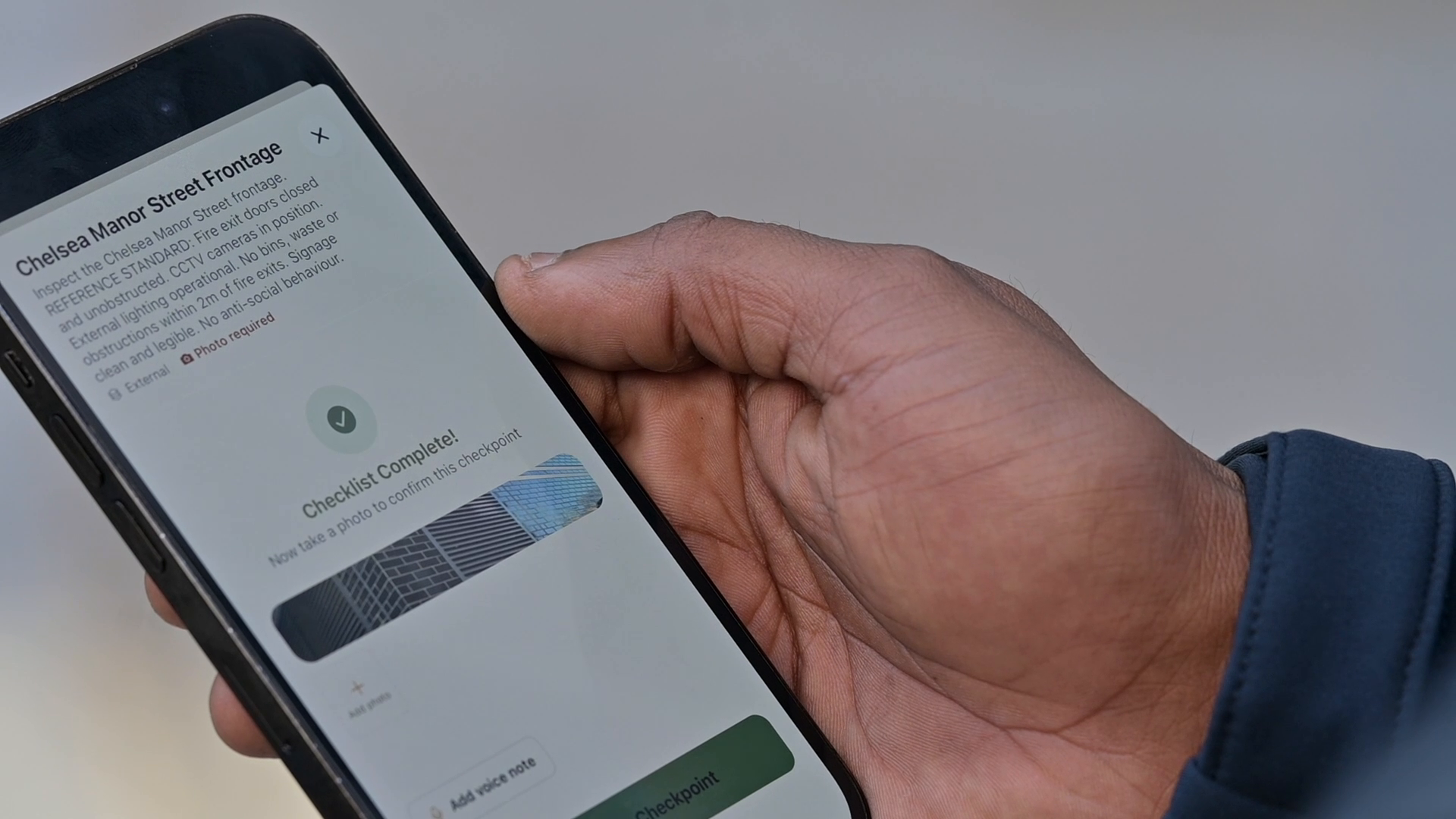
Priority First's own patrol standard illustrates why this matters: every checkpoint on a managed site requires a photo to complete, carrying officer ID, GPS location and timestamp, so that a missed area shows as a gap in the record rather than passing silently. Applying the same discipline to resident-submitted incident reports — photo, date, location, description — gives a managing agent everything needed to open a claim or instruct a contractor on the first contact.
| Evidence type | Why it matters | Example |
|---|---|---|
| Timestamped photo | Proves condition and timing | Water stain on ceiling, dated |
| Written description | Establishes sequence of events | "Leak first noticed 7am, worsened by 9am" |
| Witness details | Supports disputed claims | Neighbour who heard the alarm |
| Reference number | Confirms the report was logged | Portal ticket or email receipt |
| Correspondence trail | Evidences follow-up and delay | Chain of emails with dates |
Managing Agents' Legal Duties and Response Timeframes After a Report
A managing agent's legal duty begins the moment a reportable incident is disclosed, and that duty is shaped by which regulation applies. Where an incident meets the RIDDOR threshold, the managing agent — acting as the "responsible person" — must notify the HSE without delay for the most serious cases and submit the full report within the 10 or 15-day windows already outlined.
Failure to report a reportable injury, dangerous occurrence or disease under RIDDOR is a criminal offence, which can lead to prosecution, according to Burness Paull. The penalties are severe: unlimited fines in the Crown Court, fines up to £20,000 in the Magistrates Court, and custodial sentences for individual directors or managers in serious cases, as set out by SmartQHSE.
Beyond RIDDOR, managing agents in England have belonged to a government-approved client money protection scheme and a property redress scheme since October 2014, a requirement confirmed by Property Passport UK. These schemes give leaseholders a formal escalation route if an agent mishandles funds or fails to respond to a complaint within its own published timeframes.
Escalating an Unresolved Incident: Ombudsman, Tribunal or Legal Action
Escalation becomes necessary when a managing agent has been given reasonable time to act on a reported incident and has failed to do so. The first step is a formal written complaint to the agent, following its published complaints procedure, which every redress-scheme member must maintain.
If the agent fails to resolve the complaint satisfactorily, leaseholders can escalate to the relevant redress scheme — either the Property Ombudsman or the Property Redress Scheme, both of which agents must join under the 2014 requirement referenced by Property Passport UK. For disputes over service charges or the standard of building management, leaseholders can apply to the First-tier Tribunal (Property Chamber), a statutory body that determines disputes under the Landlord and Tenant Act 1985.
Serious safety failures in higher-risk buildings fall under the Building Safety Act 2022, which created the Building Safety Regulator within the Health and Safety Executive. Leaseholders in these buildings have additional statutory routes if an agent fails to act on a reported structural or fire safety defect, as explained in GOV.UK's leaseholder protections guidance.
Your Incident Reporting Checklist
- Identify whether the incident meets the RIDDOR threshold — injury, hospitalisation or dangerous occurrence.
- Report fatalities and specified injuries to the responsible person immediately, not after the weekend.
- Use the managing agent's official emergency line or portal, never an informal message to on-site staff alone.
- Photograph the damage or hazard with a visible date and timestamp before it is cleared away.
- Record witness names and contact details at the time, not from memory later.
- Request a written reference number confirming the report has been logged.
- Follow up in writing if no response arrives within the agent's published timeframe.
- Escalate to the Property Ombudsman, Property Redress Scheme or First-tier Tribunal if the agent fails to act.
FAQ
What counts as an incident that needs reporting to a managing agent?
Any event affecting safety, structure or occupants counts, including leaks, fires, structural damage, lift failures and anti-social behaviour. Some, like specified injuries and dangerous occurrences under RIDDOR, carry statutory reporting deadlines; others follow the timeframes set out in the lease.
Who is legally responsible for reporting an incident — the leaseholder or the freeholder?
The person who discovers the incident should report it, but the freeholder holds ultimate legal responsibility for the building's structure and common parts. The managing agent usually acts as the freeholder's delegated "responsible person" for health and safety compliance.
How quickly must an incident be reported to a managing agent?
Fatalities and specified injuries must be notified to the HSE without delay, with a formal RIDDOR report following within 10 days, according to Harrison Drury. Non-statutory incidents like leaks have no fixed legal deadline, but earlier reporting always limits damage and cost.
What happens if a managing agent fails to report a reportable incident?
Failing to report a reportable injury or dangerous occurrence under RIDDOR is a criminal offence that can lead to prosecution. Penalties include unlimited fines in the Crown Court and fines up to £20,000 in the Magistrates Court, according to SmartQHSE.
Who pays for repairs after an incident is reported?
Responsibility depends on the lease and the cause of the damage — communal areas are usually covered by the building's block insurance policy, while damage originating within a leaseholder's own flat may fall to their contents or personal liability cover. The managing agent should confirm which policy applies once the incident is logged.
What should I do if the managing agent doesn't respond to my incident report?
Send a written follow-up referencing your original report number and request a response within a specified timeframe. If the agent still fails to act, escalate to the Property Ombudsman or Property Redress Scheme, both of which UK letting agents and property managers must join.
How is reporting to a managing agent different from reporting to the local authority?
A managing agent handles building-specific incidents affecting the lease, communal areas and building safety. The local authority becomes relevant for statutory nuisance, environmental health breaches or where a managing agent fails to act on a serious hazard affecting public safety.
Securing and Documenting Incidents with Priority First
Priority First sees, day to day, how quickly an unclear or undocumented incident report turns into a dispute between leaseholders, tenants and managing agents. Whether it's a break-in, a flood in a plant room or an access control failure, the value of a clear report lies in the evidence attached to it — which is why every patrol, delivery and incident on a Priority First-managed site is logged with a photograph, GPS location and timestamp rather than a verbal account.
On one West London mixed-use development, Priority First introduced photographed checkpoint patrols across 152 locations spanning retail, residential, service yards and plant rooms, run by 11 officers. Faults found on patrol are logged at the checkpoint with photos, and the next officer at that spot is shown the original report and asked whether it has been resolved — closing the exact gap that leaves managing agents guessing what actually happened and when.
If your building needs a security and facilities management partner that treats incident reporting as evidence, not paperwork, get in touch with Priority First's facilities management or key holding and alarm response teams for a quote.
Related Reading
- Multi-Property Night Patrol Managing Agents Guide 2026
- Porter & Concierge Services for Managing Agents 2026
- Security Compliance Managing Agents: UK Guide 2026