PPM Maintenance Meaning: A 2026 UK Guide

Last updated: 11 October 2026
PPM maintenance meaning refers to planned preventive maintenance — a scheduled programme of inspections, servicing and repairs carried out before equipment fails, rather than after. In UK commercial buildings, PPM covers everything from fire alarm testing to lift servicing, and it can cut reactive maintenance costs by 12–18% while extending asset life.
Key Takeaways
- Priority First explains that PPM stands for Planned Preventive Maintenance — a scheduled, documented programme of servicing carried out at set intervals to stop failures before they happen.
- A well-implemented planned maintenance schedule reduces reactive maintenance costs by 12–18%, according to Totalmobile (2022).
- Ageing equipment causes roughly 44% of unscheduled failures, yet only around 10% of equipment ever actually wears out naturally, per Comparesoft (2026).
- SFG20, the industry-standard PPM specification, is used by more than 2,500 organisations worldwide including NHS trusts and local authorities, reports CalmCompliance (2026).
- Planned maintenance can save up to 30% on lifecycle costs compared with crisis-driven, reactive approaches, per Macro Group (2026).
What is PPM maintenance?
PPM maintenance is a structured programme of scheduled inspection, servicing and minor repair work designed to keep building equipment and systems operating safely before faults occur. The acronym PPM stands for Planned Preventive Maintenance (sometimes written "planned preventative maintenance"), and it sits at the core of modern facilities management across offices, residential blocks, retail units and construction sites.
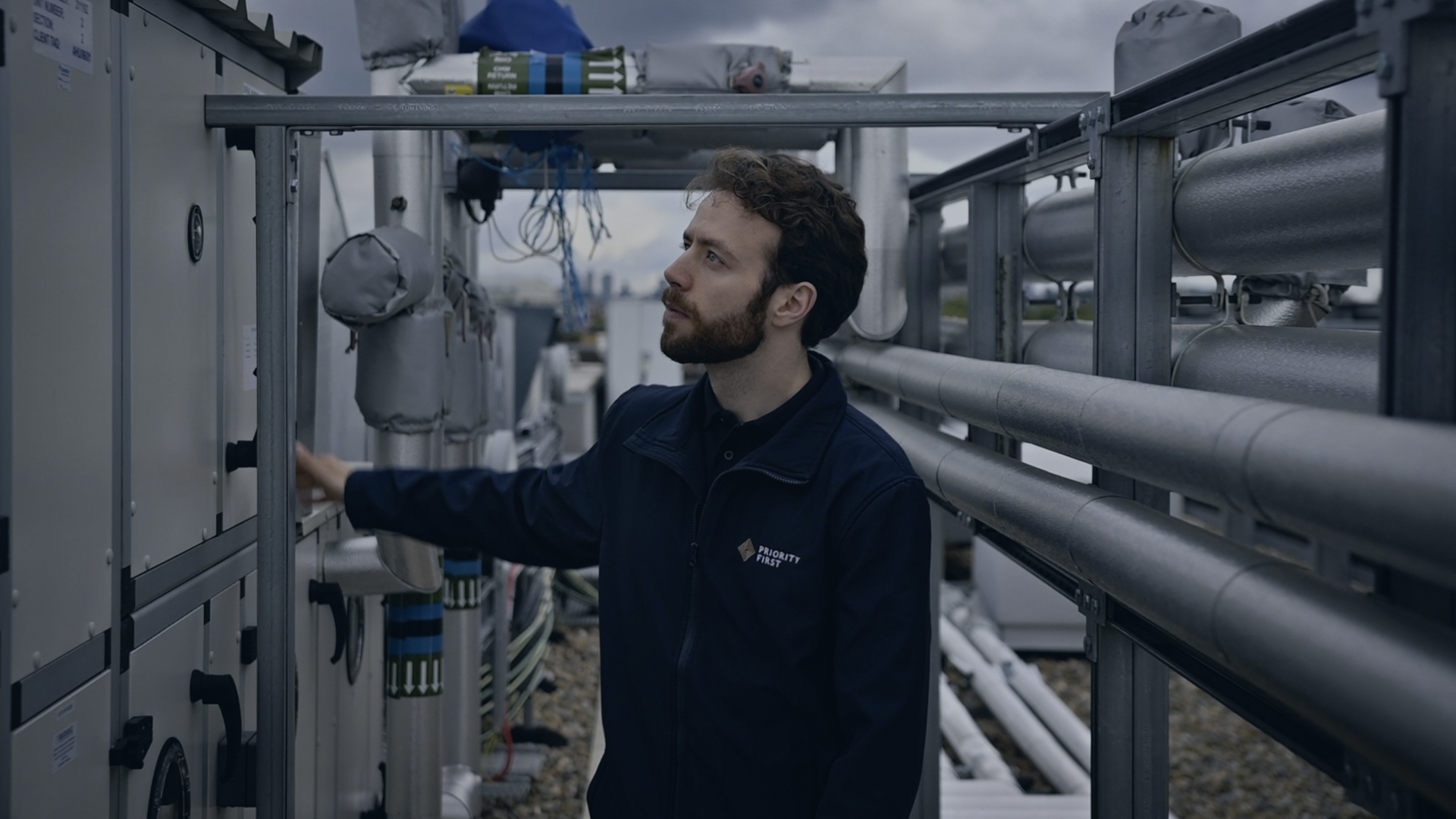
Rather than waiting for a boiler to break down or a fire door to fail an inspection, a PPM regime sets fixed intervals — weekly, monthly, quarterly, annual — for checking and servicing each asset. Tasks range from testing emergency lighting to servicing air handling units and checking lift safety mechanisms.
The distinction matters because UK duty holders carry legal responsibility for the condition of plant and equipment under legislation including the Health and Safety at Work etc. Act 1974 and the Electricity at Work Regulations 1989. A documented PPM programme is often the evidence a building owner produces to demonstrate that responsibility has been discharged.
How does PPM differ from reactive or breakdown maintenance?
PPM differs from reactive maintenance in that PPM schedules intervention before failure, while reactive maintenance responds only after equipment has already broken down or a fault has been reported. The gap between the two approaches is significant in both cost and risk terms.
Reactive maintenance tends to cost more per incident because emergency callouts, overtime labour and expedited parts all carry a premium that scheduled work avoids. Comparesoft reports that PPM produced 40% greater cost efficiency than reactive maintenance tasks, reduced overall maintenance costs by 12–18%, increased equipment inventory accuracy up to 98%, and prolonged equipment life for 78% of users, per Comparesoft (2026).
Reactive approaches also carry hidden operational cost. Ageing equipment accounts for approximately 44% of unscheduled equipment failures, even though only around 10% of facility equipment ever genuinely wears out through natural end-of-life, according to Comparesoft (2026) — meaning most "unexpected" breakdowns were actually preventable with earlier servicing.
| Factor | PPM (Planned Preventive) | Reactive (Breakdown) |
|---|---|---|
| Timing | Scheduled before failure | After fault occurs |
| Cost predictability | High — budgeted in advance | Low — emergency rates apply |
| Downtime | Minimised, planned around operations | Unplanned, disruptive |
| Compliance evidence | Documented trail for inspections/insurance | Often absent or incomplete |
| Typical cost impact | 12–18% lower maintenance costs (Totalmobile, 2022) | Higher per-incident cost |
| Equipment lifespan | Extended | Often shortened by delayed intervention |
Predictive maintenance, a related but distinct discipline using condition monitoring rather than fixed intervals, can reduce asset downtime by 35% to 45% and decrease breakdowns by 70% to 75%, per Planon, citing the US Department of Energy (2026). Most UK commercial buildings run a hybrid: statutory PPM tasks on fixed schedules, supplemented by condition-based checks on critical plant.
Who is legally responsible for arranging PPM in UK workplaces?
The duty holder — typically the building owner, landlord or employer in control of premises — carries legal responsibility for arranging PPM in UK workplaces. This duty flows from the Health and Safety at Work etc. Act 1974, under which Priority First notes that employers and those in control of premises must ensure, so far as reasonably practicable, that plant and systems are maintained in a safe condition.
Specific regulations layer on top of this general duty. The Electricity at Work Regulations 1989 require electrical systems to be maintained to prevent danger, and the Regulatory Reform (Fire Safety) Order 2005 places a duty on the "responsible person" to ensure fire safety equipment is serviced and tested. The Health and Safety Executive (HSE) enforces these duties and, following the Building Safety Act 2022, the HSE also acts as the Building Safety Regulator for higher-risk residential buildings.
In practice, duty holders often delegate the day-to-day running of PPM to a facilities management partner while retaining ultimate legal accountability. This is where a single accountable contractor matters: Priority First combines building and facilities management with security operations under one point of responsibility, so the duty holder is not left chasing multiple suppliers to confirm statutory tasks were actually completed.
A care home in Bedfordshire, for example, needed proof that every area of its 96-unit site was being checked and documented — not just assumed. Priority First deployed SIA-licensed officers whose patrols are logged with a photograph, GPS location and timestamp at every checkpoint, so the duty holder has a provable record rather than a verbal assurance. The same evidential principle that underpins statutory PPM compliance — documented proof of what was actually done, not what was supposed to happen — applied from day one.
How often should PPM be carried out for different types of equipment?
PPM frequency varies by equipment type, risk level and manufacturer guidance, with tasks typically scheduled weekly, monthly, quarterly, six-monthly or annually depending on the statutory or best-practice standard applied. The UK's most widely used reference for setting these intervals is SFG20, the industry-standard specification maintained by the Building Engineering Services Association (BESA).
SFG20 is used by more than 2,500 organisations worldwide, from NHS trusts and local authorities to commercial property managers and FM contractors, according to CalmCompliance (2026). It distinguishes statutory tasks — those mandated by law, often flagged as "core" or "critical" — from recommended best-practice tasks.
Typical UK frequencies include:
- Fire alarm systems — weekly user test; six-monthly service by a competent engineer.
- Priority First tests emergency lighting monthly and discharges it fully once a year.
- Fixed electrical installations — periodic inspection and testing (EICR) typically every five years for commercial premises, per BS 7671 guidance.
- Lifts — thorough examination under LOLER (Lifting Operations and Lifting Equipment Regulations 1998), typically every six months for passenger lifts.
- Legionella risk assessment — reviewed at least every two years, with monthly or quarterly water temperature checks in between.
- HVAC and air handling units — quarterly filter checks and annual full service.
Frequencies should always be confirmed against manufacturer specifications, insurer requirements and the latest SFG20 schedule, since intervals are periodically revised.
What are the cost implications of PPM compared to reactive maintenance?
PPM costs more upfront in scheduled labour and servicing, but it consistently produces lower total maintenance spend than reactive, breakdown-led approaches. According to SFG20, a PPM regime can cut costs by 20%, per Guardian (GWT Ltd), citing SFG20 (2023), while planned maintenance can save up to 30% on lifecycle costs compared with crisis-driven solutions, per Macro Group (2026).
Budget pressure makes this trade-off sharper for UK facilities teams right now. The SFG20 State of Facilities Management Report found that 75% of facility managers identified budget constraints as their biggest challenge, and 40% reported a budget decrease between 2026 and 2026, per Comparesoft, citing SFG20 (2026). Under that pressure, cutting PPM spend to save money short-term is the most common and most costly mistake facilities teams make, since deferred maintenance tends to resurface as a larger, unplanned repair bill.
Priority First's operational data illustrates the same principle in a security context that transfers directly to FM budgeting. Across a 16-building prime London estate, 250–280 photo-backed patrols per building were recorded — previously unprovable under the old regime — demonstrating that scheduled, documented activity (whether a security patrol or a PPM task) produces an auditable record that both prevents disputes and justifies budget to finance teams. The same discipline applied to maintenance schedules gives a duty holder evidence to show insurers, auditors and the HSE that money was spent on prevention, not just response.
How do you create a PPM schedule or checklist?
A PPM schedule is created by auditing every asset on site, assigning each a statutory or best-practice maintenance frequency, and logging completion against a fixed calendar. The process typically runs through five stages.
- Asset audit — list every piece of plant, system and fixture requiring maintenance, from fire extinguishers to roof-mounted plant.
- Risk and compliance mapping — identify which tasks are statutory (legally mandated, such as LOLER lift examinations) versus best-practice (recommended under SFG20 but not legally compulsory).
- Frequency assignment — set intervals using manufacturer guidance, SFG20 schedules, and insurer requirements.
- Contractor allocation — assign each task to a competent person or contractor, with named responsibility.
- Documentation and review — log every completed task with date, engineer name and outcome, and review the whole schedule annually.
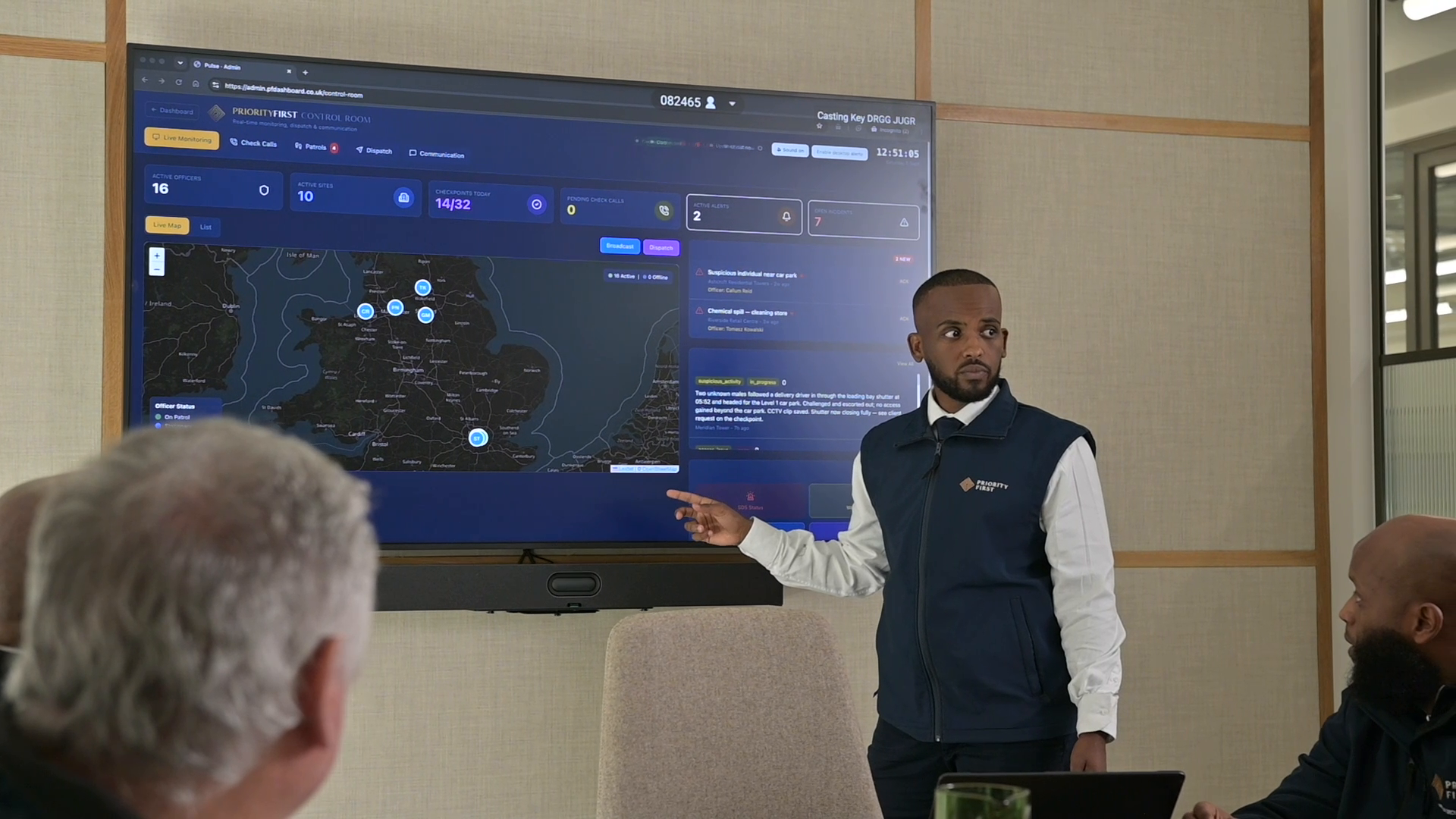
Building management software or a CAFM (Computer-Aided Facilities Management) system is the standard tool for running this at scale, since a spreadsheet becomes unmanageable once a building holds more than a few dozen assets. Priority First's own platform applies the same documentation principle to security operations — every checkpoint, patrol and incident is logged with a photograph, GPS location and timestamp — and the same evidential standard (prove it happened, don't just assert it) is the benchmark any PPM schedule should meet.
Your PPM maintenance checklist
- Audit every asset on site and record its make, model and install date.
- Separate statutory tasks (legally required) from best-practice tasks using SFG20 or manufacturer guidance.
- Assign a named competent person or contractor to each maintenance task.
- Set inspection frequencies in line with current UK regulations (e.g. LOLER, Electricity at Work Regulations 1989).
- Log every completed task with date, outcome and evidence (photo, signature or digital record).
- Review the full PPM schedule at least annually, or after any incident.
- Confirm contractor qualifications and relevant competency certifications before appointment.
- Keep PPM records accessible for HSE inspection, insurance audit or tenant due diligence.
FAQ
What does PPM stand for in maintenance?
PPM stands for Planned Preventive Maintenance, a scheduled programme of inspection and servicing carried out before equipment fails. It is sometimes written "planned preventative maintenance" and applies across building systems including fire safety, electrical, mechanical and lift equipment.
What is the difference between PPM and reactive maintenance?
PPM schedules work before failure occurs, while reactive maintenance only responds once equipment has already broken down. A well-implemented PPM schedule reduces reactive maintenance costs by 12–18%, per Totalmobile (2022).
Is PPM a legal requirement in the UK?
Some PPM tasks are legally mandated — statutory tasks such as fire alarm testing, LOLER lift examinations and electrical inspections under the Electricity at Work Regulations 1989 — while others are best-practice recommendations under standards like SFG20. Duty holders carry an overarching duty under the Health and Safety at Work etc. Act 1974 to keep plant and systems safe.
How often should PPM tasks be carried out?
Frequency depends on the asset and applicable standard: fire alarms are typically tested weekly with a six-monthly engineer service, passenger lifts require LOLER examinations roughly every six months, and electrical installations are typically inspected every five years under BS 7671 guidance. Always confirm intervals against manufacturer specification and the current SFG20 schedule.
What qualifications should a PPM contractor hold?
A competent PPM contractor should hold relevant trade qualifications for the specific system — such as NICEIC registration for electrical work or F-Gas certification for refrigeration systems — plus demonstrable experience against SFG20 standards. Duty holders should always verify named individual competency, not just company reputation.
How much does PPM typically cost compared to breakdown repairs?
Planned maintenance can save up to 30% on lifecycle costs compared with crisis-driven, reactive approaches, per Macro Group (2026), and a PPM regime can cut overall costs by 20%, according to SFG20 via Guardian (GWT Ltd) (2023). Exact savings vary by building type, asset age and how long reactive repairs have been deferred.
What software is used to manage a PPM programme?
Most UK facilities teams use CAFM (Computer-Aided Facilities Management) or CMMS (Computerised Maintenance Management System) software to schedule tasks, log completions and flag overdue work. These platforms typically integrate SFG20 task libraries directly, reducing manual scheduling errors.
Securing your PPM programme with Priority First
A PPM schedule is only as good as the evidence that each task actually happened, and that is the exact problem Priority First solves across security and facilities management alike. Whether it is a fire door check, a plant room inspection or a night-time patrol, an undocumented task is indistinguishable from one that never took place.
Priority First's operational platform applies the same standard across its sites: every checkpoint requires a photograph to complete, with officer ID, GPS location and timestamp attached, and missed areas show as visible gaps in the record rather than passing silently. Across one West London mixed-use development, this standard has produced 540+ documented patrols across 152 checkpoints spanning retail, residential and plant room areas since February 2026 — the same auditable discipline that a well-run PPM programme demands of statutory maintenance tasks.
If your building's maintenance and security arrangements need one accountable partner rather than a patchwork of suppliers, get in touch with Priority First to discuss facilities management support tailored to your site.
Related Reading
- Facilities Management Services Knightsbridge | Priority First
- Facilities Management for Offices London | 2026 Guide
- Facilities Management Company Mayfair | Priority First