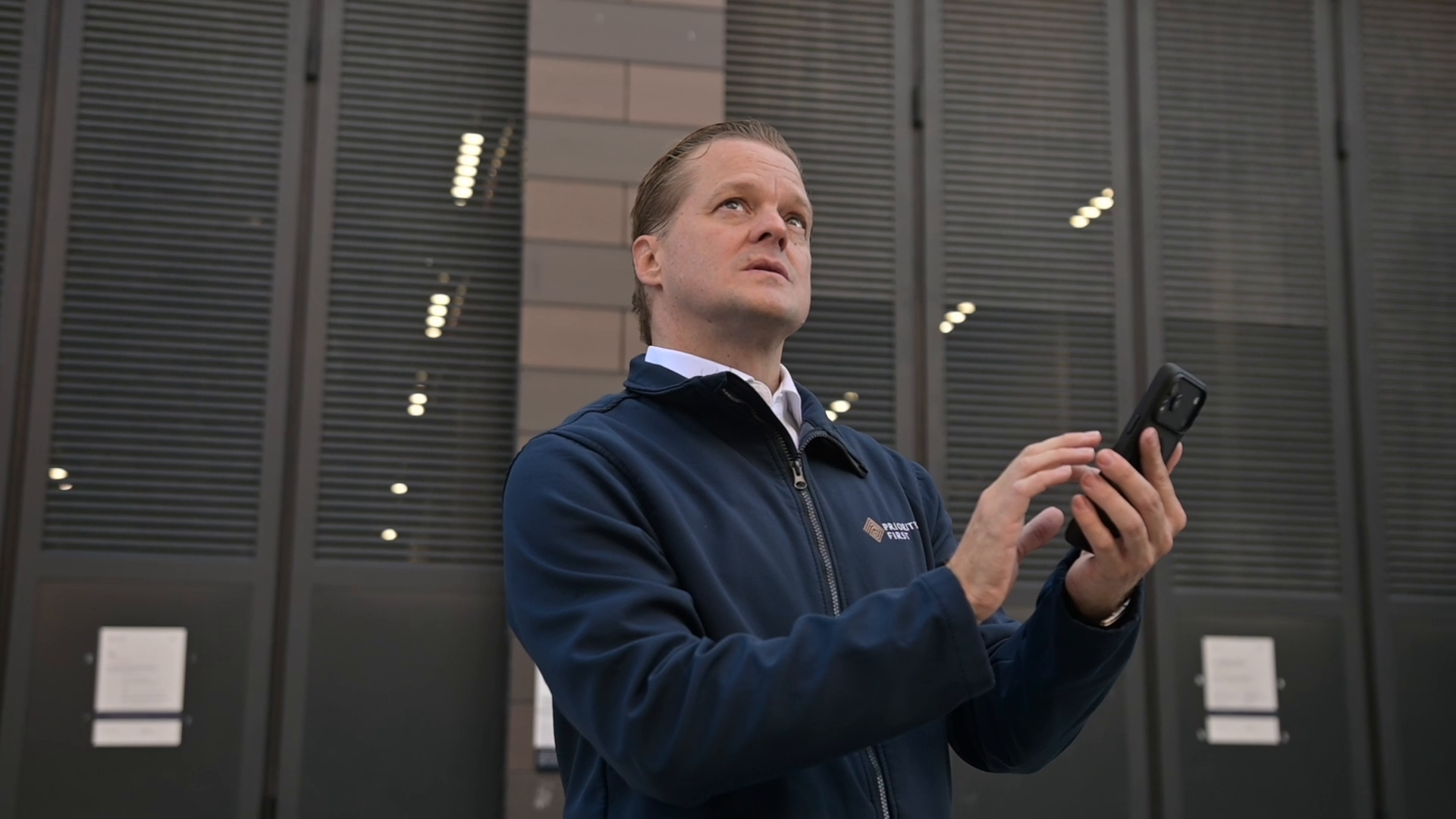
What Makes a Good Security Officer? 2026 Guide

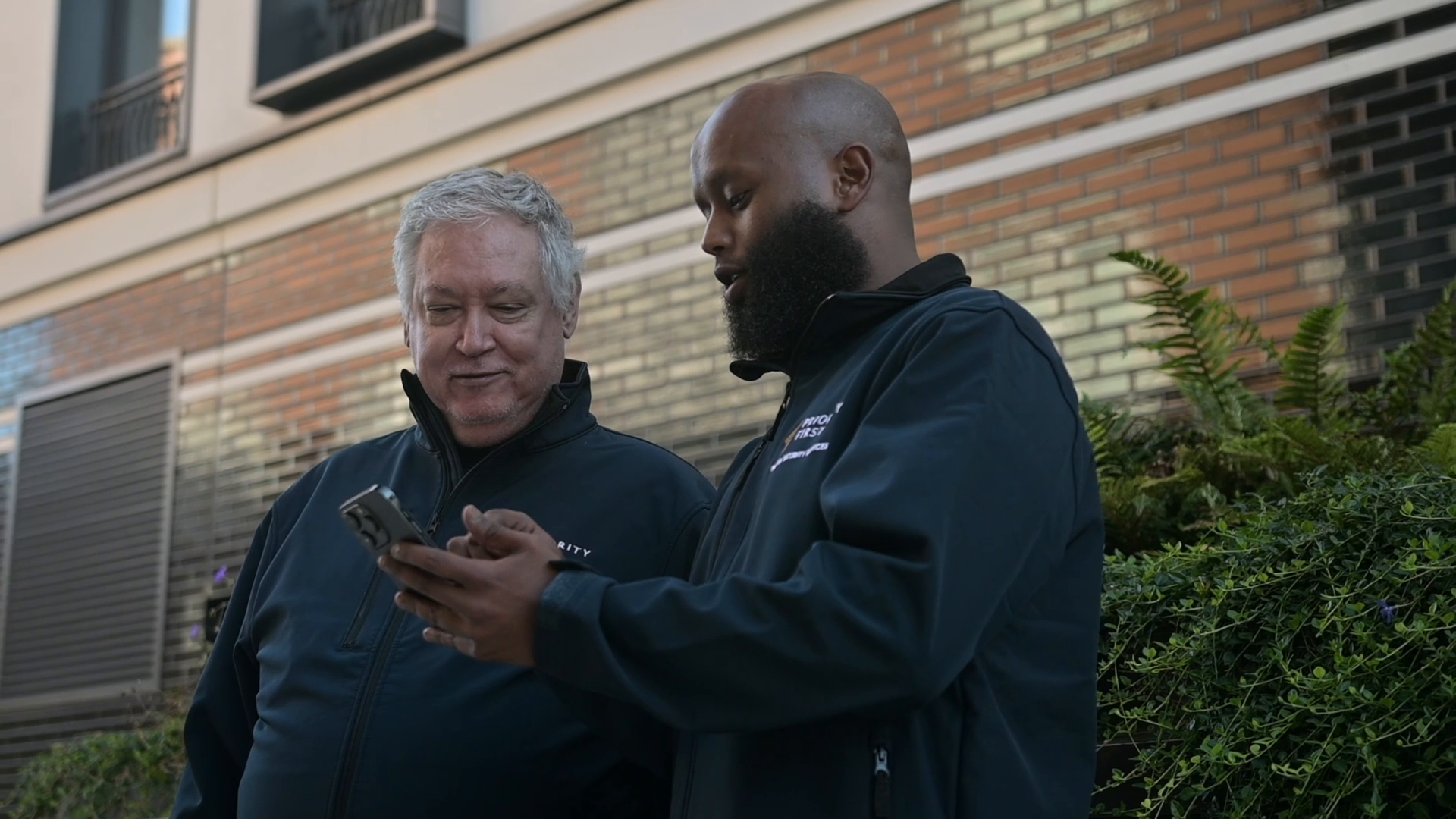
Last updated: 28 September 2026
A good security officer combines a valid SIA (Security Industry Authority) licence with sharp observational skill, calm conflict-management ability, and consistent, provable patrol discipline. Priority First's own operational data shows officers across a 24-site London portfolio completing over 4,900 photo-backed patrols, evidencing the standard employers should expect.
Key Takeaways
- Priority First requires a good security officer to hold a valid SIA licence under the Private Security Industry Act 2001 before working in any licensable role in the UK.
- Priority First's largest managed portfolio runs 24 sites on one platform, with 4,900+ patrols completed and photo-verified as of August 2026.
- Security industry turnover is a persistent challenge, with the U.S. security sector experiencing roughly 50.8% annual turnover against 38.4% across all industries, according to GuardOwl (2026).
- Conflict de-escalation, communication and attention to detail separate consistently effective officers from those who merely meet minimum licensing requirements.
- Employers who verify checkpoint evidence, not just attendance, catch performance gaps that occurrence-book reporting alone will not reveal.
What Qualities Make a Security Officer Effective?
An effective security officer is a licensed individual who combines integrity, vigilance and sound judgement to protect people, property and information without unnecessary escalation. The role demands someone who notices what's out of place before it becomes a problem.
Integrity sits above every other trait, because a security officer routinely holds keys, alarm codes and unsupervised access to premises worth millions. Reliability follows closely: an officer who is late, distracted or absent creates a gap that opportunistic theft or an unmonitored fire risk can exploit within minutes.
Good officers also show composure under pressure and a willingness to follow procedure even when nobody is watching. Curiosity and attentiveness matter too — the best officers ask why a fire door is propped open rather than walking past it.
Priority First's Managing Director Mo Hassan captures this standard when discussing front-of-house work: "A concierge is the first impression your building makes, every single day. Anyone can check a visitor list. The standard we hold is that residents and guests are greeted by name, problems are owned rather than reported upwards, and security is done so smoothly it reads as service." The same principle — ownership over box-ticking — defines a genuinely good officer in any setting.
What Qualifications Does a Security Officer Need in the UK?
A security officer in the UK legally requires an SIA licence, issued by the Security Industry Authority under the Private Security Industry Act 2001, before undertaking any licensable activity such as manned guarding, door supervision or CCTV monitoring. The SIA and NPSA licence summary sets out which roles require which licence category.
To obtain a Front Line SIA licence, a candidate must complete an approved training course covering conflict management, the law, health and safety, and physical intervention where relevant, as detailed in the official SIA training requirements published by the government. Candidates must also pass identity and criminality checks and prove their right to work in the UK.
Beyond the licence itself, many roles benefit from a Disclosure and Barring Service (DBS) check, first aid certification, and site-specific inductions. Corporate and residential clients in areas such as Mayfair, Chelsea and Knightsbridge increasingly expect officers trained to British Standard BS 7499 for static guarding.
What Training Do Good Security Officers Complete Beyond the Minimum?
Good security officers pursue training well beyond the SIA's baseline licence requirements, including conflict de-escalation refreshers, first aid, radio and CCTV proficiency, and sector-specific inductions. Minimum licensing proves legal competence; ongoing training proves operational competence.
Employers seeking a genuine standard should look for officers trained against British Standard BS 7958 for CCTV monitoring, familiarity with the Health and Safety at Work etc. Act 1974, and fire marshal or first-aid-at-work certificates. Retail-focused officers benefit from training in organised retail crime patterns, while construction site officers need awareness of the Construction (Design and Management) Regulations 2015.
Priority First inducts officers to cover each specific site rather than relying on generic guarding knowledge — as demonstrated when three new buildings, including a 10-checkpoint serviced residence, were onboarded across Central London within a fortnight in July 2026. Checkpoint maps, site notes and prior incident history were loaded into the platform before day one, meaning new officers saw a site's full history the moment their first patrol began. That approach cut the traditional "weeks of bedding in" down to days, turning training into something continuously reinforced on the job.
What Are the Core Legal Duties a Security Officer Must Uphold?
A security officer's core legal duties include protecting life and property, reporting incidents accurately, maintaining a lawful and reasonable use of force, and complying with data protection law when handling CCTV footage or visitor records. These duties exist independently of any specific client contract.
Under the Data Protection Act 2018 and UK GDPR, officers monitoring CCTV must ensure footage is stored securely and only used for its stated purpose, a standard enforced by the Information Commissioner's Office (ICO). Officers also carry general duties under the Health and Safety at Work etc. Act 1974 to avoid endangering themselves or others while carrying out patrols or responding to incidents.
Good officers document everything — not from a legal obligation alone, but because an undocumented incident is functionally unprovable in court or to an insurer. This is where paper occurrence books repeatedly fail clients: reports say "all in order" while nobody can prove which checkpoint was actually inspected at 3am.
Priority First encountered exactly this problem across a mixed-use West London development with 152 checkpoints spanning retail units, residential cores, service yards and plant rooms. Every checkpoint now requires a watermarked photo, GPS coordinate and timestamp to register as complete; missed areas show as visible gaps in the record rather than passing silently. Since going live in February 2026, the site has logged more than 540 patrols across its first five months — a legal and operational duty turned into an evidenced one.
How Does a Good Security Officer Handle Conflict De-escalation?
A good security officer handles conflict de-escalation by recognising early warning signs, using calm verbal techniques to reduce tension, and only escalating to physical intervention as a last resort under the law. SIA-approved conflict management training, a mandatory module for the Front Line licence, covers exactly this hierarchy of response.
The officer's tone, body language and positioning matter as much as what they say. Standing at an angle rather than head-on, keeping hands visible, and lowering voice volume rather than raising it are all techniques taught in approved courses referenced by the SIA training standards.
Retail environments demand a particular version of this skill. As Mo Hassan explains: "Retail theft is organised now, and the response has to be too. A good retail officer knows the difference between a nervous shopper and a professional working a route, shares intelligence with neighbouring stores, and understands that how an intervention looks to genuine customers matters as much as the intervention itself."
Getting this wrong is costly — a poorly handled confrontation can escalate a minor incident into a legal liability or reputational crisis for the client site.
How Do Good Security Officers Use Technology on Site?
Good security officers use technology such as CCTV monitoring, access control systems and patrol-verification apps to convert subjective observation into objective, provable evidence. Technology doesn't replace vigilance; it corroborates it.
Modern CCTV monitoring, delivered against British Standard BS 7958, requires officers trained to spot behavioural patterns rather than passively watch screens. Access control systems, meanwhile, log every entry and exit electronically, removing reliance on a signed paper register that can be lost or falsified.
Across a whole-portfolio deployment spanning 24 sites and more than 11 field officers, Priority First replaced paper occurrence books entirely with a single platform covering patrols, incidents, deliveries, alarm response and shift handovers. Alarm activations are now logged in the field with cause, action and photo evidence, and false-alarm counts are tracked per site against the police-response threshold. A silent duress system sits behind every officer's PIN, escalating automatically to a named responder and to the police if triggered. Shift handovers write themselves from the shift's actual recorded events, and the incoming officer signs for what they're inheriting rather than taking a verbal word for it.
What Should Employers Check When Hiring a Security Officer?
Employers hiring a security officer should verify the SIA licence number directly against the SIA public register, confirm DBS clearance, and ask for evidence of patrol performance rather than relying on a CV alone. A licence proves legal eligibility; it does not prove reliability.
Retention data across the sector suggests why vetting quality matters so much. Turnover in the contract security industry averages 200% or more annually at many client sites, according to Silva Consultants (2026), while Belfry Software (2026) reports turnover ranging from 100% to 400% depending on business model. An ASIS International survey via GuardOwl (2026) found over 40% of security providers cite turnover as their top challenge, with the best-retention firms crediting advancement opportunities, cited by 60% of respondents, as the key driver.
High turnover erodes site knowledge exactly where clients need it most. Priority First's own approach — loading site history, checkpoint maps and prior incident notes into a shared platform — was built specifically to stop that knowledge leaving when an individual officer does, across a portfolio now covering 24 sites.
In-house vs contracted security officers
| Factor | In-house officers | Contracted (outsourced) officers |
|---|---|---|
| Recruitment and vetting | Managed internally, variable rigour | Managed by specialist provider against consistent standards |
| Cover for absence/turnover | Limited backup pool | Provider manages relief staffing |
| Training investment | Often ad hoc | Structured, ongoing across sites |
| Technology and reporting | Requires separate procurement | Often bundled into provider's platform |
| Accountability | Direct but resource-heavy | Single accountable partner, contractually defined |
Your good security officer checklist
- Confirm the officer's SIA licence number against the official register before deployment.
- Request evidence of DBS clearance and right-to-work documentation.
- Ask for proof of patrol performance — photo-backed checkpoints, not verbal assurance.
- Check conflict-management training dates against SIA-approved course standards.
- Review site induction records for knowledge of fire exits, alarm codes and key holding procedures.
- Ask how incidents and shift handovers are documented, and whether records are tamper-evident.
- Verify the officer's familiarity with data protection duties under UK GDPR for CCTV handling.
- Establish who the officer escalates to in a duress situation, and how quickly.
FAQ
What makes a good security officer?
A good security officer combines a valid SIA licence, strong integrity, calm conflict-management ability, and consistent, evidenced patrol discipline. These qualities matter more together than any single trait alone.
Is an SIA licence legally required for all security officers in the UK?
Yes, an SIA licence is legally required for anyone performing licensable activities such as manned guarding, door supervision or CCTV monitoring under the Private Security Industry Act 2001. Working without one is a criminal offence.
How can employers verify a security officer's SIA licence?
Employers can verify an SIA licence by checking the licence number against the official SIA public register. This confirms the licence is current and matches the named individual.
Why is security guard turnover such a persistent problem?
Security guard turnover is persistently high because the work is often physically demanding, unsociably scheduled and historically undervalued in pay and progression. Silva Consultants (2026) reports turnover averaging 200% or more annually at many client sites in the contract security industry.
What separates a good security officer from an average one?
A good security officer proactively identifies risk and documents it with evidence, while an average officer simply reports that a shift passed without incident. Photo-backed checkpoints and detailed incident logs are how that difference becomes provable.
Does physical fitness matter for security officer roles?
Physical fitness matters because the role often involves standing or patrolling for extended periods and may require rapid response to an incident. Most SIA-approved training courses assess candidates for the physical capability needed for their specific licensable role.
How does technology improve security officer performance?
Technology improves performance by converting subjective claims into objective, timestamped evidence, such as GPS-tagged photos at each patrol checkpoint. This closes the gap between what an officer reports and what actually happened on site.
Securing your site with Priority First's SIA-licensed officers
Every point in this article — licensing, training, conflict skills, evidenced patrols — is the standard Priority First builds its manned guarding around, not an aspiration. Rather than relying on paper occurrence books that assert a patrol happened, Priority First's officers photograph every checkpoint, log every alarm activation with cause and action, and hand over shifts through records the incoming officer actually signs for.
Priority First currently protects over £1.6 billion in client assets across prime central London, including Chelsea, Knightsbridge and Mayfair, alongside West London and contracts in the West Midlands and Bedfordshire, maintaining a 100% customer satisfaction rate and a 4.9-star Google rating from 59 reviews as of September 2026.
If your business needs officers who are licensed, trained, and provably accountable on every shift, get in touch with Priority First for a tailored quote on manned guarding through the Physical Protection / Manned Guarding service.
Related Reading
- What Is Martyn's Law? UK Security Requirements 2026
- Office Security Guards London 2026 | Priority First Security
- What is a Security Project Manager and Why It Matters in Construction