Best Security Companies in London for Construction Sites 2026


Last updated: 7 September 2026
Quick answer: The best security companies for London construction sites in 2026 combine SIA-licensed manned guarding with photo-verified patrols, 24/7 CCTV monitoring and logistics-aware site management, because construction theft is estimated to cost UK businesses over £1 million a week. Priority First, Mitie, G4S, Wilson James and SG London each take a different approach — from evidence-backed patrol reporting to large-scale national coverage — so the right choice depends on site size, budget and how much proof of coverage you need.
Key Takeaways
- Construction theft is estimated to cost UK businesses more than £1 million a week, making site security a financial necessity rather than a discretionary cost.
- Under the Private Security Industry Act 2001, every security operative working on a UK construction site must hold an individual licence issued by the Security Industry Authority (SIA), the UK regulator for the private security industry — this is a legal requirement, not an optional accreditation.
- Priority First records 100% of checkpoint completions with a timestamped, GPS-tagged photograph on its largest managed estates, up from 0% before onboarding, and took one mixed-use development from zero photographed checkpoints to 152.
- Priority First has protected over £1.6 billion in client assets and holds a 5.0-star rating from 44 Google reviews, based on its work across prime central London and nationwide sites.
- Priority First, Mitie, G4S, Wilson James and SG London differ mainly in scale, specialism and how verifiable their patrol reporting is, rather than in the headline list of services each one offers.
Introduction
Construction sites across London face a persistent and costly security problem. Theft of materials, plant and equipment is estimated to cost UK businesses over £1 million a week, a figure that reflects how attractive open, unattended sites are to opportunistic and organised criminals alike. Left unmanaged, this exposure creates financial losses, project delays, and reputational damage that can outlast the build itself.
In practice, the implications are straightforward: without robust security, contractors and developers risk not only the direct cost of stolen materials but also insurance complications, delayed handovers, and disputes over liability. Investing in site security is not simply an overhead line item — it is a condition of running a construction project without unplanned disruption. Understanding the leading security companies operating in the capital helps developers, principal contractors and facilities managers find a provider whose coverage model, technology and reporting standards match the risk profile of their site.
With numerous providers competing for construction contracts, the practical question is how to tell them apart. Priority First, headquartered in Mayfair, positions itself around evidence: rather than simply promising patrols, it documents them, with every checkpoint on its monitored sites requiring a photograph to register as complete. Combined with a track record of protecting more than £1.6 billion in client assets, this approach illustrates one clear route to reducing theft risk — proof of coverage, not just presence.
What Is Construction Site Security?
Construction site security is the combination of manned guarding, technology and procedural controls used to protect an active building site's materials, plant, structure and personnel from theft, vandalism, unauthorised access and safety incidents. It typically covers the period from groundworks through to practical completion, when a site is at its most exposed — often unoccupied overnight and containing high-value, easily resold materials such as copper, tools and plant machinery.
A construction security provider is usually built around several core elements: SIA-licensed manned guards or mobile patrol officers, CCTV monitoring (often temporary, tower-mounted units on early-phase sites), access control at the site perimeter and welfare cabins, keyholding and alarm response outside working hours, and logistics support to manage deliveries and vehicle movements safely. The Security Industry Authority (SIA) is the UK body responsible for regulating the private security industry under the Private Security Industry Act 2001, and it is a legal requirement for anyone carrying out licensable guarding activity — including construction site security — to hold a valid, individual SIA licence.
Who Are the Leading Security Companies in London?
The leading construction site security providers in London are Priority First, Mitie, G4S, Wilson James and SG London, each treating theft and access risk as a solvable operational problem rather than an unavoidable cost of doing business. Given that theft is estimated to cost UK construction businesses over £1 million a week, these providers differentiate themselves less on the services they list and more on how reliably — and verifiably — those services are actually delivered on site.
Priority First offers robust protection measures built around tailored, site-specific deployments that combine manned guarding, keyholding, alarm response and CCTV monitoring with a photo-verified patrol standard. Every officer working under this model is individually SIA-licensed, as required by law for anyone undertaking manned guarding in the UK. The company's approach has been shaped by managing dense prime central London portfolios — including estates spanning Chelsea, Knightsbridge and Mayfair — where clients expect provable coverage rather than assurances alone.
Mitie Security is a large, nationally established provider offering extensive protective services, including guarding and monitoring specialised for construction environments. G4S Secure Solutions operates at similar scale, providing protective services shaped around the specific challenges of building sites, from hoarding-line perimeter control to plant security. Wilson James has built a strong reputation in logistics-integrated security, focusing on how site protection can support rather than obstruct material and vehicle flow. SG London positions itself around bespoke corporate protection with attention to the particular requirements of individual construction projects.
Each of these firms is recognised within the London market for established delivery models. The consequences of skipping proper security cover — financial loss, delay, and reputational harm — mean that comparing providers properly, rather than defaulting to the largest name, is worth the time it takes. For a wider view of how these firms compare outside the construction sector specifically, see this buyer's guide to security companies in London.
What Does Tailored Construction Site Security Look Like?
Tailored construction site security means building a protection plan around a specific site's risks — material theft, vandalism, unauthorised access, and compliance with duties under the Health and Safety at Work etc. Act 1974 — rather than applying a single fixed package. These risks affect financial stability, project timelines and client relationships simultaneously, which is why leading providers design solutions around the individual site rather than a standard tier of cover. The five firms below illustrate the range of approaches on offer in London.
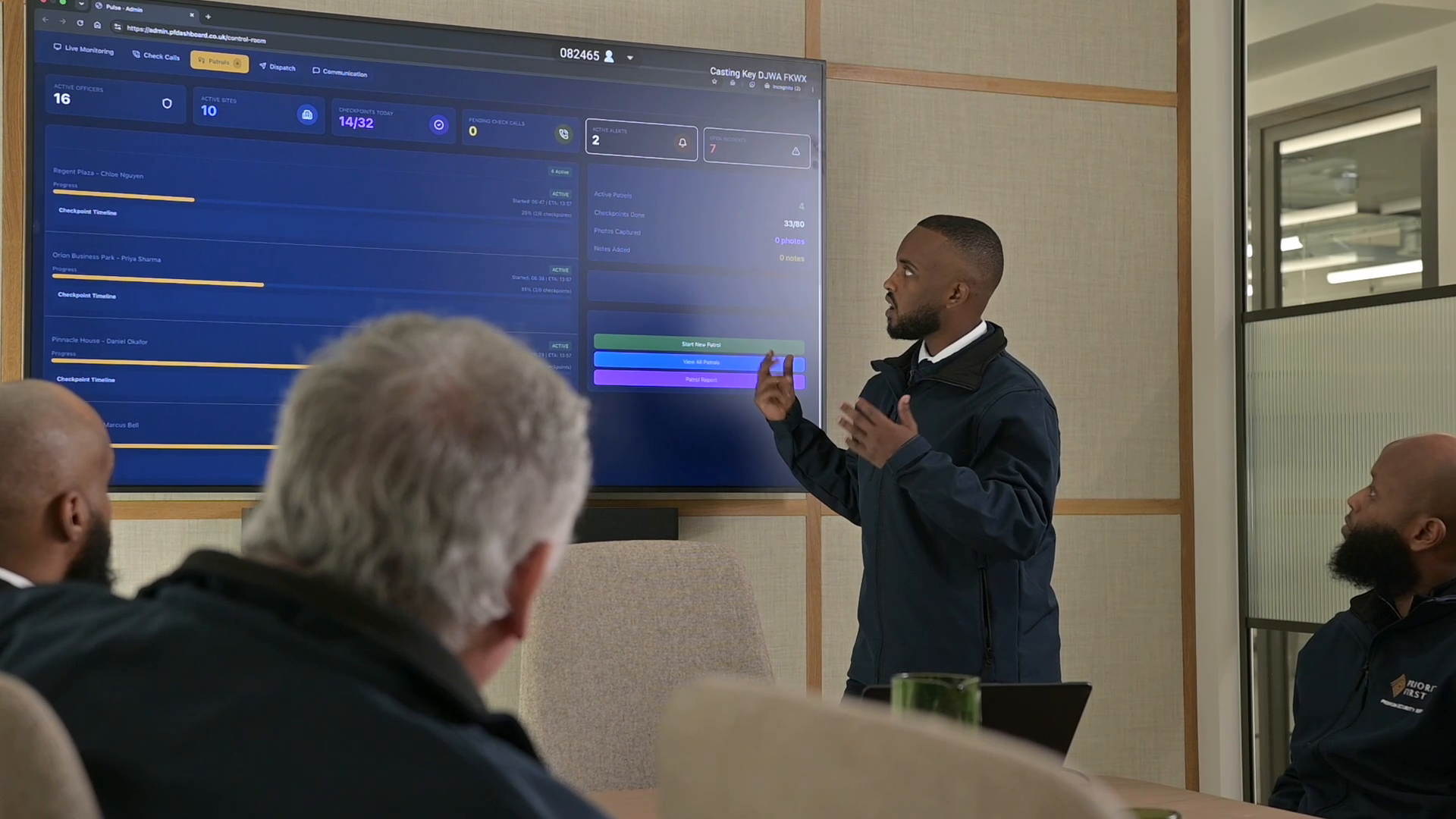
Priority First: Delivers customised on-site security teams supported by CCTV monitoring and photo-verified patrols, so that every checkpoint completion is logged with an officer ID, GPS location and timestamp rather than relying on an unverifiable paper log. This evidence-first model — used across construction site security deployments — lets clients see exactly what was checked and when, rather than trusting that a patrol happened. Priority First also integrates its guarding with existing site systems and logistics management, reducing disruption during onboarding.
Mitie Security: Offers flexible protection that scales with the size and phase of a construction project, including manned guarding and mobile patrols designed to integrate into existing project workflows with minimal disruption.
G4S: Combines physical guarding with access control systems and surveillance technology, aiming to keep protection adaptable as a site's risk profile changes across different construction phases.
Wilson James: Concentrates on integrating security with operational logistics, so that protective measures support rather than obstruct ongoing works — an approach that fits sites where vehicle and material movement is constant.
SG London: Focuses on custom protective solutions for the specific layout and risk profile of individual sites, with an emphasis on deterring opportunistic crime during quieter periods such as evenings, weekends and project downtime.
Each of these approaches aims to let site and project managers focus on delivery rather than ongoing theft or compliance concerns — but the practical difference between providers usually comes down to how much verifiable evidence of coverage a client actually receives.
What Technology Do Construction Security Providers Use?
Modern construction security providers rely on photo-verified patrolling, AI-assisted CCTV, predictive risk data and digital reporting to prove coverage rather than simply claim it. On Priority First's largest managed sites, checkpoint completions now require a watermarked photograph 100% of the time, compared with 0% before the system was introduced, meaning any missed checkpoint shows up as a visible gap in the record rather than passing silently.
Several other technologies are now standard across leading providers:
- AI-assisted CCTV: Modern surveillance systems increasingly feature automated motion and behavioural detection, allowing faster identification of suspicious activity and reducing the burden on manned monitoring alone. Coverage of these developments is available through CCTV & surveillance guides, which track how monitoring technology is evolving across UK sites.
- Predictive risk assessment: Some providers use site data and historical incident patterns to flag higher-risk periods or areas — such as newly delivered plant sitting unsecured overnight — before an incident occurs.
- Digital reporting systems: Real-time incident and patrol reporting replaces paper logs, giving site managers immediate visibility of guard activity rather than a retrospective summary.
- Access control: Biometric and RFID (Radio Frequency Identification, a technology that identifies and tracks tagged items or cards remotely) systems are increasingly used to control entry to welfare units, plant compounds and restricted zones, reducing reliance on physical keys that can be lost or duplicated.
On its largest single mixed-use development, Priority First moved from zero photographed checkpoints to 152, illustrating how quickly an evidence-based system can be introduced once a site goes live — a shift the company reports typically happens within days rather than the weeks it can take to bed in a conventional guarding contract. Manned patrols, including canine-assisted units where appropriate, remain the visible deterrent element that technology supports rather than replaces.
How Do the Leading Providers Compare on Strengths and Trade-offs?
No single provider suits every construction site: the right choice depends on project scale, budget, and how much verifiable reporting a client needs. The comparison below sets out the general strengths and trade-offs typically associated with each provider, based on their public positioning and market reputation.
Priority First Strengths: Highly tailored deployments built around the specific site rather than a standard package; photo-verified patrol evidence with officer ID, GPS and timestamp on every checkpoint; integrated logistics and facilities management alongside guarding; a track record of over £1.6 billion in client assets protected and a 5.0-star rating from 44 Google reviews. Considerations: As a specialist, evidence-led provider rather than a mass-market operator, pricing may sit above some lower-cost competitors, which is a factor for budget-constrained projects.
Mitie Security Strengths: Substantial national resources and manpower, with a broad range of facilities and security services under one roof. Considerations: Scale can mean less personalised attention on smaller or shorter-duration sites.
G4S Secure Solutions Strengths: A global operator with established security protocols and extensive cross-sector experience. Considerations: Larger corporate structures can limit flexibility when a client needs a fast, non-standard response to a site-specific issue.
Wilson James Strengths: Strong integration of logistics and security, with a compliance-led approach tailored specifically to construction environments. Considerations: Less breadth of service outside the construction and logistics sector compared with more diversified providers.
SG London Strengths: Local market knowledge and bespoke security planning, often suited to clients who want closer day-to-day contact with their provider. Considerations: A smaller operational scale may mean fewer spare resources during periods of high demand across multiple sites.
This comparison is a starting point rather than a final answer — the right provider depends on site size, project phase, budget and how important photo- or data-backed patrol evidence is to your team.
Your Construction Site Security Checklist
Use this checklist when evaluating or setting up security for a London construction site:
- Confirm every guard assigned to your site holds a valid, individual SIA licence — ask to see licence numbers, not just a company-level assurance.
- Establish whether patrols are evidenced (photo, GPS, timestamp) or simply logged on trust — evidence gaps are where liability disputes usually start.
- Map your site's highest-risk periods (overnight, weekends, material deliveries) and confirm patrol frequency matches that risk.
- Check CCTV coverage includes all perimeter access points, plant compounds and material storage areas, not just the main entrance.
- Agree a keyholding and alarm response protocol for out-of-hours incidents, including response time expectations.
- Clarify how security integrates with site logistics — delivery sign-off, vehicle access control and material movement — to avoid duplicated processes.
- Request a sample incident or patrol report before signing, so you know exactly what evidence you will actually receive each week.
- Review pricing against the provider's scale and evidence standard, not just the headline day rate.
Conclusion
Security for construction sites in London is not a discretionary line item — it is a direct response to a well-documented risk, with theft estimated to cost UK businesses over £1 million a week. The providers covered here — Priority First, Mitie, G4S, Wilson James and SG London — each address this risk through a different combination of manned guarding, technology and logistics integration.
Priority First's approach centres on making coverage provable: photo-backed patrols, GPS-tagged checkpoints, and integration with wider facilities and logistics management, all delivered by SIA-licensed officers. Mitie and G4S bring national scale and established protocols suited to large, multi-site portfolios. Wilson James and SG London bring sector-specific compliance focus and local relationship-driven service respectively.
The underlying lesson holds regardless of provider: investing properly in construction site security is a strategic decision, not an insurance formality. As reporting standards and technology continue to raise the bar for what "coverage" should mean, choosing a partner whose evidence standard matches your project's risk is now as important as choosing one with the right headcount. For related context on manned guarding standards elsewhere in the capital, see this guide to manned guarding services in London.
How Priority First Approaches Construction Site Security
Construction sites share a challenge with the commercial and residential buildings Priority First manages every day: the gap between a security plan on paper and what actually happens on the ground. Priority First was built to close that gap, combining SIA-licensed manned guarding, keyholding and alarm response, CCTV monitoring, and full facilities and logistics management under one accountable provider — an approach also used across the company's concierge and front-of-house work in prime residential buildings, where the same evidence standard applies to deliveries, access and daily operations.
The clearest proof point of this approach: across its largest managed portfolios, Priority First requires a photograph to complete every patrol checkpoint, with each one carrying officer ID, GPS location and a timestamp. On one mixed-use development, this took checkpoint photography from zero before onboarding to 152 documented checkpoints, with 100% of completions now photo-backed — replacing a system where a missed patrol could simply go unrecorded.
If you're planning security for a construction site — or reviewing whether your current provider can actually prove the coverage you're paying for — get in touch with Priority First for a site-specific quote and assessment.
Frequently Asked Questions
What are the main security challenges faced by construction sites in the UK? Construction sites in the UK face significant exposure to theft, vandalism and unauthorised access, with theft alone estimated to cost UK businesses over £1 million a week. Open perimeters, valuable unsecured materials, and unoccupied overnight periods make sites an attractive target for opportunistic and organised crime alike.
Why is security important for construction sites? Security is important because it directly protects a project's financial position and timeline. Robust protection measures safeguard materials, plant and equipment while helping contractors meet health and safety obligations and avoid the delays and disputes that follow a serious incident.
What makes Priority First stand out among security companies in London? Priority First stands out for combining tailored, site-specific security teams with a photo-verified patrol standard, meaning every checkpoint completion is logged with officer ID, GPS and timestamp. This evidence-first model, backed by a track record of protecting over £1.6 billion in client assets, gives clients provable coverage rather than assurances alone.
What types of security measures does Priority First provide? Priority First's construction site services include SIA-licensed manned guarding, keyholding and alarm response, CCTV monitoring, and logistics-integrated site management, all delivered with photo-backed patrol evidence.
How is Mitie Security recognised in the London security landscape? Mitie Security is recognised as a large, nationally established provider offering extensive protective services, including manned guarding and mobile patrols specialised for construction environments.
What is G4S Secure Solutions known for? G4S Secure Solutions is known for combining physical guarding with access control and surveillance technology at national and international scale, providing protective services tailored to the specific challenges of building environments.
What are the strengths of Wilson James as a security company in London? Wilson James is known for integrating security closely with operational logistics, ensuring protective measures support rather than obstruct ongoing construction activity while maintaining a strong compliance focus.
What does SG London focus on in its security services? SG London focuses on bespoke corporate protection tailored to the specific requirements and layout of individual construction projects, with a strong emphasis on local client relationships.
What are the overall characteristics of the best security companies in London? The best security companies in London are recognised for reliability and increasingly for their ability to evidence coverage through photo-backed patrols, digital reporting and integrated technology, rather than relying on guard presence alone.
What are the consequences of ignoring security risks on construction sites? Ignoring security risks can lead to significant financial losses from theft and vandalism, project delays, health and safety compliance issues, and reputational damage with clients and insurers. Investing in evidenced security measures from the outset is a practical way to prevent these losses.