Branded Vehicle Security Patrol London | Priority First

Last updated: 5 August 2026
Branded vehicle security patrol London services use clearly liveried patrol cars staffed by SIA-licensed officers to deter crime, respond to alarms and monitor commercial or residential sites across the capital. With over 128,000 SIA licence holders based in London and vehicle crime running at 1.69 times the national average, visible marked patrols remain one of the most cost-effective deterrents available to businesses today.
Key Takeaways
- London has more than 128,000 SIA licence holders, by far the highest concentration of any UK region, according to Professional Security Magazine (2026).
- London's crime rate reached 106.4 crimes per 1,000 people in 2026/25, with over 951,800 crimes recorded across the capital, according to Statista / Metropolitan Police (2026).
- Vehicle crime in London hit 86,474 reports in the year to August 2026, a rate 1.69 times the national average, according to The World Data (2026).
- A quarter of business premises in England and Wales — 26% — experienced at least one crime in a 12-month period, according to the Home Office Commercial Victimisation Survey (2023).
- Cambridge University's Institute of Criminology found that four 15-minute patrols per day cut reported crime by 28%, with 97% of that reduction occurring when officers were not even present, according to research cited by MSS Security Patrols (2026).
What is a branded vehicle security patrol in London?
A branded vehicle security patrol is a marked, liveried patrol car crewed by SIA-licensed officers who carry out scheduled and randomised visits to commercial sites, residential developments and construction locations. The vehicle's visible branding — company name, livery colours and marked signage — is deliberate: it signals an active security presence to anyone watching the site, including opportunist offenders assessing risk before they act.
Unlike static guarding, where an officer is fixed to one location, a mobile patrol vehicle typically covers a defined route across several sites within a shift. This model suits businesses that need consistent oversight of multiple premises — offices, retail units, car parks, construction sites — without the cost of a dedicated officer at every location around the clock.
In London specifically, this matters more than in most regions. London is home to more than 128,000 SIA licence holders, according to Professional Security Magazine (2026), reflecting both the density of commercial premises requiring protection and the scale of demand for professional security cover across the capital.
Priority First operates branded patrol vehicles as part of an integrated security and facilities management offering, meaning the same accountable partner handles patrols, key holding, alarm response and building management under one contract.
How does a branded patrol vehicle deter crime in London?
Visible, marked security vehicles deter crime primarily through unpredictability and perceived risk, not constant physical presence. Research from Cambridge University's Institute of Criminology found that structured patrol visits reduced reported crime by 28%, and remarkably, 97% of that reduction happened when officers were not physically on site, according to MSS Security Patrols (2026), citing the Cambridge study.
This finding reshapes how businesses should think about patrol value. The deterrent effect comes from the possibility of a return visit at any time, not solely the moment the vehicle is parked outside. A branded car creates a lasting signal that a site is actively monitored, well beyond the minutes an officer spends on the ground.
For London businesses, this is particularly relevant given the scale of the challenge. London's crime rate reached 106.4 crimes per 1,000 people in 2026/25, up from 105.8 the previous year, with over 951,800 crimes recorded by police across the capital, according to Statista / Metropolitan Police (2026). Against that backdrop, a randomised, branded patrol schedule does more to unsettle would-be offenders than a fixed, predictable routine ever could.
Priority First builds this unpredictability into every patrol contract, varying visit times and routes so that no site becomes a known quantity to anyone watching it.
Why vehicle branding specifically matters
Marked livery is not cosmetic — it is a functional part of the deterrent. An unbranded car offers no immediate signal of authority or purpose; a branded vehicle with clear signage, company colours and visible SIA identification communicates active oversight the moment it appears.
This is especially important for construction sites and vacant properties, where opportunist theft and unauthorised access are the primary risks businesses are trying to manage.
How much does a branded vehicle security patrol cost in London?
Branded vehicle security patrol costs in London vary depending on visit frequency, number of sites, and whether alarm response or key holding is bundled in. As a general guide, businesses should expect patrol contracts to be priced per visit or as a monthly retainer covering an agreed number of scheduled and randomised checks, with costs scaling according to site complexity and geographic spread.
Because pricing depends heavily on the specifics of a site — number of checkpoints, distance between locations, out-of-hours requirements — Priority First quotes bespoke rates after a site assessment rather than publishing a single flat fee. Below is an illustrative guide to how the market typically structures pricing tiers.
| Service tier | Typical inclusion | Best suited for |
|---|---|---|
| Basic scheduled patrol | Fixed daily/weekly visits, external perimeter checks | Vacant properties, low-risk sites |
| Randomised mobile patrol | Varied visit times, internal and external checks, incident reporting | Retail units, offices, mixed-use developments |
| Patrol plus alarm response | All of the above, plus out-of-hours key holding and alarm call-out | Commercial premises with intruder alarm systems |
| Full integrated FM and security | Patrols, concierge, CCTV monitoring, building management under one contract | Prime residential and commercial portfolios |
Ways to reduce costs:
- Consolidate multiple nearby sites onto a single patrol route to reduce per-visit cost.
- Combine patrol with key holding and alarm response under one contract rather than separate suppliers.
- Use photo-verified checkpoint reporting to reduce disputes and repeat call-outs.
- Review patrol frequency seasonally — construction sites, for example, may need increased cover only during specific project phases.
Alternatives to consider:
CCTV monitoring can supplement or partially replace patrol frequency on sites with strong camera coverage, while static guarding remains preferable for locations requiring a constant human presence, such as staffed reception desks or high-footfall retail entrances.
Static guarding vs branded mobile patrols: which does your business need?
Static guarding and branded mobile patrols solve different problems, and most London businesses need to weigh cost against coverage before choosing one. Static guards provide continuous, fixed presence — ideal for access control, visitor management and situations demanding immediate human response. Branded mobile patrols provide broader coverage across multiple sites or a large single site at a fraction of the cost of round-the-clock static cover.
The Home Office's 2023 Commercial Victimisation Survey found that 26% of business premises in England and Wales experienced at least one crime in a 12-month period, according to the Home Office survey cited by KeepSafe Secure (2023). This underlines why most businesses need some form of ongoing security presence — the question is which model fits the risk profile and budget.
| Factor | Static guarding | Branded mobile patrol |
|---|---|---|
| Presence | Continuous, fixed location | Scheduled and randomised visits |
| Cost | Higher (per hour, per guard) | Lower per site, scalable across multiple locations |
| Best for | Access control, reception, high-footfall sites | Multi-site portfolios, out-of-hours cover, deterrence |
| Response to alarms | Immediate if on-site | Rapid response within agreed timescales |
| Deterrent visibility | Constant but predictable | Intermittent but unpredictable — proven to reduce crime |
Many London businesses combine both: static guarding during trading hours, branded patrol coverage overnight and at weekends. Priority First designs hybrid contracts along these lines, integrating patrols with concierge and front-of-house teams so cover flexes with actual risk periods rather than a fixed rota.
What checks apply to security patrol officers in London?
Every officer deployed on a branded vehicle patrol in London must hold a valid SIA licence under the Private Security Industry Act 2001, which established the compulsory licensing framework for the UK's private security sector, according to the legislation.gov.uk explanatory notes. This licensing requirement is non-negotiable — deploying an unlicensed individual on any manned guarding or patrol role is a criminal offence.
Beyond SIA licensing, reputable providers vet officers to BS 7858 standards, the British Standard governing security screening of individuals employed in a security environment, and carry out DBS checks where the contract requires it. This combination of statutory licensing and enhanced vetting is what separates a professional patrol provider from an informal or unregulated one.
The scale of the licensed workforce underlines how mainstream and regulated this sector has become. There were a record 458,705 active SIA licence holders across the UK as of November 2026, a rise of about 17,000 in the previous 12 months, according to Professional Security Magazine (2026) — up from around 451,000 in 2026 and just under 235,000 in 2008, according to Statista, citing GOV.UK data (2026).
For businesses commissioning patrol services, verifying an officer's SIA licence and asking about screening standards should be a standard part of due diligence before signing any contract.
How do businesses know a patrol actually happened?
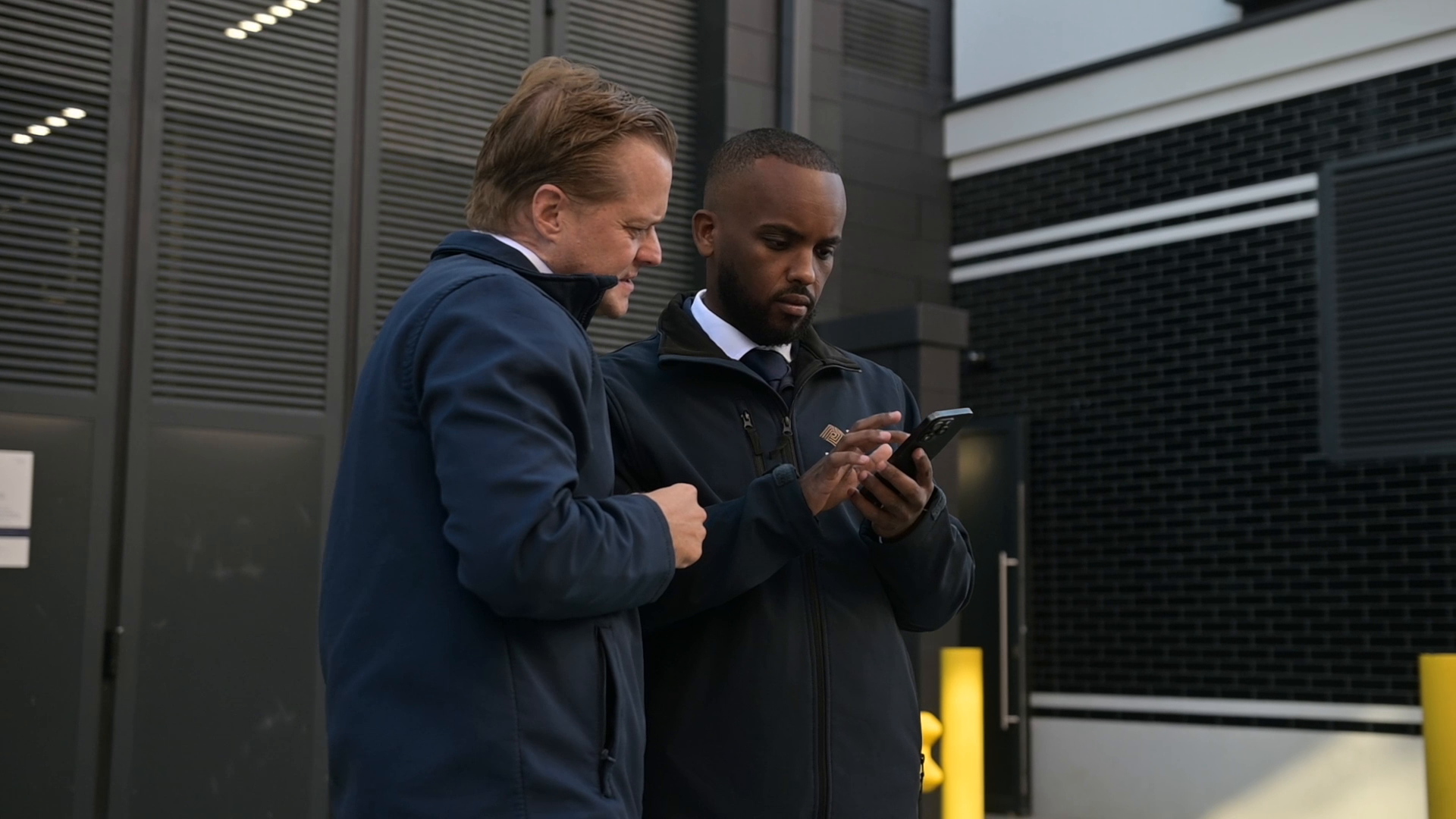
Historically, businesses relied on paper occurrence books and an officer's word that a round was completed — a system with obvious gaps. Priority First addresses this directly through photo-verified checkpoint reporting, where officers log GPS-tagged, timestamped photos at each checkpoint to create a provable audit trail rather than an unverifiable assertion.
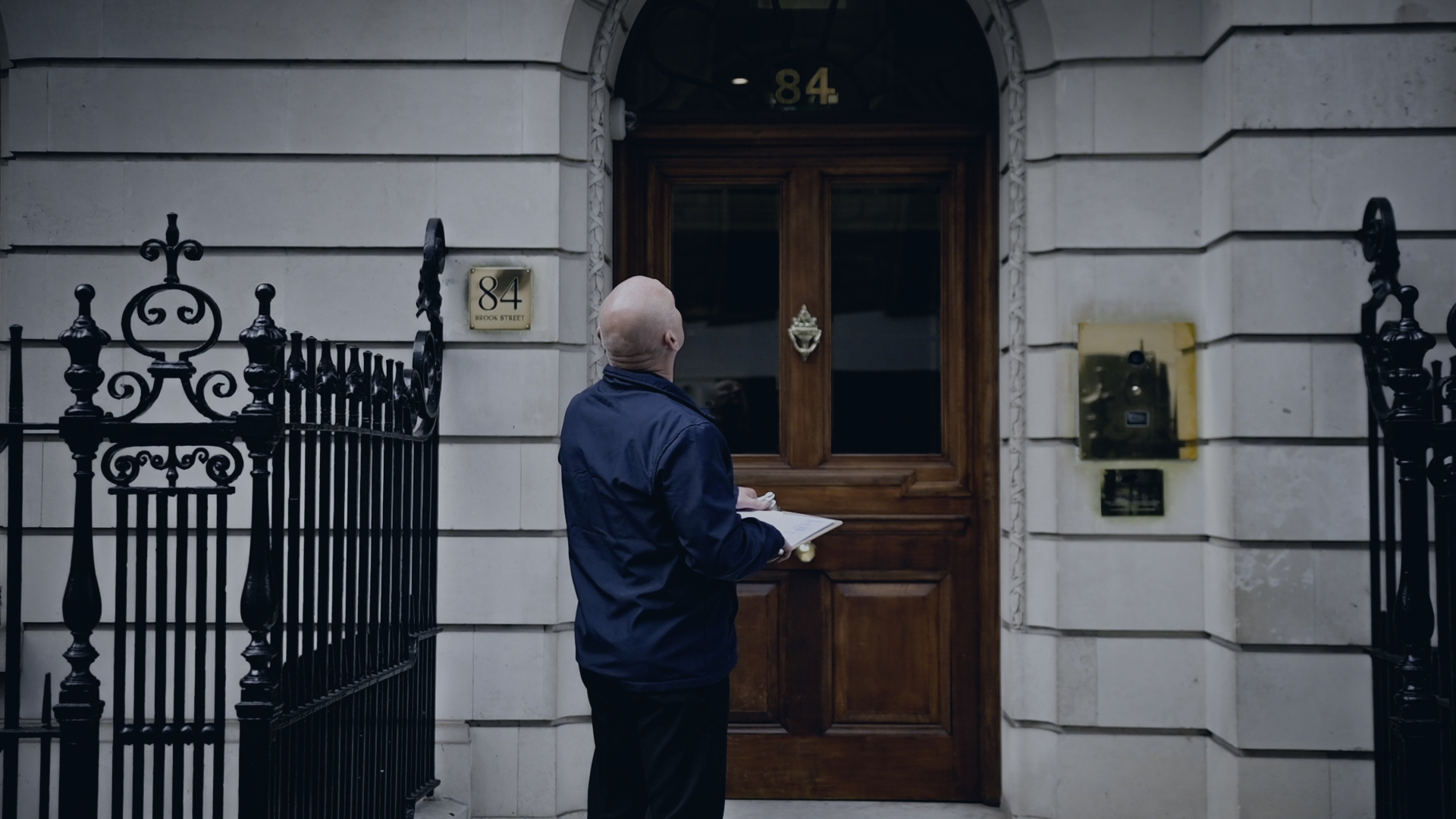
This matters in practice. On one West London mixed-use development covering retail, residential and service areas, Priority First deployed photographed checkpoint patrols across 152 separate checkpoints spanning plant rooms, service yards, retail and residential zones. Every checkpoint requires a photo to complete, and any missed area shows as a visible gap in the record rather than a silent assumption of "all in order." Since going live in February 2026, the site has recorded more than 540 patrols in the first five months alone, with 11 officers working from the same system.
This same principle — checking, proving, escalating — extends to alarm response. Across a wider 24-site portfolio, alarm activations are logged in the field with cause, actions and photos attached, and false-alarm counts are tracked per site against the police-response threshold. Since moving onto this single platform in early 2026, the portfolio has grown from 18 to 24 sites and logged more than 4,900 photo-backed patrols across 11-plus field officers.
Your branded vehicle security patrol checklist
Before signing any patrol contract, businesses should work through the following:
- Confirm every officer's SIA licence is current and matched to the correct licence category for the role.
- Ask how patrol visits are verified — photo evidence, GPS timestamps and checkpoint logs, not just a signed occurrence book.
- Check the patrol schedule includes randomisation, not just fixed, predictable visit times.
- Establish alarm response timescales in writing, including who is contacted and in what order.
- Clarify vehicle branding and visibility standards — livery, signage and identification should be clear and consistent.
- Review vetting standards applied to officers, including BS 7858 screening where relevant.
- Ask whether patrols can be bundled with key holding, concierge or wider facilities management under one contract.
- Request a site-specific risk assessment before agreeing patrol frequency and route.
FAQ
What is a branded vehicle security patrol and how does it work in London?
A branded vehicle security patrol is a marked patrol car staffed by SIA-licensed officers who conduct scheduled and randomised visits to sites across London. The vehicle's visible livery acts as a deterrent, while officers check perimeters, respond to alarms and log checkpoint visits, typically with photo or GPS verification.
Do mobile security patrol officers need an SIA licence in London?
Yes, every officer carrying out manned guarding or patrol duties in London must hold a valid SIA licence under the Private Security Industry Act 2001, according to legislation.gov.uk. Deploying unlicensed staff on these duties is a criminal offence, regardless of the size of the contract.
How much does a branded security patrol vehicle service cost in London?
Costs vary by site complexity, visit frequency and whether alarm response or key holding is included, so most providers quote bespoke rates after a site assessment. Consolidating multiple nearby sites onto one route and combining patrol with key holding under a single contract are the most effective ways to reduce overall cost.
What is the difference between static security guards and mobile vehicle patrols?
Static guards remain fixed at one location providing continuous presence, while mobile vehicle patrols cover multiple sites through scheduled and randomised visits. Static guarding suits access control and reception duties, whereas branded mobile patrols suit multi-site portfolios and overnight or out-of-hours deterrence at a lower per-site cost.
How often do mobile patrol vehicles visit a site in London?
Visit frequency depends on the contract and site risk profile, ranging from several visits per day to periodic overnight checks. Research from Cambridge University's Institute of Criminology found that even four 15-minute patrols per day reduced reported crime by 28%, according to MSS Security Patrols (2026), demonstrating that frequency matters less than unpredictability.
Can branded security vehicles respond to alarm activations out of hours?
Yes, branded patrol providers typically offer out-of-hours alarm response as a bundled service alongside patrol visits and key holding. Response involves attending the site, identifying the cause of activation, taking action and logging the incident with photographic evidence for the client's record.
Are marked security patrol vehicles more effective as a deterrent than unmarked ones?
Marked vehicles provide an immediate, visible signal of active security presence that unmarked cars cannot replicate. Given that research shows 97% of a patrol's crime-reduction effect occurs when officers are absent, according to MSS Security Patrols (2026), the visible reminder that branding provides plays a meaningful role in sustaining that deterrent between visits.
What areas of London do mobile vehicle security patrols typically cover?
Coverage depends on the provider, but most London-based security companies operate across prime central London and outer boroughs, including residential, commercial and construction sites. Priority First, headquartered in Mayfair, serves prime central London locations alongside nationwide clients as part of its integrated security and facilities management offering.
Securing your London portfolio with Priority First
Every business weighing up a branded vehicle security patrol in London is really asking the same question: how do we prove a site is actually being checked, not just told it is? Priority First answers that directly, running patrols, alarm response and checkpoint verification through one accountable system rather than a paper occurrence book that leaves the building with the officer who wrote it.
Across one 24-site portfolio, Priority First has logged more than 4,900 photo-backed patrols since early 2026, while a separate West London mixed-use development has recorded over 540 patrols across 152 photographed checkpoints since February 2026 — proof, not assertion, of every visit made.
If your commercial, construction or residential site in London needs a branded patrol service backed by SIA-licensed officers and verifiable reporting, get in touch with Priority First for a site assessment and tailored quote.
Related Reading
- 10 Benefits of Hiring Security Patrol Companies for Construction Sites
- 10 Ways Mobile Patrol Dogs Enhance Security in Cambridge Construction Sites
- Enhance Estate Patrol Services with These Best Practices for Security