


24 Hour Concierge for Apartment Blocks: Cost and Cover


Last updated: 28 November 2026
A 24 hour concierge service means staffed cover at a building entrance around the clock, handling access, deliveries, CCTV monitoring and emergencies. It's usually paid for through the service charge. Some schemes run this at real scale. Hackney's Residential Concierge security for its 13 tower blocks, funded by residents, has a core workforce of 26 officers, according to Hackney Council (2023).
Key Takeaways
- On-site 24 hour concierge only pays for itself at a certain scale of building or portfolio; smaller blocks often do better with a virtual or shared model.
- Concierge costs are usually recoverable through the service charge only where the lease specifically allows it, so check the lease before budgeting.
- Where concierge duties include patrols, key holding or incident response, staff should hold the matching SIA (Security Industry Authority) licence.
What a 24 hour concierge service typically includes
A 24 hour concierge service covers five things as standard: access control, visitor and delivery management, CCTV and intercom monitoring, patrols, and incident response. The volume behind that list is usually far higher than residents assume.
Sandwell Council's concierge service handles on average over 120,000 intercom calls per year via its CCTV and concierge control room, according to Sandwell Council (2024). That single figure makes the point: a concierge desk isn't a receptionist with spare time. It's a control point fielding a constant stream of access requests, deliveries and queries, any one of which can be a genuine emergency.

The scope varies by building but tends to follow a pattern. Southampton City Council describes how a 24 hour concierge control centre links door entry and CCTV systems for blocks of flats. This gives residents one point of contact rather than several separate systems. Islington Council sets out concierge schemes across its estates with defined operating hours, which is worth noting: "24 hour" is a specific commitment, not a default, and some schemes run reduced hours instead.
For a leaseholder-run block, the question isn't whether this list sounds useful. It's whether the building generates enough traffic, footfall and genuine risk to justify staffing it around the clock, rather than monitoring it remotely and sending someone when needed.
24 hour concierge versus virtual concierge: cost and effectiveness compared
The choice between on-site and virtual concierge comes down to footfall, building size and whether residents need a physical presence handling parcels and patrols, beyond a monitored camera feed. Neither option is universally right; each suits a different building profile.
| On-site 24 hour concierge | Virtual / remote concierge | |
|---|---|---|
| Physical presence | Staffed desk, always someone on-site | None on-site; cameras and intercom monitored off-site |
| Parcel handling | Received, logged and handed over in person | Not handled, or limited to a locker system |
| Deterrence value | Visible, constant | Lower; relies on signage and camera visibility |
| Best suited to | Large blocks, high footfall, multiple entrances | Smaller blocks, single entrance, lower footfall |
| Cost | Highest ongoing cost; depends on the site, a quote confirms it | Lower ongoing cost; depends on the site, a quote confirms it |
| Response to incidents | Immediate, on-site | Delayed by the time to dispatch someone |
A large mansion block with multiple entrances, high parcel volume and shared amenity space usually needs the physical presence a virtual desk can't give. A smaller block with one entrance and low footfall may find a virtual model handles the same access and monitoring tasks for considerably less. A mobile patrol can cover what remote monitoring can't.
The honest trade-off: on-site 24 hour concierge is the most expensive option available, and it's only cost-effective at a certain scale of building or portfolio. Many smaller blocks cannot justify the cost against a virtual or shared alternative. Pushing for round-the-clock staffing on a building that doesn't need it is usually where service charges balloon without a matching improvement in security.
Who pays: service charges, leaseholders and apportionment
Concierge costs are usually recoverable through the service charge, but only where the lease specifically allows it. This is where management companies most often get procurement wrong, either introducing concierge cover the lease doesn't support, or apportioning the cost in a way leaseholders can challenge.
The lease sets the rules, and it does so in two ways. First, it has to permit recovery of concierge or security costs as part of the service charge at all. Some older leases simply don't contemplate this kind of staffing and need a formal variation before the cost can be passed on. Second, it sets the apportionment formula, commonly by floor area or by equal share per unit, and that formula has to be applied consistently or it invites dispute.
Leaseholders are entitled to see how these costs are calculated and to challenge an apportionment they think is wrong. A residents' management company introducing 24 hour concierge for the first time should budget for consultation under the relevant lease terms before committing to the cost. Getting this sequence backwards is the most common reason concierge proposals stall or get reversed at the next AGM.
Qualifications and licensing concierge staff should hold
Where concierge duties overlap with security work, staff need an SIA licence covering that specific activity, not a general assurance that they're "trained". The NPSA's summary of SIA licences sets out the categories: Door Supervisor, Security Guard and CCTV, each covering different duties.
A concierge who only answers the door and signs for parcels may not need a licence for that alone. The moment the role includes patrols, key holding, incident response or acting on CCTV to challenge an intruder, it crosses into licensable security work. Buyers should ask a provider for evidence of current SIA licences for every officer on the rota. They should also ask for documented training and vetting records to confirm that staff are qualified.
This matters for liability as much as for compliance. If an unlicensed concierge physically intervenes in an incident that needed a licensed security response, the building's insurer and the provider's own indemnity cover may both be compromised. Ask to see the licence register before signing, not after an incident forces the question.
Proving delivered cover: evidence and technology at the concierge desk
A concierge desk is only as good as the record it keeps. Photo-backed, timestamped logging of patrols, parcels and incidents turns what is normally invisible work into something a residents' management company can actually audit.
The gap this closes is a familiar one. A parcel sits in a back room, logged on paper if at all, and a resident asking "where's my delivery?" gets a shrug rather than an answer. At a high-end retail and residential courtyard in Central London, Priority First deployed concierge and security cover combining patrols, key management and full parcel logging in one app; every parcel is now logged on arrival with a photo and signed out on collection, replacing a paper log with 100% of deliveries photographed and signed out. Patrols logged since the service went live in February 2026 stand at 135+, with no earlier figure on record because the system didn't exist before.
James Thornton, Managing Director of the British Security Consortium, makes a related point about how buyers evaluate concierge and security contracts generally: "Procurement teams focusing exclusively on hourly rates frequently overlook total cost of ownership." A concierge contract that can't prove what it delivered carries a hidden cost of its own, in disputes, leaseholder trust and time spent chasing answers.
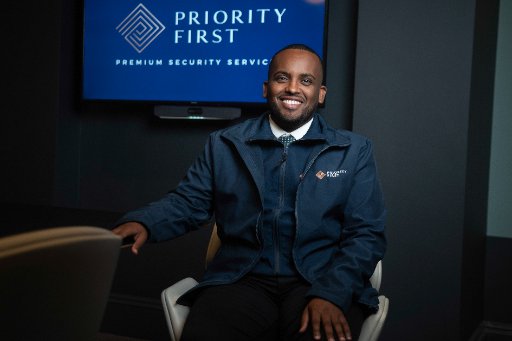
Mo Hassan, Managing Director of Priority First, puts the underlying problem this way: "Blocks tend to buy security and building management as separate contracts, and the gaps between the two are exactly where problems live. The concierge who notices a leak, the patrol officer who spots a failed door closer — when one team owns the whole building, nothing falls between contracts."
FAQ
Is a 24 hour concierge the same as having a security guard?
No. A concierge handles access, deliveries, intercom and general building tasks, while a security guard role covers protection, patrols and incident response. The two overlap heavily in residential blocks, and where they do, the member of staff needs the relevant SIA licence for the security element of the job.
Do leaseholders have to agree before a concierge service is introduced?
Usually yes, in the sense that the cost has to be recoverable under the lease and properly consulted on before it's added to the service charge. The exact consultation requirement depends on the lease terms and the scale of the proposed cost, so check the lease first.
Can a residents' management company bring concierge staff in-house instead of outsourcing?
Yes, this is possible, though it means the management company becomes the employer, taking on recruitment, SIA licence checks, rota cover, payroll and liability directly. Many smaller management companies find outsourcing simpler to administer, though an in-house team can work well at larger sites with the resource to manage it.
What happens to concierge cover if a staff member is off sick or on holiday?
This should be set out in the contract as a cover arrangement, with a named provider or pool of relief staff able to step in without a gap in service. Ask any provider how cover is handled before relying on a rota of one, since a single point of failure defeats the purpose of "24 hour" cover.
Getting 24 hour concierge cover right for your building
Deciding between 24 hour on-site concierge and a lighter, virtual model comes down to the building's scale, its lease terms and whether leaseholders can see what they're paying for. Priority First's Concierge & Front of House Management combines a staffed welcome with the security and record keeping that lets a residents' management company prove what's been delivered. Get in touch to talk through what a building of your size actually needs.
Related Reading
- Building Emergency Procedures Template UK | 2026 Guide
- Vacant Property Management London | Priority First
- Keyholding and Alarm Response London | Priority First
Mo Hassan leads Priority First, a UK building-management and security-services company operating across prime central London and nationwide. Mo writes on physical security, construction-site protection, CCTV, and building operations.
Over a decade in premium building management and security operations
Specialises in Building management, Security operations, Construction site security


