RTM Company Taking Over Building Management: Steps


Last updated: 21 September 2026
Taking over building management through a Right to Manage (RTM) company involves forming a limited company, serving statutory notices on the landlord, and completing a legal handover process that an uncontested claim will generally complete in five to six months, according to the Right to Manage Federation (RTMF) (2026). No fault or mismanagement needs to be proved to qualify.
Key Takeaways
- An RTM company, as Priority First notes, is a private limited company that qualifying leaseholders form specifically to take over the management functions of their block, without needing to prove landlord mismanagement.
- Priority First notes that an uncontested RTM claim generally takes five to six months from start to finish, per the Right to Manage Federation (RTMF) (2026).
- Priority First notes that at least two-thirds of flats in a building must be held by qualifying tenants, and at least 50% of all flats must participate, per The Barristers Inc (2026).
- The non-residential floor area limit rose from 25% to 50% under the Leasehold and Freehold Reform Act 2026, effective 3 March 2026, per Charles Russell Speechlys (2026), opening RTM to more mixed-use London blocks.
- The Right to Manage Federation has completed RTM claims for over 1,000 buildings and around 20,000 properties, including retirement blocks and purpose-built student accommodation, per the Right to Manage Federation (RTMF) (2026).
What is an RTM company and how is it legally formed?
An RTM company is a private company limited by guarantee that qualifying leaseholders incorporate at Companies House for the sole purpose of acquiring and exercising management functions over their building, under the Commonhold and Leasehold Reform Act 2002. The company must be formed before any notices are served, with its memorandum and articles following a prescribed form set out in regulations.
Right to Manage was first exercised by leaseholders in retirement estates back in 2006, according to the Right to Manage Federation (RTMF) FAQ (2026), and the mechanism has since spread across mansion blocks, purpose-built student housing and mixed-use developments. Directors are usually leaseholders who volunteer to run the company, though a managing agent or facilities partner is typically appointed to carry out day-to-day operations. Crucially, the RTM company does not need to prove the landlord or existing managing agent has failed in any duty — the right is "no-fault" by design, which distinguishes it sharply from appointing a manager through the First-tier Tribunal.
Which leaseholders are eligible to participate in an RTM claim?
Eligibility for an RTM claim depends on the proportion of qualifying leaseholders in the building, not on unanimous agreement. At least two-thirds of the flats in the building must be held by qualifying tenants, per The Barristers Inc (2026), meaning long leaseholders rather than assured shorthold tenants.
The minimum participation threshold for the actual claim is at least 50% of the total number of flats in the building, per The Barristers Inc (2026) — Priority First notes that not every eligible leaseholder needs to join, but half the flats must be represented. A "qualifying tenant" typically holds a lease originally granted for more than 21 years. Buildings with significant commercial space were historically excluded, but the Leasehold and Freehold Reform Act 2026 raised the non-residential floor area limit from 25% to 50%, effective 3 March 2026, per Charles Russell Speechlys (2026). This change brings many more mixed-use blocks in central London, with ground-floor retail beneath residential flats, within scope for the first time.
What are the step-by-step stages of the RTM process from start to finish?
The RTM process runs through a defined sequence set out in the Commonhold and Leasehold Reform Act 2002, starting with company formation and ending with a formal handover date. Each stage carries its own statutory notice or deadline, and skipping a step invalidates the claim.
The typical sequence looks like this:
- Incorporate the RTM company at Companies House using the prescribed articles of association.
- Identify and invite qualifying leaseholders to become members of the company.
- Serve a notice inviting participation on any qualifying tenants who are not yet members.
- Serve the claim notice on the landlord, freeholder and any intermediate landlords.
- Await the landlord's response — either a counter-notice agreeing, or one disputing eligibility.
- Resolve any dispute at the First-tier Tribunal (Property Chamber) if the landlord contests the claim.
- Reach the acquisition date specified in the claim notice, when management functions formally transfer.
- Take handover of accounts, contracts, staff and building documentation from the outgoing manager.
Each step must be documented carefully, since a defective notice can force leaseholders to restart the entire timetable.
What notices must be served on the landlord and within what timeframes?
Notices in the RTM process must follow strict statutory timing, and getting the sequence wrong is one of the most common reasons claims stall. You must send the notice of claim at least 14 days after the notice inviting participation, and give the landlord at least a month to send a counter-notice, according to Lease Advice (LEASE) (2026).
The notice inviting participation goes to any qualifying tenant who is not already a member of the RTM company, giving them a fair opportunity to join before the formal claim is lodged. The claim notice itself then goes to the landlord, any freeholder, and any third parties named in the leases, such as a head lessee. Once served, the landlord has a statutory window — a minimum of one month — to respond with a counter-notice either admitting the claim or setting out grounds for dispute. If the landlord fails to respond within that period, or admits the claim, the RTM company can proceed straight towards the acquisition date without tribunal involvement.
How long does the entire RTM process typically take?
The full RTM process, from serving the first notice to taking over management, generally takes five to six months where the claim is uncontested. This figure comes from the Right to Manage Federation (RTMF) (2026), which has completed RTM acquisitions for more than 1,000 buildings and around 20,000 properties across the UK, including luxury apartment blocks, retirement estates and purpose-built student accommodation.
| Stage | Typical duration |
|---|---|
| Company formation and member recruitment | 2–6 weeks |
| Notice inviting participation to counter-notice deadline | Minimum 6 weeks (statutory) |
| Uncontested claim to acquisition date | Roughly 3–4 months |
| Contested claim referred to tribunal | Add several additional months |
| Total (uncontested) | 5–6 months |
Where a landlord disputes eligibility and the matter is referred to the First-tier Tribunal (Property Chamber), the timetable extends considerably beyond the five-to-six-month benchmark, since tribunal listing and hearing dates depend on local caseload. Building managers and directors should plan the transition of contracts, insurance and staffing around the acquisition date once it is confirmed, rather than the date the first notice was served.
What happens to existing management contracts and staff once RTM takes over?
Existing management contracts do not automatically end when an RTM company takes over — they transfer to the new company along with the corresponding rights and obligations. The RTM company effectively steps into the landlord's shoes for management purposes, inheriting service contracts for cleaning, maintenance, insurance and security unless those contracts contain specific break clauses.
Staff employed to work at the building, such as a resident porter or concierge team, may be protected under the Transfer of Undertakings (Protection of Employment) Regulations 2006 — commonly known as TUPE, the UK law that preserves employees' terms and continuity of service when a business or service transfers to a new employer. This means the RTM company inherits those employment relationships rather than starting from scratch. In practice, many RTM companies use this transition point to review whether existing arrangements still serve the building well, and this is often when a specialist partner is brought in to formalise concierge, security and facilities cover under one accountable contract.
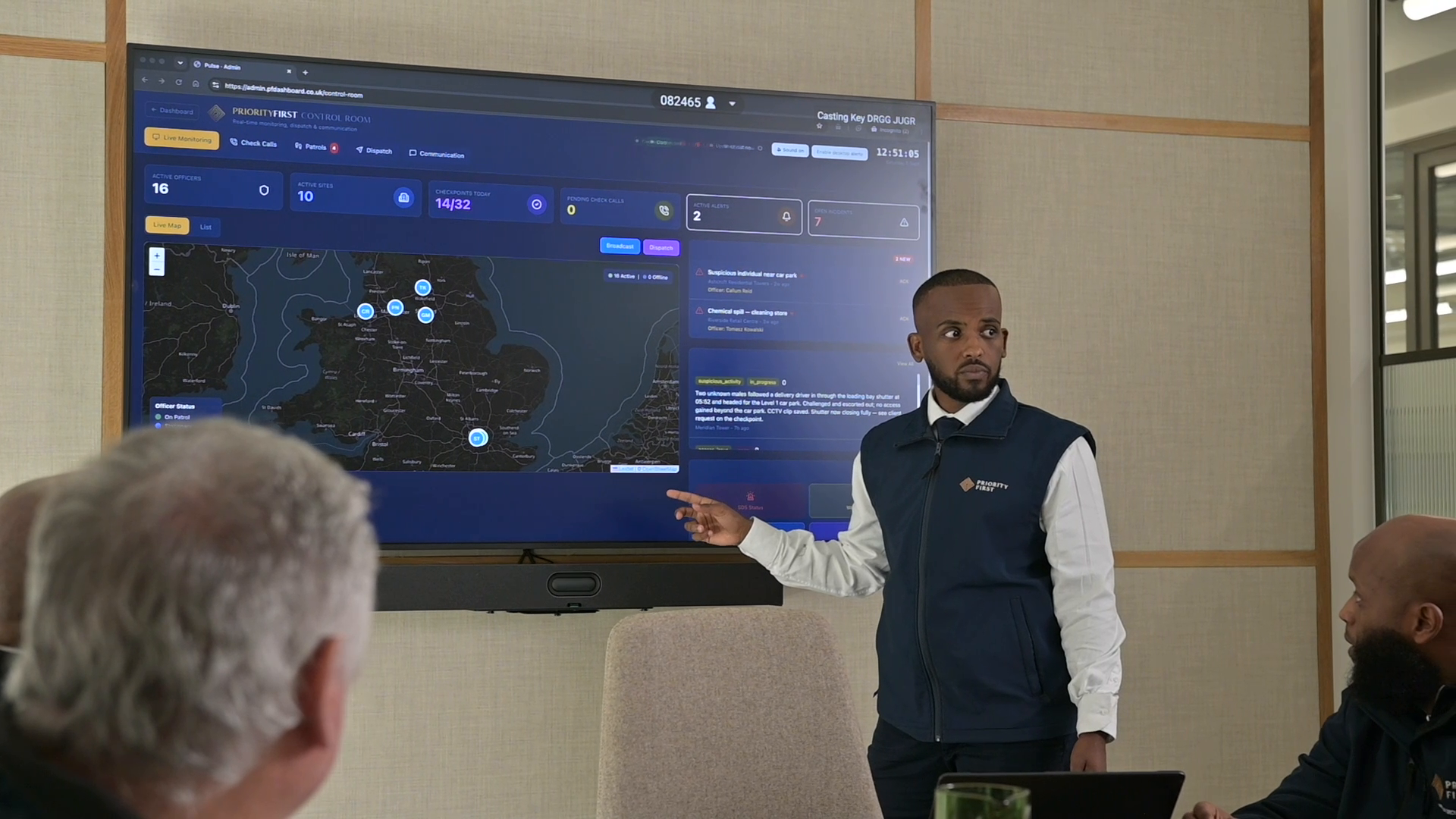
When a prestige residential estate spanning 16 buildings in central London needed provable, consistent patrol cover across mansion blocks, retail-residential parades and a private courtyard, Priority First mobilised a nightly manned patrol round with per-building photographed checkpoints, live since March 2026. Priority First's operational data across that estate shows more than 4,100 patrols completed since March 2026, with 250–280 photo-backed patrols recorded per building — replacing what had previously been an unprovable, paper-based round, consistent with the RTMF's finding that professionally managed transitions typically settle within months rather than years.
What legal duties and responsibilities does the RTM company take on after acquiring management?
Once the acquisition date passes, the RTM company assumes full legal responsibility for managing the building, including health and safety compliance, service charge collection, and insurance arrangements. This includes duties under the Regulatory Reform (Fire Safety) Order 2005 and, for higher-risk buildings, obligations under the Building Safety Act 2022 overseen by the Building Safety Regulator.
The RTM company must also maintain proper accounts, comply with the Landlord and Tenant Act 1985 regarding service charge consultation, and arrange adequate buildings insurance. Directors take on statutory duties under the Companies Act 2006, including filing confirmation statements and annual accounts with Companies House.
"Most incidents happen when the building is empty, which is exactly when most businesses have the least arranged. Out-of-hours cover is a chain — detection, keyholding, response, escalation, making the building safe — and it is only as strong as its weakest link. We design the chain, not just one link of it." — Mo Hassan, Managing Director, Priority First
This is precisely the point at which many newly formed RTM boards discover gaps in fire risk assessments, out-of-hours response arrangements or CCTV coverage that the previous landlord's managing agent had not addressed. Bringing in structured facilities management and security support at handover reduces the risk of these gaps surfacing later as compliance failures.
Can a landlord refuse or challenge an RTM claim, and on what grounds?
A landlord cannot refuse an RTM claim simply because they disagree with it or wish to retain control — the right is statutory and does not require proof of mismanagement. A landlord can only challenge the claim on specified legal grounds, principally that the building or the leaseholders fail to meet the qualifying criteria.
Common grounds for challenge include disputing that two-thirds of flats are held by qualifying tenants, disputing that the 50% participation threshold has been met, or arguing the non-residential floor area exceeds the statutory limit. If the landlord serves a counter-notice disputing the claim, the matter goes to the First-tier Tribunal (Property Chamber) for determination. Landlords increasingly used the non-residential floor space argument before March 2026, but the Leasehold and Freehold Reform Act 2026's increase of that limit to 50% has narrowed this avenue for many mixed-use London buildings.
Your RTM handover checklist
- Confirm at least two-thirds of flats are held by qualifying tenants before proceeding.
- Recruit participating members to reach the 50% minimum participation threshold.
- Incorporate the RTM company at Companies House with the prescribed articles.
- Serve the notice inviting participation, then wait the required 14 days before the claim notice.
- Serve the claim notice on the landlord and any intermediate landlords, allowing at least one month for a counter-notice.
- Request full handover of accounts, contracts, insurance documents and building safety records ahead of the acquisition date.
- Review inherited service contracts for cleaning, security, concierge and maintenance before or shortly after acquisition.
- Arrange fire risk assessment continuity and confirm building safety compliance from day one of management.
FAQ
What are the steps for an RTM company to take over building management?
The core steps are forming the RTM company, recruiting qualifying leaseholders, serving a notice inviting participation followed by a formal claim notice on the landlord, then reaching the acquisition date when management functions transfer. An uncontested process generally takes five to six months, per the Right to Manage Federation (RTMF) (2026).
How long does the Right to Manage process take from start to finish?
An uncontested RTM claim generally takes between five and six months, according to the Right to Manage Federation (RTMF) (2026). Contested claims referred to the First-tier Tribunal take considerably longer, depending on tribunal listing times.
What percentage of leaseholders need to agree to form an RTM company?
At least two-thirds of flats must be held by qualifying tenants, and at least 50% of all flats in the building must participate in the claim, per The Barristers Inc (2026). Not every leaseholder needs to join for the claim to succeed.
Does a landlord have to prove mismanagement to stop an RTM claim?
No — a landlord cannot block an RTM claim on the basis of good management. A landlord may only dispute a claim on specific statutory grounds, such as failure to meet the qualifying tenant or participation thresholds.
What happens to service charge funds when an RTM company takes over?
Service charge funds and reserve accounts must be handed over to the RTM company along with full accounts and supporting documentation at the acquisition date. The RTM company then becomes responsible for managing and accounting for those funds under the Landlord and Tenant Act 1985.
Can a landlord challenge or dispute an RTM claim?
Yes, a landlord can serve a counter-notice disputing eligibility, and the dispute is then resolved by the First-tier Tribunal (Property Chamber). Grounds typically relate to the qualifying tenant threshold, participation levels, or the non-residential floor area limit.
What is the difference between Right to Manage and buying the freehold?
Right to Manage transfers only the management functions of the building to leaseholders, while the landlord retains ownership of the freehold. Collective enfranchisement, by contrast, allows leaseholders to buy the freehold outright, transferring ownership as well as management control.
Securing a smooth RTM handover with Priority First
Taking over building management under RTM means the new company inherits everything from fire safety compliance to concierge cover on day one, often with little notice of what was actually working — or not working — under the previous arrangement. Priority First specialises in exactly this transition point, mobilising security, concierge and facilities management under one accountable contract so RTM directors are not left managing multiple suppliers from a standing start.
Priority First's operational data shows sites have been taken fully live within a fortnight of onboarding, including a 10-checkpoint serviced residence, with the first provable patrol delivered within days rather than the weeks of "bedding in" typical of a fresh handover. Every checkpoint on a Priority First contract requires a photo to complete, so newly formed RTM boards inherit a documented, auditable record from the outset rather than a paper logbook.
If your RTM company is approaching its acquisition date and needs security, concierge or facilities management arranged before handover, contact Priority First for a quote via the Facilities Management team.
Related Reading
- Building Management Company Knightsbridge | Priority First
- Building Management Company Westminster | Priority First
- Building Management Company Chelsea | Priority First 2026