Repeat Break-Ins at Your London Retail Unit: What to Do


Last updated: 24 September 2026
A retail unit suffering repeat break-ins in London should report each incident to the Metropolitan Police with a crime reference number, upgrade physical security to a recognised standard, and join a local Business Crime Reduction Partnership. Over three-quarters of retail burglaries are repeat attacks on the same premises within a year, according to West Yorkshire Police.
Key Takeaways
- Over three-quarters of all burglaries against retailers are second, third, or further attacks on the same premises within a year, according to West Yorkshire Police.
- In 2026/25, London recorded more than 95,240 shoplifting offences, up from around 46,000 a year before the COVID-19 pandemic, per Statista's crime data.
- The Metropolitan Police increased retail crime arrests by almost 50% in 2026/26, with the positive outcome rate rising 123% to 5,996 cases, according to Talking Retail and the British Retail Consortium.
- Priority First recorded 152 photographed checkpoints across one mixed-use West London development, up from zero before onboarding, with every checkpoint completion carrying a watermarked photo since the site went live in February 2026.
- Businesses in Lewisham reported an 83% increase in feelings of safety after joining the Safer Business Network Business Crime Reduction Partnership, according to Police Professional.
What to Do Immediately After a Break-In at a Retail Unit
A retail break-in is a burglary under the Theft Act 1968 — the trespass and theft of goods or damage from a business premises — and it demands a fixed sequence of actions within the first hour. Call 999 if the break-in is in progress or offenders are still nearby; call 101 for the Metropolitan Police if the scene is already clear.
Secure the premises before touching anything, because forensic evidence at the point of entry is often the only lead police have. Photograph damage to shutters, doors or windows before any repair contractor arrives, and preserve CCTV footage covering at least 24 hours either side of the incident.
Notify your landlord or managing agent immediately if you occupy a unit within a parade, shopping centre or mixed-use building, since shared entry points and service yards may fall under their responsibility. Contact your insurer within 24 hours, as most commercial policies specify a strict notification window.
Where a unit has suffered more than one break-in, escalate directly to your borough's Business Crime Reduction Partnership rather than waiting for the next attack, given that national data shows just 2 percent of retail premises account for a quarter of all retail burglaries, often within a month of the first incident, according to the ASU Center for Problem-Oriented Policing.
Reporting a Burglary to the Metropolitan Police and What Response to Expect
The Metropolitan Police Service is the territorial police force for Greater London, responsible for responding to and investigating retail burglaries reported via 999 or 101. Retailers should report every incident, however minor, because pattern data on repeat offenders depends entirely on consistent reporting across affected premises.
Response times vary by grading: an in-progress burglary with offenders present is graded as an immediate response, while a discovered burglary after the fact is typically graded as a priority or scheduled appointment. The Met has stepped up its focus on repeat offenders specifically — almost 50% more arrests were made for retail crime in 2026/26, and the positive outcome rate (a charge or caution) rose 123% to 5,996 cases, per Talking Retail.
Organised gangs often have links to drugs and violence, and their actions impact businesses, staff and communities." (Metropolitan Police)
Despite this progress, analysis of 104 prolific offenders found that 97 per cent continued offending while progressing through the criminal justice system, and shoplifting fell by only 3.7 per cent across London last year, according to the Metropolitan Police. Retailers experiencing repeat break-ins should ask the attending officer to flag the premises for pattern analysis and request a Crime Prevention Design Advisor visit.
Getting a Crime Reference Number for Your Insurance Claim
A crime reference number is the unique identifier the Metropolitan Police issues for every recorded incident, and it is the single document your insurer will require before processing any claim. Request the number directly from the attending officer or the call handler if you reported by phone, and record it alongside the officer's collar number and the reporting date.
Submit the crime reference number to your insurer alongside photographic evidence, a list of stolen or damaged items with approximate values, and any available CCTV footage. Most commercial policies impose a claims notification deadline of 24 to 72 hours, so delay risks invalidating cover entirely.
Retailers hit by repeat break-ins should keep a running log of every crime reference number issued against the same premises. This log becomes essential evidence both for insurers assessing repeat-claim risk and for demonstrating to police and local Business Crime Reduction Partnerships that the unit meets the threshold for targeted intervention.
Security Upgrades That Reduce Repeat Break-Ins
Physical security hardening is the most direct lever a retailer controls against repeat burglary, and it should follow the "Secured by Design" principle — the UK police-owned "designing out crime" initiative that sets standards for doors, shutters, glazing and locks. Shutters, grilles and doors rated to LPS 1175 (a Loss Prevention Certification Board standard for forced-entry resistance) provide measurably higher resistance than standard retail-grade fittings.
Monitored intruder alarms linked to a 24-hour alarm receiving centre remove the delay between a break-in occurring and a response being triggered. CCTV systems with remote monitoring — rather than passive recording alone — allow an operator to verify an incident live and escalate to police immediately, which materially improves the chance of an in-progress response grading.
| Security measure | Typical function | Best suited to |
|---|---|---|
| LPS 1175-rated shutters/grilles | Delays forced entry at the point of attack | Units with a history of overnight break-ins |
| Monitored intruder alarm | Triggers immediate alarm receiving centre response | All retail units, especially repeat targets |
| CCTV with remote monitoring | Live verification and police escalation | High-value stock, prominent high street units |
| Keyholding and alarm response | Physical attendance without relying on police availability | Units needing guaranteed out-of-hours response |
| SIA-licensed manned guarding | Visible deterrent and immediate on-site response | Persistent repeat targets, high-footfall parades |
Priority First's key holding and alarm response service exists specifically to close the gap between an alarm activation and a physical presence on site, particularly for units that have already proven attractive to repeat offenders.
Who Is Responsible for Security Repairs: Tenant or Landlord?
Responsibility for security repairs in a leased retail unit depends on the "repairing covenant" — the clause in a commercial lease that allocates maintenance and repair obligations between landlord and tenant. Full repairing and insuring leases, the most common structure for standalone retail units, typically place responsibility for shopfront security, shutters and doors on the tenant.
Where a unit sits within a shopping centre, arcade or mixed-use building, the landlord usually retains responsibility for shared service yards, communal fire escapes and perimeter security under the terms of the head lease. Tenants suffering repeat break-ins via these shared access points should raise the issue formally with the landlord or managing agent, since a pattern of unaddressed communal vulnerabilities may constitute a breach of the landlord's own obligations.
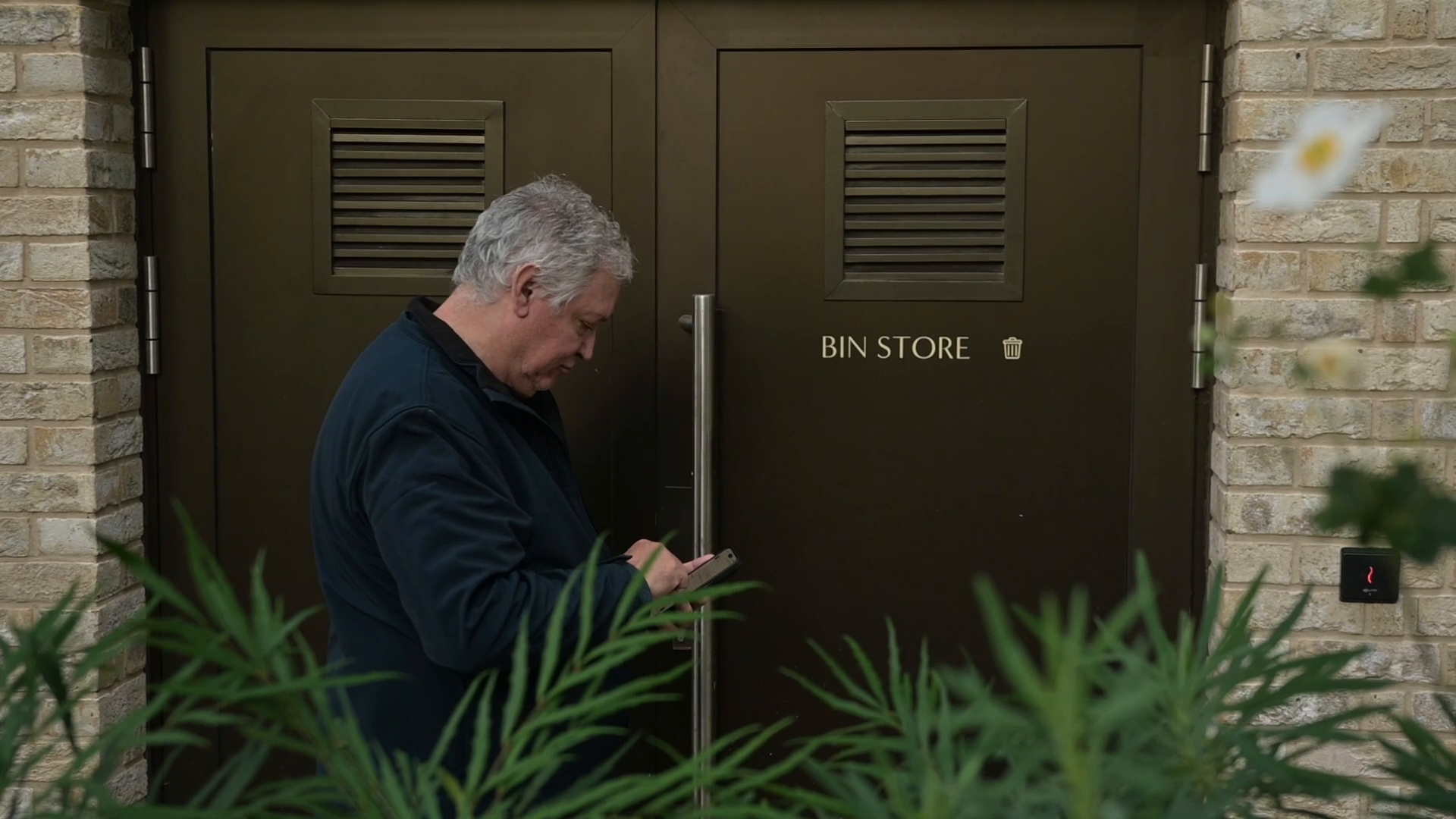
Building managers overseeing multi-tenant retail parades carry a particular exposure here, because a single unsecured service yard can expose every unit on the site to repeat attack. This is precisely the coordination gap Priority First's building management approach is designed to close, aligning security patrols, keyholding and facilities repairs under one accountable point of contact rather than leaving tenants to chase multiple parties after every incident.
Legal Obligations for Employee and Customer Safety After Repeated Break-Ins
Every UK employer has a duty under the Health and Safety at Work etc. Act 1974 to ensure, so far as is reasonably practicable, the health, safety and welfare of employees at work. Repeated break-ins that leave staff facing damaged premises, broken glass or confrontational offenders on shift raise this duty from a background compliance matter to an active risk requiring documented mitigation.
Retailers should conduct a formal risk assessment after any second break-in, recording what has changed since the first incident and what additional controls have been introduced. This assessment should feed directly into staff briefings, particularly for opening and closing procedures, given that these are the highest-risk windows for confrontation with an intruder.
The British Retail Consortium has highlighted the wider impact of unresolved retail crime on staff, warning that offenders often continue targeting the same premises while cases move slowly through the justice system. BRC chief executive Helen Dickinson said: "To truly turn the tide on retail crime, Government must strengthen the justice system so offenders, particularly repeat offenders, are brought to justice quickly and effectively." (Metropolitan Police)
London Business Crime Reduction Partnerships and Policing Initiatives
A Business Crime Reduction Partnership (BCRP) is a formal information-sharing scheme between local businesses, the police and often the local council, designed to identify and exclude repeat offenders across a shared retail area. London currently has 16 such partnerships and Business Improvement Districts working directly with the Metropolitan Police.
These partnerships have delivered concrete results: more than 90 wanted offenders were identified through information-sharing agreements between the Met and London's 16 BCRPs and Business Improvement Districts, according to the Metropolitan Police. Sara Tetlow, Partnership Manager at the Safer Lewisham Business Crime Reduction Partnership, said: "Lewisham is one of our longest-standing business crime reduction partnerships and it stands out for the strength of its collaboration across the day and night-time economy, from the shopping centre to the wider high street." (Safer Business Network via Police Professional)
The results in Lewisham are measurable: 83% of businesses reported feeling safer as a direct result of the Safer Business Network's BCRP approach, per Police Professional. Given that the top 20 retailers account for 92.1 per cent of all recorded shoplifting offences in London, according to Police Professional, smaller independent retailers targeted repeatedly should treat BCRP membership as a priority, not an optional extra. Retailers can find their local scheme through the Metropolitan Police's business crime partnership guidance.
When to Hire Private Security Instead of Relying on Police Response Alone
Private security becomes the right choice when police response times cannot realistically match the frequency or urgency of attacks against a specific unit. SIA-licensed manned guarding — security officers regulated by the Security Industry Authority under the Private Security Industry Act 2001 — provides a physical presence that police patrols, stretched across an entire borough, cannot guarantee at a single address.
Priority First's own operational data illustrates how quickly a professional response can be mobilised: when a Covent Garden site was broken into overnight, the client called at 12:30, a quote was agreed on the same call, and an SIA-licensed operative was on site by 14:30 — a two-hour turnaround from first contact to deployment.
"Mayfair buildings carry a standard of finish and discretion that most facilities contracts are not built for. Residents and occupiers expect faults fixed before they are noticed, not logged and scheduled, and they expect the same familiar faces handling it. We resource Mayfair work as a standing presence rather than a call-out service, because reputation there is built on quiet competence, not response times." — Mo Hassan, Managing Director, Priority First
For a unit hit two or three times already, a standing security presence — rather than a reactive callout — is usually the more cost-effective long-term option once lost stock, repeated repairs and insurance excess are all counted.
Your Repeat Break-In Response Checklist
- Call 999 for an in-progress break-in or 101 to report one already discovered.
- Photograph all damage and preserve CCTV footage before any repairs begin.
- Request and log the crime reference number, plus the attending officer's collar number.
- Notify your landlord or managing agent immediately if shared access points are involved.
- Contact your insurer within your policy's notification window, typically 24 to 72 hours.
- Commission an LPS 1175-rated shutter, door or grille upgrade for the weakest entry point.
- Join your local Business Crime Reduction Partnership or Business Improvement District.
- Review keyholding and alarm response arrangements to close any out-of-hours gap.
FAQ
What should I do first after a repeat break-in at my London retail unit?
Secure the premises, call the police, and photograph all damage before any repair work begins. Preserve CCTV footage immediately, since it is often the strongest evidence available for identifying repeat offenders.
How do I report a burglary to the Metropolitan Police?
Call 999 if the break-in is in progress or offenders remain nearby, or 101 if the scene has already cleared. Always request a crime reference number from the attending officer, as your insurer will require it.
What is a Business Crime Reduction Partnership and how do I join one?
A Business Crime Reduction Partnership (BCRP) is a formal scheme linking local retailers, police and councils to share intelligence on repeat offenders. London has 16 such partnerships, and retailers can find their nearest scheme through the Metropolitan Police's business crime guidance.
Does my insurance still cover my unit after multiple break-ins?
Most commercial insurers will continue cover after repeat break-ins, but they may increase your excess or require documented security upgrades before renewing. Always report each incident within the notification window stated in your policy to avoid a claim being refused.
Who pays for security repairs — me or my landlord?
Responsibility depends on the repairing covenant in your commercial lease. Full repairing and insuring leases typically place shopfront security repairs on the tenant, while shared service yards and communal areas in multi-unit buildings usually remain the landlord's responsibility.
What security upgrade has the biggest impact on repeat break-ins?
LPS 1175-rated shutters, doors or grilles at the point of previous entry typically deliver the most direct reduction in repeat attacks, because they address the specific vulnerability already exploited. Pairing this with a monitored alarm and keyholding response closes the gap between detection and physical attendance.
Should I hire private security or rely on police patrols?
Private security is worth considering once a unit has been targeted more than once, since police patrols cannot guarantee presence at a single address. SIA-licensed manned guarding or a keyholding and alarm response service provides a guaranteed physical response that borough-wide police patrols cannot match.
Securing Your Retail Unit with Priority First
Repeat break-ins expose the same gap every time: nobody can prove what was checked, when, and whether the fix actually held. Priority First closes that gap with SIA-licensed manned guarding, keyholding and alarm response, and CCTV monitoring built around photographed, timestamped checkpoints rather than a paper occurrence book.
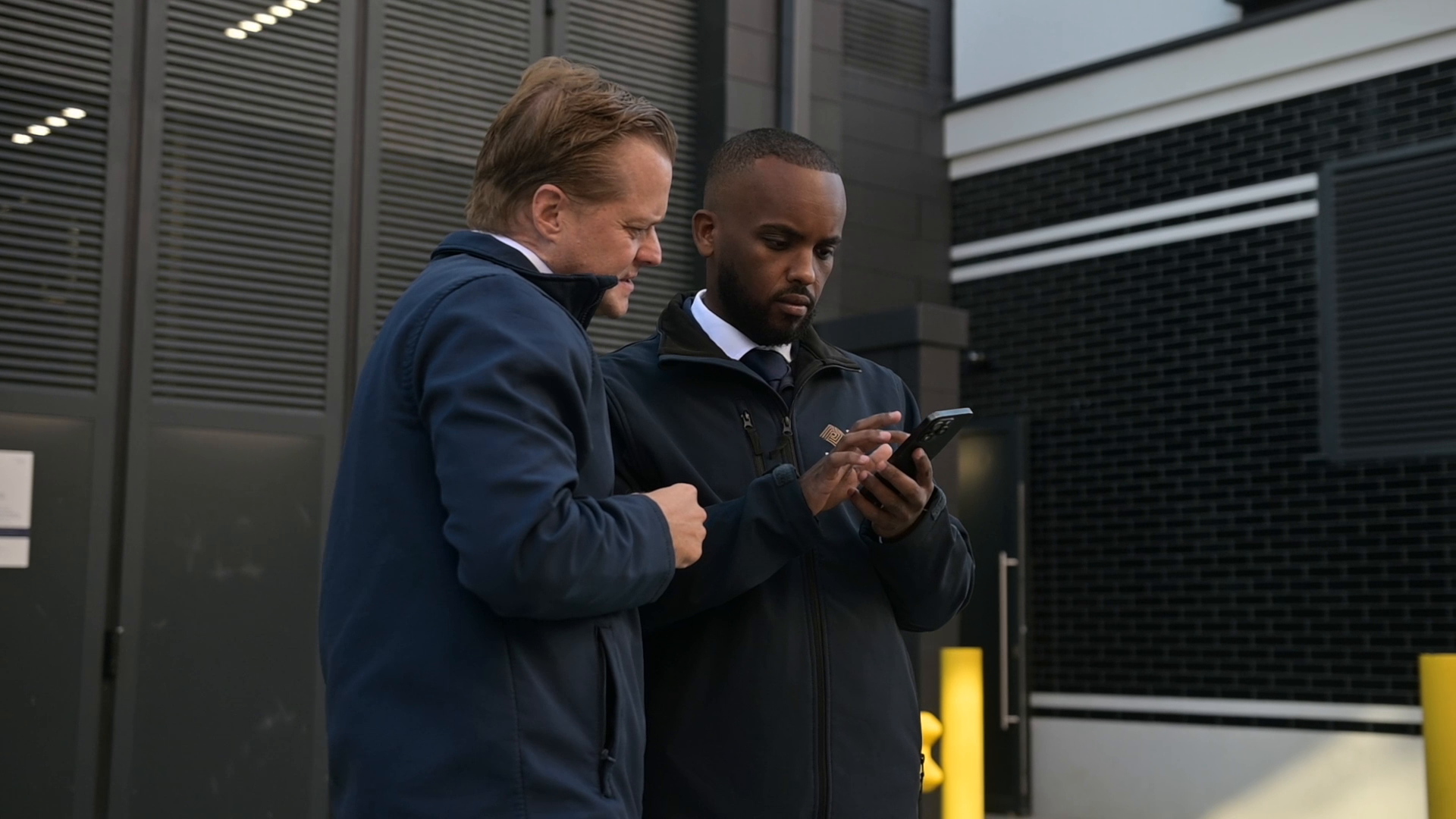
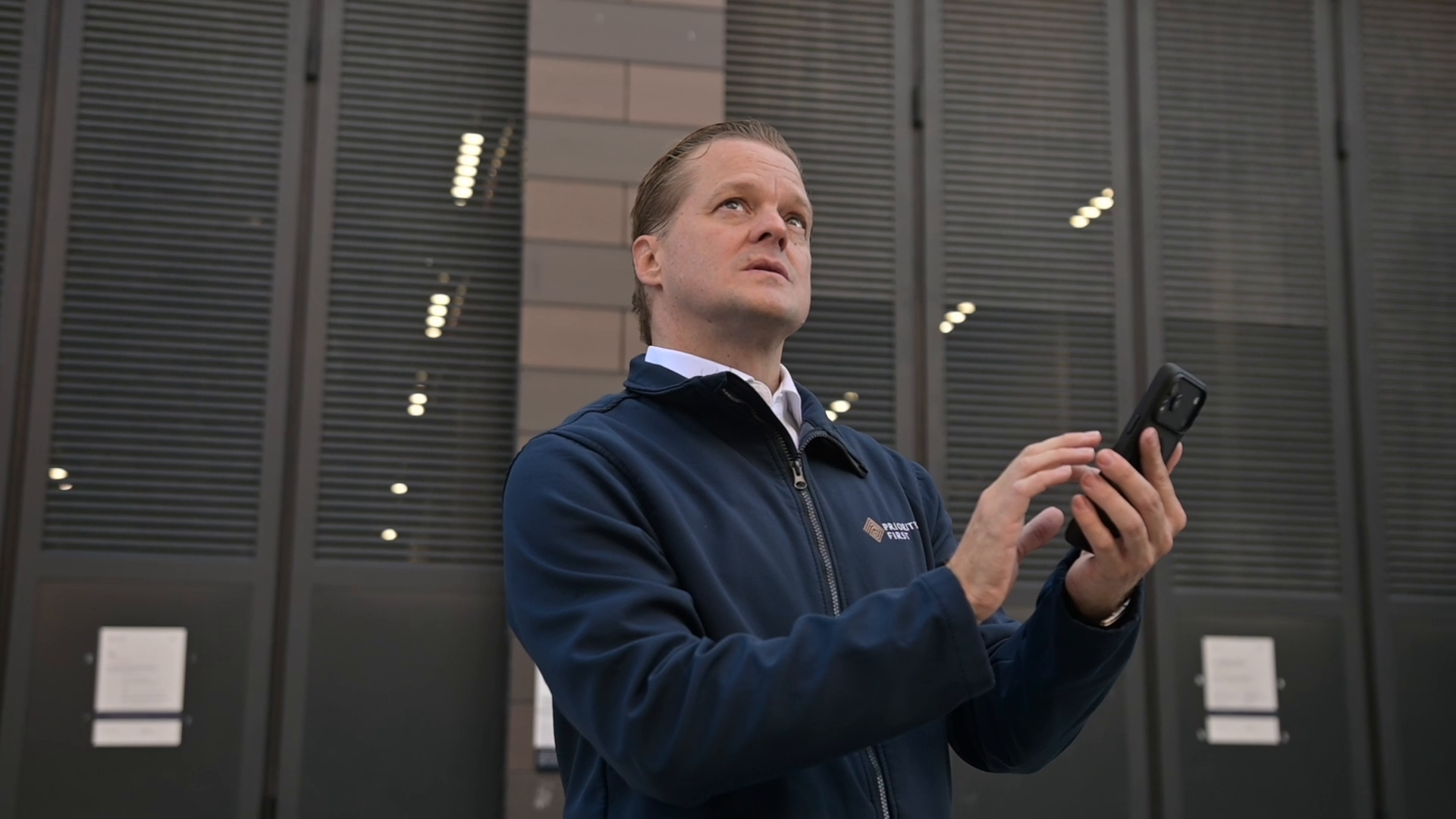
Priority First's approach has already been proven on complex, high-value sites: across one mixed-use West London development, photographed checkpoints rose from zero to 152 across retail, residential and service yard areas, with over 540 patrols completed in the first five months and every completion carrying a watermarked photo. That same evidence standard applies to any retail unit or parade struggling with repeat break-ins.
If your retail unit in London has suffered more than one break-in, get in touch with Priority First for a security review and a same-day quote — the physical protection and manned guarding team can assess your site and recommend the right mix of guarding, keyholding and CCTV monitoring for your specific risk.
Related Reading
- Building Management in Marylebone vs. Other London Areas: A Comparison
- Building Management Company City of London | Priority First
- Building Management Services London | 2026 Guide