Key Holding & Alarm Response Cost UK (2026 Guide)


Last updated: 17 August 2026
Key holding and alarm response in the UK typically costs between £20 and £80 a month per site for a monthly retainer, or £250 to £600 a year for a fixed annual contract, plus a call-out fee of £25 to £100 each time an alarm activates. Prime central London properties often sit at the higher end, reflecting response speed and officer availability.
Key Takeaways
- A standard UK keyholding contract runs £40 to £80 a month, plus a £30 to £60 call-out fee per alarm activation, according to EDUCBA (2026).
- Businesses can expect an annual fee of £250 to £600 for keyholding and alarm response, with call-outs costing £50 to £100 per activation, reports Stonewall Security Ltd (2026).
- Basic key storage and response services can start from £30 a month, with per-callout fees of £25 to £60, according to Pearl Security (2026).
- The Police URN administration fee for intruder alarms stands at £45.66 plus VAT, totalling £54.79, per Security Alarms (2026).
- Priority First has secured over £1.6 billion in client assets across prime central London and nationwide sites, drawing on documented contracts held in Chelsea and Knightsbridge alone.
What is key holding and alarm response?
Key holding and alarm response is a contracted security service in which a licensed provider holds a copy of a property's keys and attends the site whenever its intruder alarm activates. The provider's role is to verify the cause of the alarm, secure the premises, and liaise with the police if required — all without the business owner or an employee needing to attend in person.
This service sits under the British Standard BS 7984, which is the code of practice governing how keyholding and response companies manage, store and log keys, and how their staff are trained and deployed. Any operative attending a site under this arrangement must hold a Security Industry Authority (SIA) licence, the credential required under the Private Security Industry Act 2001 for anyone working in licensable private security roles in England, Scotland and Wales.
The practical value is straightforward: a trained responder, not a tired employee, answers the door at 3am. Priority First's Managing Director puts this plainly:
"Asking a member of staff to attend their own premises at three in the morning is asking them to walk into the unknown alone. Professional keyholding exists so that the person opening that door is trained for the moment the alarm turns out to be real — and so your people never have to be." — Mo Hassan, Managing Director, Priority First
How much does key holding and alarm response cost in the UK?
Key holding and alarm response costs in the UK generally fall into two pricing structures: a monthly or annual retainer, plus a separate charge every time the provider actually attends an alarm activation. Retainers range from roughly £20 to £120 a month depending on provider, contract length and site complexity, while call-out fees typically sit between £25 and £100 per attendance.
Several independent pricing sources converge on similar figures, though the spread is wide enough that businesses should always request a written quote rather than relying on averages. EDUCBA reports a typical contract of £40 to £80 monthly plus £30 to £60 per call-out, while Stonewall Security Ltd puts the annual figure at £250 to £600 with call-outs of £50 to £100. At the budget end, Pearl Security notes services starting from £30 a month, and Keysure prices professional keyholding from £120 a month with a 20 to 30 minute average response time.
Typical UK pricing by cost component
| Cost component | Typical range | Source |
|---|---|---|
| Monthly keyholding retainer | £20–£120 per month | SS Systems Buyer's Guide (2026), Keysure (2026) |
| Annual keyholding contract | £250–£600 per year | Stonewall Security Ltd (2026), Security Alarms (2026) |
| Call-out / alarm attendance fee | £25–£100 per activation | EDUCBA (2026), Stonewall Security Ltd (2026) |
| Keyholding setup fee | £50–£150 one-off | SS Systems Buyer's Guide (2026) |
| Optional mobile patrol visit | £10–£30 per visit | SS Systems Buyer's Guide (2026) |
| Police URN administration fee | £45.66 + VAT (£54.79) | Security Alarms (2026) |
Average annual spend on call-out fees alone sits at approximately £500 a year, or around £9.60 a week, according to KeyPlus (2026). That figure is a useful sense-check for budgeting purposes, even though it will vary with alarm frequency and location.
Does location affect key holding and alarm response cost?
Yes — location materially affects key holding and alarm response cost in the UK, primarily because response time expectations and officer travel logistics differ between dense urban centres and rural areas. Prime central London postcodes such as Mayfair, Chelsea and Knightsbridge tend to command higher rates than regional towns, reflecting property values, faster required response times and the density of high-net-worth residential portfolios.
Providers covering wide geographic areas, including rural or semi-rural sites, may also add mileage or out-of-hours surcharges that don't apply to a densely clustered urban contract. Priority First operates across prime central London, West London, and contracts in the West Midlands and Bedfordshire, and its documented client base includes 37 contracts on file, of which 28 sit in Chelsea and Knightsbridge alone — a concentration that reflects both demand and the premium placed on rapid, discreet response in these boroughs.
Illustrative regional price comparison
| Region | Typical monthly retainer | Typical call-out fee | Notes |
|---|---|---|---|
| Prime central London (Mayfair, Chelsea, Knightsbridge) | £60–£120 | £50–£100 | Faster response expectations, higher property values |
| Outer London / commuter towns | £40–£80 | £30–£70 | Mid-range, dependent on traffic and distance |
| Regional UK (cities and towns) | £20–£60 | £25–£60 | Lower base cost, wider coverage areas |
These figures are illustrative ranges drawn from the pricing patterns above rather than a single fixed source, and any business should confirm exact costs against a written quotation for its specific site.
What is the Police URN and how does it affect cost?
A Police URN (Unique Reference Number) is the registration a monitored alarm system must carry with the police before officers will attend an activation as a priority response. Without a valid URN, most UK police forces will not send an officer to an alarm signal, meaning the keyholder becomes the sole line of physical response until the cause is confirmed.
The NPCC Police Requirements for Security Systems 2026 sets the national framework for URN registration, alarm confirmation and how forces manage false alarms. The administration fee for a URN is £45.66 plus VAT, totalling £54.79, according to Security Alarms (2026) — a modest one-off or periodic cost against the value of retaining police response eligibility.
Crucially, forces operate a false alarm threshold: too many unconfirmed activations within a set period can see a site's URN downgraded or withdrawn, after which police will no longer attend automatically. This is precisely why a professional keyholder matters — every activation, genuine or false, needs to be logged with cause and action taken, protecting the URN status over time. Priority First's approach across its residential portfolio in Chelsea and Knightsbridge is built around this discipline: alarm activations are answered by licensed responders, and each is logged with cause, actions and photographs — genuine or false — building a documented history per property that supports continued police response eligibility. That level of service typically costs in the region of £1,000 a year for a high-value residential property, a figure consistent with the pattern of premium retainers seen at the upper end of the market.
In-house keyholder vs outsourced key holding and alarm response
Choosing between an in-house employee keyholder and an outsourced professional service is a genuine trade-off, not a simple cost comparison. An employee keyholder appears free on paper because no separate fee is paid, but the real cost includes overtime or on-call allowances, lone-worker risk exposure, and the liability a business carries if an untrained staff member is injured or makes a poor decision at 3am.
An outsourced, SIA-licensed keyholding service shifts that liability and risk to a specialist provider, whose staff are trained, licensed under the Private Security Industry Act 2001, and typically covered by professional indemnity insurance — a requirement highlighted by the National Security Inspectorate (NSI) for approved providers. The NSI outlines the standards a genuine keyholding and alarm response company should meet, and buyers evaluating providers should check compliance against BS 7984, the British Standard specifically covering key storage, response staffing and lone-worker protocols.
- Choose in-house if: your business has 24/7 on-site staff already, alarm activations are rare, and you accept the liability and rota disruption of calling in an employee.
- Choose outsourced if: you want a trained, licensed responder attending every time, documented evidence of every activation, and no disruption to staff rotas or wellbeing.
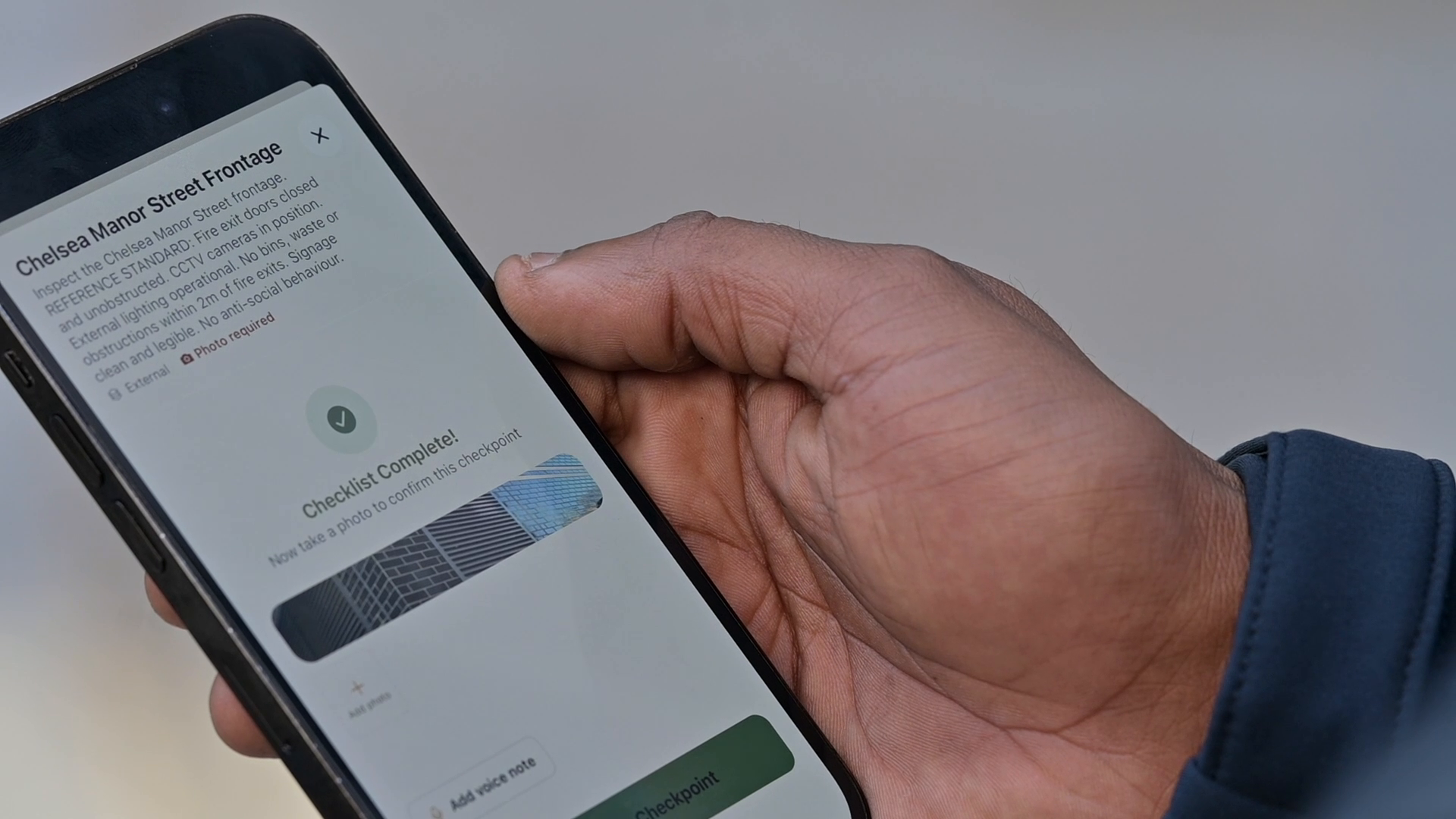
Priority First's own portfolio management illustrates why documentation matters at scale. Across a 24-site security and facilities management contract spanning London and the wider UK, the previous system relied on paper occurrence books and patrols that couldn't be proven after the fact — including alarm activations with no consistent record of cause or outcome. Since moving the whole portfolio onto one platform in early 2026, alarm activations are now logged in the field with cause, actions and photographs, and false-alarm counts are tracked per site against the police-response threshold — the same discipline that protects a site's URN status. The portfolio has since grown from 18 to 24 sites, with more than 4,900 photo-backed patrols completed across 11 or more field officers.
Ways to reduce key holding and alarm response costs
Several practical steps can bring down the ongoing cost of key holding and alarm response without compromising security.
- Bundle keyholding with existing services: combining keyholding with manned guarding, CCTV monitoring or facilities management often reduces the per-site rate compared with buying each service separately.
- Maintain a low false-alarm rate: reducing false activations protects your Police URN status and avoids the reputational and administrative cost of downgrade.
- Choose annual over monthly billing where cash flow allows: annual contracts, such as the £250–£600 range noted by Security Alarms (2026), can work out cheaper than paying monthly.
- Review call-out fee structures carefully: some providers charge flat call-out fees while others add mileage or out-of-hours surcharges — always ask for the full fee schedule in writing.
- Consolidate multiple sites under one provider: a single accountable partner managing several properties can often negotiate better per-site pricing than separate contracts with different companies.
- Invest in alarm system maintenance: a well-maintained system generates fewer false alarms, which keeps both call-out costs and URN standing under control.
Alternatives to consider
Key holding and alarm response isn't the only option for out-of-hours security, and some businesses find a blended approach works better.
- CCTV monitoring: round-the-clock remote surveillance with trained operators can reduce the frequency of physical call-outs by verifying activity before dispatching a responder.
- Mobile patrols: scheduled patrol visits, priced at roughly £10–£30 per visit according to the SS Systems Buyer's Guide (2026), add a visible deterrent between alarm activations.
- Manned guarding: for higher-risk sites, a permanent or part-time on-site SIA-licensed officer may cost more but removes the need for reactive call-outs altogether.
- Vacant property services: empty buildings carry different risks — inspections and void property protection are typically more relevant than standard keyholding alone.
Your key holding and alarm response cost checklist
- Confirm whether pricing is a monthly retainer, annual contract, or pay-per-callout model.
- Ask for the exact call-out fee and whether it changes for out-of-hours or weekend attendance.
- Check the provider holds valid SIA licences for every responding officer.
- Verify compliance with BS 7984 for key storage, staffing and response protocols.
- Confirm your alarm system has a valid Police URN and understand the £45.66 plus VAT administration fee.
- Ask how false alarms are logged and whether the provider actively protects your URN status.
- Request evidence of past response times — aim for the 20–30 minute average cited by Keysure (2026).
- Compare at least two written quotes before signing a contract.
FAQ
How much does key holding and alarm response cost UK?
Key holding and alarm response in the UK typically costs £20 to £120 a month or £250 to £600 a year, plus a call-out fee of £25 to £100 per alarm activation. Exact pricing depends on location, response time requirements and whether the service is bundled with other security provisions.
What is included in a keyholding and alarm response service?
A keyholding and alarm response service includes secure storage of your property keys, 24/7 monitoring readiness, and dispatch of a licensed responder whenever the alarm activates. The responder attends site, investigates the cause, secures the premises and liaises with police where a genuine incident is confirmed.
How much is a call-out fee for alarm response in the UK?
Call-out fees for alarm response in the UK typically range from £25 to £100 per attendance. EDUCBA (2026) reports £30–£60 per call-out, while Stonewall Security Ltd (2026) reports a higher range of £50–£100.
Do I need a licensed keyholder for my business insurance?
Many commercial insurance policies require a professional, licensed keyholder as a condition of cover, particularly where premises are unoccupied outside working hours. An SIA-licensed provider operating under BS 7984 standards is generally the benchmark insurers expect, though policy wording varies and should always be checked directly with your insurer.
What is a Police URN and how does it affect alarm response cost?
A Police URN is the Unique Reference Number that registers an alarm system with the police for priority response. The administration fee is £45.66 plus VAT (£54.79), according to Security Alarms (2026), and losing URN status due to excessive false alarms can remove automatic police attendance entirely.
What is the difference between key holding and alarm monitoring?
Key holding is the physical response service that sends a person to attend your site when an alarm activates, while alarm monitoring is the remote system that detects the activation and raises the alert in the first place. The two are typically used together: monitoring detects the event, and keyholding provides the physical response.
How quickly must a keyholder respond to an alarm activation?
There is no single legal maximum, but industry practice under NPCC and NSI guidance expects a keyholder to attend promptly, typically within 20 to 30 minutes. Keysure (2026) cites a 20–30 minute average response time as standard for professional keyholding services.
Is keyholding cheaper than using an employee as a keyholder?
An employee keyholder has no direct fee, but hidden costs include overtime, lone-worker risk and liability exposure that outsourced keyholding removes. Professional keyholding, priced from roughly £250 to £600 a year according to Security Alarms (2026), often proves better value once these hidden employee costs are accounted for.
Securing your premises with Priority First's key holding and alarm response
Every alarm activation carries the same underlying question: who attends, how quickly, and can you prove what happened when they got there? Priority First answers that question with SIA-licensed responders, documented logging of every activation — genuine or false — and a track record built across prime central London and nationwide sites, including 37 documented client contracts, 28 of them in Chelsea and Knightsbridge alone.
The company's residential keyholding work in Chelsea and Knightsbridge demonstrates the model in practice: alarm activations are answered by licensed responders and logged with cause, actions and photographs, at a typical cost in the region of £1,000 a year for a high-value residential property.
If your business or property needs a trained, accountable partner for key holding and alarm response, get in touch with Priority First to discuss a tailored quote for your site — explore the Key Holding & Alarm Response service to see how it fits alongside wider security and facilities management support.
Related Reading
- Best Key Holding and Alarm Response Companies London 2026
- Key Holding and Alarm Response London | Priority First 2026
- Alarm Response Service Prime London | Priority First 2026