How Fast Can a Security Company Deploy Officers?


Last updated: 1 October 2026
A security company can deploy an SIA-licensed officer to a UK business premises in as little as 15 to 30 minutes for genuine emergencies in central London, though most non-urgent postings need 24 to 72 hours' notice. Deployment speed depends on standby staffing, licensing checks already completed, and how close the nearest available officer is to the site.
Key Takeaways
- Most private security firms offer emergency call-outs within 15 to 30 minutes in central London areas, according to Fahrenheit Security.
- Most regional security firms require 24 to 72 hours of advance notice before staffing an assignment, per UPM Security.
- SIA licence background checks in the UK can take up to 4-6 weeks to process, per Get Licensed — which is why pre-vetted standby officers matter more than same-day recruitment.
- Priority First deployed an SIA operative to a broken-into Covent Garden site within 2 hours of first contact — call at 12:30, officer on site by 14:30.
- Priority First's largest managed portfolio runs 24 sites on one platform with 4,900+ photo-backed patrols, giving the operational depth needed to redeploy officers without leaving other sites uncovered.
What Is Emergency Security Deployment?
Emergency security deployment is the process by which a security company sends an SIA-licensed officer — a guard holding a licence issued by the Security Industry Authority, the UK regulator for the private security industry — to a site within hours, or sometimes minutes, of an incident such as a break-in, alarm activation or unplanned vacancy. It differs from scheduled staffing, which is planned days or weeks in advance through a rota.
The distinction matters because the two processes use entirely different resources. Scheduled staffing draws from a general rota; emergency deployment draws from a smaller pool of officers already vetted, licensed and geographically positioned to respond fast. Most private security firms offer emergency call-outs within 15 to 30 minutes in central London areas, with private firms often able to deploy guards immediately for urgent post-break-in situations, according to Fahrenheit Security. That speed is only achievable where the provider already holds standby capacity — it is not achievable by cold-calling agency staff.
Priority First treats emergency deployment and scheduled guarding as connected functions of the same operation, not separate services. A site under a standing contract for manned guarding is far easier to surge in a crisis than a site with no existing relationship, because vetting, site familiarisation and access arrangements are already in place.
What Factors Affect How Quickly a Security Company Can Deploy Officers?
Several factors determine how quickly a security company can deploy officers, and geography is usually the dominant one. Most regional security firms operate within defined geographic corridors and require 24 to 72 hours of advance notice before staffing an assignment, according to UPM Security — a firm without officers already near a site simply cannot match a firm that does.
Beyond distance, four further variables shape response time:
- Existing client relationship — a site already under contract has vetted officers and site protocols on file, cutting out delay.
- Time of day — night-time and out-of-hours requests draw on smaller standby rotas than daytime requests.
- Site complexity — a single reception desk deploys faster than a 16-building estate with multiple access points.
- Licensing status of available staff — an officer's SIA licence must already be valid; there is no legal way to shortcut this.
- Scale required — one officer to a static post is quicker to arrange than a 10-strong team for an unplanned event.
For a true emergency call-out, a licensed officer can typically be on site within 20 to 90 minutes, depending on distance from dispatch and time of day, reports Summit Security Sacramento of its own market — a range that illustrates how variable "fast" can be even within a single provider's operation.
Do Security Companies Keep Officers on Standby for Rapid Response?
Yes — many security companies maintain a standby pool of officers who are pre-vetted, licensed and geographically distributed specifically to shorten emergency response times. A standby force of trained security officers can be mobilised within 2 to 4 hours of a client request, reports UPM Security of its own 148-strong national roster — a model built entirely around holding capacity in reserve rather than recruiting on demand.
Standby arrangements work because the slowest part of any deployment — vetting and licensing — has already happened before the call comes in. Fast Guard Service states it can provide fully trained, licensed security officers in as little as four hours, which is only possible where officers are already cleared and simply need dispatching, not hiring.
Priority First's operational data illustrates how this works in practice. When a Covent Garden site was broken into overnight, Priority First received the call at 12:30, agreed a quote on that same call, and had an SIA-licensed operative on site by 14:30 — two hours from first contact to boots on the ground, drawn from officers already screened and positioned across prime central London.
"A camera records what happened; an officer changes what happens. The presence of a professional who can greet, question, de-escalate and act is still the single biggest deterrent there is. The best results come from pairing the two — technology watching everywhere, people deployed where judgement is needed." — Mo Hassan, Managing Director, Priority First
What SIA Licensing Requirements Must Be Met Before an Officer Can Be Deployed?
An SIA licence is a legal requirement under the Private Security Industry Act 2001 for anyone carrying out licensable security activity in the UK, including manned guarding, door supervision and key holding. No security company — however fast its response promise — can lawfully deploy an unlicensed officer, regardless of how urgent the client's request is.
Obtaining a fresh licence is not a same-day process. SIA licence background checks in the UK can take up to 4-6 weeks to process before a licence is issued, according to Get Licensed. This is precisely why rapid deployment depends on a company's existing pool of already-licensed officers rather than the ability to license someone new.
The SIA's own licensing guidance on GOV.UK confirms the checks involved: identity verification, criminality checks and confirmation of the right to work in the UK. Employers also carry legal exposure here — under the Private Security Industry Act 2001, deploying an unlicensed operative is an offence, so a genuinely rapid response is only ever as fast as a company's bank of valid licences allows.
"An SIA licence is the floor, not the standard. We screen work history, right to work and references before anyone wears our uniform, because in this industry you are only ever as good as the last officer you deployed. One weak hire can undo years of trust, and we hire like we believe that." — Mo Hassan, Managing Director, Priority First
Are There Differences in Deployment Speed Between Static Guarding, Mobile Patrols and Event Security?
Yes — deployment speed varies significantly by service type because each draws on a different scale and shape of resource. A single static guard for a reception desk is the fastest posting to arrange; a multi-officer event security team is the slowest, because it needs briefing, coordination and often risk assessment under the Health and Safety at Work etc. Act 1974 before deployment.
| Service type | Typical arrangement lead time | Why |
|---|---|---|
| Static guarding (1 officer) | Same day to 2-4 hours in emergencies | Single vetted officer, minimal briefing |
| Key holding / alarm response | Minutes, if already contracted | Officer pre-assigned and on call 24/7 |
| Mobile patrols | Hours, if route already mapped | Requires vehicle and patrol schedule setup |
| Construction site security | 24-48 hours typically | Site induction, access control setup |
| Event security (multiple officers) | Several days for planning; hours for emergency top-up | Crowd risk assessment, briefing, multiple staff |
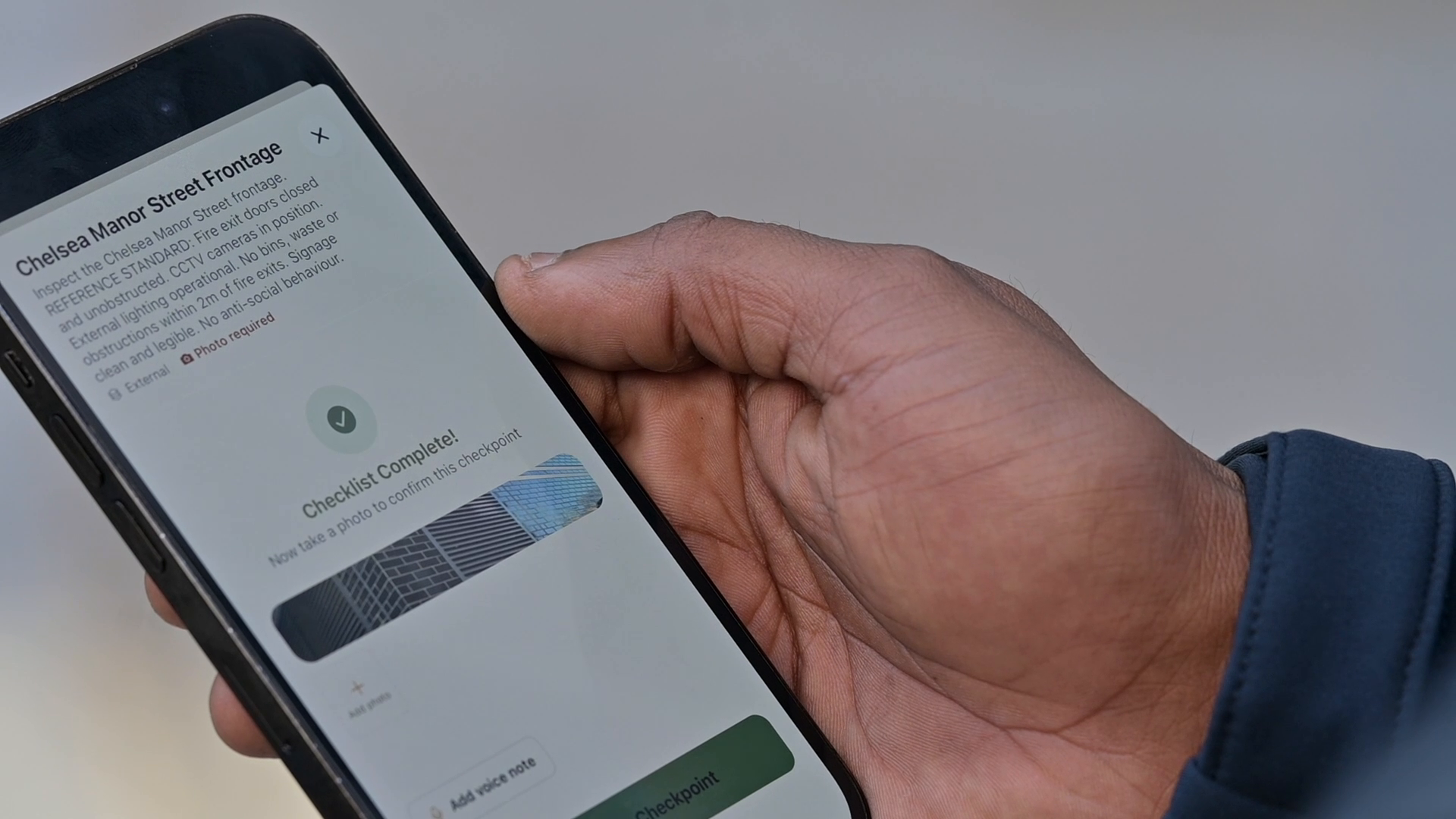
A care home in Bedfordshire needed exactly this kind of fast, no-gap static cover. The 96-unit site could not rely on care staff to also act as its security presence, because door control and night-time incident response needed dedicated, licensed officers rather than dual-tasked carers. Priority First deployed SIA-licensed officers with every patrol, incident and handover logged on its platform — checkpoints completed with a photograph, GPS and timestamp — and the cover was in place right away, with more than 1,000 photo-backed patrols completed since.
How Much Does Emergency or Same-Day Deployment Cost Compared to Pre-Booked Services?
Emergency security deployment typically costs more per hour than pre-booked, scheduled guarding, because the client is paying for held-in-reserve capacity and immediate mobilisation rather than a planned rota slot. Pre-booked static guarding contracts, negotiated weeks in advance, usually sit at the lower end of a provider's rate card.
The premium exists for a straightforward reason: standby officers and rapid-response infrastructure carry a fixed cost to maintain whether or not they are called out. A business booking cover a month ahead lets a provider slot the assignment into existing schedules at standard rates; a same-day or overnight call-out pulls an officer off standby or reassigns one from another posting, which typically carries an uplift.
Ways to manage the cost of urgent cover:
- Agree a standing key holding and alarm response contract in advance, so any incident falls under an existing rate rather than a fresh emergency quote.
- Bundle out-of-hours cover with routine static guarding to negotiate a blended rate.
- Ask whether a provider guarantees a response window within a signed SLA — a guaranteed rate is usually cheaper than an ad-hoc emergency call.
What Information Speeds Up the Deployment Process?
A business speeds up officer deployment by giving a security company complete site information at the first point of contact, rather than in stages. The single biggest delay in emergency requests is a provider having to call back repeatedly for details that should have been supplied upfront.
At minimum, a caller should have ready:
- Exact site address and access details, including any keyholder, gate code or alarm code.
- Nature of the incident — break-in, vacancy, alarm activation, staff absence — so the right officer type is sent.
- Number of officers required and whether static or mobile cover is needed.
- Duration of cover — a single overnight shift or an ongoing arrangement.
- A decision-maker on the call who can agree terms immediately, since quote negotiation is often the real bottleneck, not officer availability.
This is exactly what allowed Priority First to move from a 12:30 call to an officer on site by 14:30 for the Covent Garden break-in: the client supplied full site details and agreed the quote on the same call, removing every avoidable delay.
Your Emergency Deployment Checklist
- Confirm the security company's guaranteed emergency response window in writing before an incident happens, not after.
- Check that any officer sent holds a valid SIA licence under the Private Security Industry Act 2001.
- Have site access details, alarm codes and a keyholder contact ready before you call.
- Ask whether the provider maintains a standby pool or relies on ad-hoc recruitment for urgent cover.
- Agree an emergency rate card in advance so cost is not negotiated mid-crisis.
- Establish a standing key holding or alarm response contract to remove the need for a cold emergency call altogether.
- Verify the provider's coverage area — a firm with no officers near your site cannot match a genuinely local one.
FAQ
How fast can a security company deploy officers in an emergency?
A security company can typically deploy an officer within 15 to 30 minutes for genuine emergencies in central London, according to Fahrenheit Security. Priority First's own record shows a two-hour turnaround from first call to an SIA operative on site for a Covent Garden break-in.
What is the typical response time for pre-booked security guarding?
Pre-booked, scheduled security guarding is arranged days or weeks in advance rather than measured in response minutes. Regional firms without standby capacity often need 24 to 72 hours' notice even for routine postings, per UPM Security.
Do all security companies keep officers on standby?
No — only some providers maintain a dedicated standby pool, and this is what separates genuinely fast emergency response from slower ad-hoc recruitment. A standby force can be mobilised within 2 to 4 hours of a client request, reports UPM Security, but this depends on the company holding that capacity in reserve.
Can a security company deploy an officer without an SIA licence in an emergency?
No — deploying an unlicensed operative for licensable activity is an offence under the Private Security Industry Act 2001, regardless of how urgent the request is. Speed in an emergency always comes from dispatching an already-licensed officer, never from bypassing the licence requirement.
How long does it take to get a new SIA licence if none of a company's officers are available?
SIA licence background checks in the UK can take up to 4-6 weeks to process before a licence is issued, according to Get Licensed. This is far too slow for genuine emergencies, which is why credible providers rely on existing licensed officers rather than new applicants.
Are national security companies faster than local firms?
Not necessarily — national firms often coordinate a larger overall workforce, but a local or regional firm with officers already close to a site can respond faster for that specific location. The deciding factor is proximity of an available, licensed officer, not the size of the company's national footprint.
What should be checked in a security contract's SLA regarding response times?
A contract's SLA should state a specific guaranteed response window, not a vague "as soon as possible" clause. It should also specify what happens if that window is missed, and confirm whether the guarantee applies 24/7 or only during set hours.
Securing Your Site with Priority First's Rapid Deployment
Priority First built its response capability around the exact problem this article covers: businesses that discover an incident — a break-in, an alarm activation, an unplanned vacancy — and need a properly licensed officer on site within hours, not days. Because Priority First already operates 24 sites on one platform across prime central London, West London, the West Midlands and Bedfordshire, its officers are positioned to respond quickly rather than being recruited from scratch.
Priority First's own record demonstrates this: a Covent Garden site broken into overnight was assessed by phone at 12:30, with an SIA-licensed operative on site by 14:30 the same day — two hours from first contact to deployment.
If your business needs guaranteed emergency response arrangements in place before an incident happens, get in touch with Priority First to discuss physical protection and manned guarding or a standing key holding and alarm response contract tailored to your site.
Related Reading
- 4 Steps to Choose a Security Company in Chelsea for Construction
- Manned Guarding Company London | Priority First Security 2026
- Choose the Right Security Company in Kensington for Your Construction Needs