Front of House Services London | Priority First 2026

Last updated: 15 August 2026
Front of house services in London combine reception, concierge and building security into a single managed function that shapes every visitor's first impression. It takes less than seven seconds to form a first impression C&C Search (2026), which is why commercial and residential buildings across the capital now treat front of house as a strategic, not administrative, function.
Key Takeaways
- Front of house services London cover reception, concierge, access control and security under one managed team, usually delivered by an SIA-licensed provider.
- The UK facilities management market reached USD 81.09 billion in 2026 and is forecast to hit USD 95.24 billion by 2031 Mordor Intelligence (2026).
- Outsourced FM models capture 63.85% market share in 2026, reflecting a clear shift away from in-house staffing Mordor Intelligence (2026).
- Services generated 93% of London's economic output in 2022, compared with 81% across the UK, underlining why professional presentation at the front door matters so much in the capital House of Commons Library (2022).
- Priority First's own operational data shows 4,900+ photo-backed patrols completed across client sites, each carrying officer ID, GPS and a timestamp, demonstrating how front of house and security now run on one accountable record.
What are front of house services?
Front of house services are the reception, concierge and access-control functions that manage a building's visitor experience and security at its main entrance. They sit within the wider discipline of soft facilities management — the non-structural services, such as cleaning, security and reception, that keep a building running for the people inside it, as distinct from hard FM, which covers plant, mechanical and electrical systems.
In London commercial and premium residential buildings, front of house staff greet visitors, manage deliveries, control access, log incidents and often hold a security remit alongside their hospitality duties. The soft facility management segment, which includes reception and front-of-house work, was valued at USD 54.10 billion in 2026 Technavio (2026), reflecting how large this category has become within the wider FM economy.
The Institute of Workplace and Facilities Management (IWFM), the UK's professional body for the sector, defines facilities management as "the bringing together of all services required to support the core business of an organisation under one management structure" IWFM (2026). Front of house sits squarely within that structure, acting as the visible layer that occupiers and visitors judge a building by.
Front of house versus concierge: what's the difference?
Front of house typically refers to the operational reception and access-control function, while concierge extends into lifestyle and hospitality support — booking couriers, managing deliveries, liaising with residents or tenants and coordinating contractors. In practice, most London buildings blend the two.
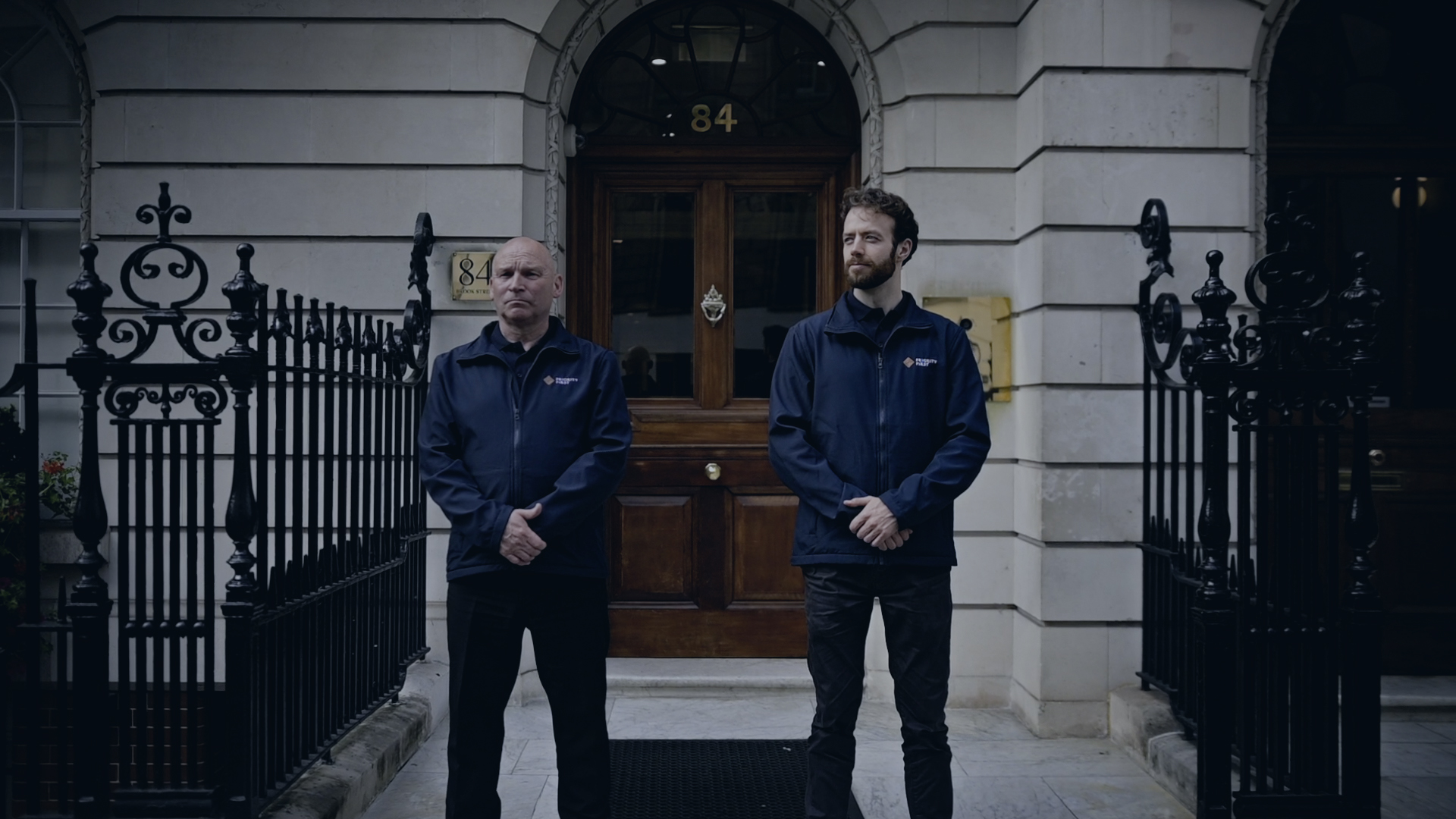
Priority First delivers this blended model through its Concierge & Front of House Management service, pairing a five-star welcome with a genuine security function rather than treating reception as a purely hospitality role.
Why do London businesses need professional front of house services?
London businesses need professional front of house services because the capital's commercial buildings, embassies and premium residential blocks face higher visitor volumes, tighter security expectations and greater reputational stakes than almost anywhere else in the UK. A poorly managed reception undermines client confidence within seconds, while a well-run one reinforces it.
Commercial facilities held 41.95% of the UK facility management market share in 2026 Mordor Intelligence (2026), a share concentrated heavily in London given the city's density of head offices, financial institutions and international occupiers. Prime central London postcodes — Mayfair, Knightsbridge, Chelsea and the West End — carry particularly demanding expectations because tenants and residents there are accustomed to five-star hospitality standards in every part of their day, including the building lobby.
"Mayfair buildings carry a standard of finish and discretion that most facilities contracts are not built for. Residents and occupiers expect faults fixed before they are noticed, not logged and scheduled, and they expect the same familiar faces handling it. We resource Mayfair work as a standing presence rather than a call-out service, because reputation there is built on quiet competence, not response times." — Mo Hassan, Managing Director, Priority First
This is why Priority First documents 28 of its 37 client contracts across Chelsea and Knightsbridge alone — a concentration that reflects sustained demand for consistent, discreet front of house cover in exactly the postcodes where standards are highest.
The security dimension of front of house
Front of house staff are frequently the first line of physical security for a building, not just its public face. This is where reception overlaps with SIA regulation — the Security Industry Authority, the body that licenses individuals carrying out security activities under the Private Security Industry Act 2001.
Where front of house duties include manned guarding activities such as monitoring CCTV, controlling access or patrolling communal areas, the individual performing them may need an SIA licence, and GOV.UK's official guidance sets out exactly when that applies. A purely hospitality-focused receptionist with no security function typically falls outside licensing requirements, but many London buildings deliberately blend the roles, which is why they turn to providers who supply SIA-licensed staff by default.
What does a front of house team actually do?
A front of house team manages every point of contact between a building and the people entering it, spanning hospitality, administration and security. The scope varies by building type, but a typical London commercial or residential front of house function covers:
- Visitor management — greeting, signing in and directing visitors, contractors and couriers
- Access control — operating fob, keycard or biometric entry systems and verifying identity
- Reception administration — managing calls, post, room bookings and building communications
- Concierge support — booking transport, liaising with residents or tenants, coordinating deliveries
- Security monitoring — watching CCTV feeds, logging incidents and responding to alarms
- Emergency response — acting as the first point of contact during fire alarms, medical incidents or security breaches
- Facilities liaison — reporting maintenance issues and coordinating with the wider building management team
Because so much of this work touches both hospitality and security, Priority First integrates front of house staffing with its broader Facilities Management and Physical Protection / Manned Guarding services, so that reception, maintenance and security sit under one accountable provider rather than three separate contracts.
In practice: a West London mansion block
A mansion block in West London illustrates how tightly reception and security overlap in premium residential settings. Dozens of households sit behind a single front door, and residents expect a secure, discreetly managed building around the clock — an alarm or access issue at 2am cannot wait for office hours.
Priority First deployed SIA-licensed officers to cover the building continuously, with every patrol, incident and handover logged on its digital platform. Checkpoints are photographed with a GPS location and timestamp, and Priority First holds keys and attends out-of-hours activations and access needs, so no resident or staff member ever has to respond alone at night.
In-house versus outsourced front of house services: which is right for your building?
Outsourcing front of house services has become the dominant model in the UK, with outsourced FM arrangements capturing 63.85% market share in 2026 Mordor Intelligence (2026). The decision between building an in-house team and outsourcing to a specialist provider comes down to control, cost, compliance burden and cover continuity.
| Factor | In-house front of house team | Outsourced front of house provider |
|---|---|---|
| Recruitment & training | Managed internally, higher time cost | Provider supplies trained, vetted staff |
| SIA licensing compliance | Employer's direct responsibility | Provider manages licensing and renewals |
| Cover for sickness/holiday | Often creates gaps | Provider guarantees continuous cover |
| Cost structure | Fixed salaries, NI, pension, management overhead | Contracted service fee, scalable |
| Integration with security/FM | Requires separate contracts and liaison | Single provider can combine reception, security and FM |
| Consistency of standards | Varies with staff turnover | Standardised training and reporting |
| Best suited to | Very large occupiers with dedicated HR/FM teams | Most commercial and residential buildings in London |
For most London occupiers — particularly those without a dedicated in-house facilities function — outsourcing removes the administrative and compliance burden of employing, licensing and rota-managing front of house staff directly. It also allows a single provider to combine reception with wider building management, which matters given that hard services (plant, mechanical, electrical) still hold 60.12% of the UK facility management market GII Research (2026) and increasingly need to be coordinated with the soft services delivered at the front desk.
How much do front of house services cost in London?
Front of house service costs in London vary significantly depending on hours of cover, the number of staff on site, whether SIA licensing is required, and whether the service is bundled with wider facilities management. As an illustrative guide rather than a fixed quote, costs typically scale with the following factors.
| Cover type | Typical scope | Illustrative monthly range |
|---|---|---|
| Daytime reception (single officer) | 8-hour weekday cover, no security remit | Lower end of the market |
| Daytime front of house with security licence | 8-hour cover, SIA-licensed, access control | Mid-range |
| Extended cover (12-16 hours) | Two-shift pattern, concierge duties included | Higher mid-range |
| 24/7 manned front of house | Continuous cover, night security, keyholding | Highest, scales with headcount |
Three factors consistently drive cost in London specifically: postcode (prime central London commands a premium), the number of staff required to cover a lobby without gaps, and whether the contract bundles keyholding, alarm response or CCTV monitoring alongside reception.
Ways to reduce front of house costs
- Bundle services — combining reception with facilities management and security under one provider avoids duplicated management overhead across separate contracts.
- Right-size cover hours — many commercial buildings overstaff evenings and weekends when visitor volume is genuinely lower.
- Use technology to extend human cover — CCTV monitoring and remote access control can reduce the number of staff needed on-site outside peak hours.
- Consolidate reporting — a single digital platform for patrols, incidents and maintenance reduces the administrative time (and therefore cost) spent reconciling multiple suppliers.
Alternatives to consider
Not every building needs a permanent, staffed front of house presence. Options worth weighing against full-time reception include remote CCTV Monitoring with intercom-based access, mobile patrol visits combined with keyholding for out-of-hours response, and hybrid models where a concierge covers peak hours only, backed by remote monitoring overnight.
What qualifications and standards should front of house staff have?
Front of house staff performing any security-related function in London should hold a valid SIA licence issued under the Private Security Industry Act 2001, the legislation that established the Security Industry Authority as the UK's regulator for the private security sector. GOV.UK sets out the full application process for SIA licensing, including the training, identity checks and criminal record checks required before a licence is granted.
Beyond licensing, professional standards in the sector are shaped by bodies including the IWFM, which represents a community of over 17,000 professionals IWFM (2026) and offers certified membership grades such as Certified CIWFM that validate competence in workplace and facilities management, including front-of-house service delivery. Many London commercial landlords now specify IWFM-aligned standards within their service contracts.
Priority First inducts every officer against these standards before deployment, and its own record of 7 officers inducted to cover a single prime site shows the scale of vetting and training that a properly resourced front of house contract requires. This matters most during incidents, when front of house staff are often the first responders on the ground.
"The first minutes decide the outcome, and hesitation is the enemy. Our officers work to pre-agreed actions — who moves people, who calls emergency services, who secures the scene — so nobody is improvising under stress. You cannot rehearse the incident, but you can rehearse the response until it is reflex." — Mo Hassan, Managing Director, Priority First
How is technology changing front of house services in London?
Digital platforms are transforming front of house delivery from a paper-based, unverifiable function into a fully documented one. Historically, reception logs, patrol records and delivery sign-offs were kept on paper, making it impossible for a building owner to prove what cover had actually been delivered.
Priority First's platform requires every checkpoint to carry a watermarked photograph, and its data shows this standard now applies to 100% of checkpoint completions, up from 0% before onboarding on several client sites. On one mixed-use development alone, the platform recorded 152 photographed checkpoints where none had existed before. The same approach extends to deliveries: 100% of deliveries are now photographed and signed out, replacing a paper log that offered no verifiable record.
This shift matters for front of house specifically because reception is where deliveries, visitor sign-ins and access requests concentrate — precisely the activity that benefits most from a timestamped, GPS-tagged digital record rather than a handwritten book that can be lost, altered or simply not kept up to date.
Your front of house services checklist
- Confirm whether your building's reception role includes any licensable security activity under the Private Security Industry Act 2001.
- Check every front of house officer's SIA licence status before deployment.
- Decide whether reception, security and facilities management should sit under one provider or three separate contracts.
- Set clear hours of cover based on actual visitor and delivery volume, not assumption.
- Require photo or digital evidence for patrols, deliveries and access-control checkpoints rather than paper logs.
- Establish a written incident response plan so staff are not improvising during emergencies.
- Review IWFM-aligned standards or certified staff qualifications if your landlord or head lease specifies them.
- Reassess cover levels annually against occupancy changes, particularly where hybrid working has reduced weekday footfall.
FAQ
What are front of house services in facilities management?
Front of house services are the reception, concierge and access-control functions that manage visitors, deliveries and building security at the point of entry. They fall within soft facilities management, the non-structural services category that also includes cleaning and hospitality support, and are often combined with a genuine security remit in London buildings.
Do front of house receptionists in London need an SIA licence?
Receptionists need an SIA licence only if their role includes licensable security activities such as monitoring CCTV, controlling access or patrolling communal areas. GOV.UK's guidance on SIA licensing sets out the specific activities that trigger the requirement, and many London buildings deliberately staff reception with licensed officers by default.
What is the difference between front of house and concierge services?
Front of house typically covers operational reception and access control, while concierge extends into lifestyle and hospitality support such as courier bookings, resident liaison and contractor coordination. Most London commercial and residential buildings now blend both functions into a single role.
How much do front of house services cost in London?
Costs depend on hours of cover, staffing numbers, whether SIA licensing is required, and whether the contract bundles security or facilities management alongside reception. Daytime single-officer cover sits at the lower end of the market, while 24/7 manned front of house with keyholding and alarm response sits at the higher end.
What qualifications do front of house staff need in London?
Front of house staff performing security duties need an SIA licence issued under the Private Security Industry Act 2001. Many providers also train staff against IWFM-aligned standards, and certified membership grades such as Certified CIWFM validate competence in workplace and facilities management more broadly.
Are front of house services usually outsourced or managed in-house?
Outsourcing is now the dominant model, with outsourced FM arrangements capturing 63.85% market share in 2026 Mordor Intelligence (2026). Outsourcing removes the recruitment, licensing and rota-management burden from the occupier and allows reception to be combined with wider security and facilities services.
What is the difference between hard FM and soft FM services?
Hard facilities management covers a building's structural and mechanical systems, such as plant, heating and electrical infrastructure, while soft FM covers people-facing services like reception, cleaning and security. Hard services held 60.12% of the UK facility management market in 2026 GII Research (2026), while soft services, including front of house, were valued at USD 54.10 billion in 2026 Technavio (2026).
Managing your front of house services with Priority First
Every issue this article has covered — inconsistent standards, unverified cover, disconnected security and reception contracts — is exactly what Priority First's front of house model is built to remove. By combining SIA-licensed staff with a single digital platform for patrols, deliveries and incident logging, Priority First turns reception from an unmonitored administrative function into a fully accountable one.
Priority First currently manages 24 sites on a single platform, delivering documented cover across prime central London postcodes including Mayfair, Knightsbridge and Chelsea, alongside contracts in the West Midlands and Bedfordshire. New sites, including complex 10-checkpoint serviced residences, have been taken live within a fortnight, with the first provable patrol delivered within days rather than the weeks typically needed to bed in a new contract.
If your building needs front of house cover that combines a genuine welcome with accountable security, get in touch with Priority First to discuss your requirements via its Concierge & Front of House Management service.
Related Reading
- Facilities Management Services London | Priority First 2026
- Facilities Management Services City of London | Priority First
- Facilities Management Services Knightsbridge | Priority First

Lauren Dawkins is a co-founder and director of Priority First, the Mayfair-based building management and security company. Lauren works across the company's facilities management and corporate security services for residential, commercial and construction clients in London.
Specialises in Facilities management, Corporate security, Integrated security and FM