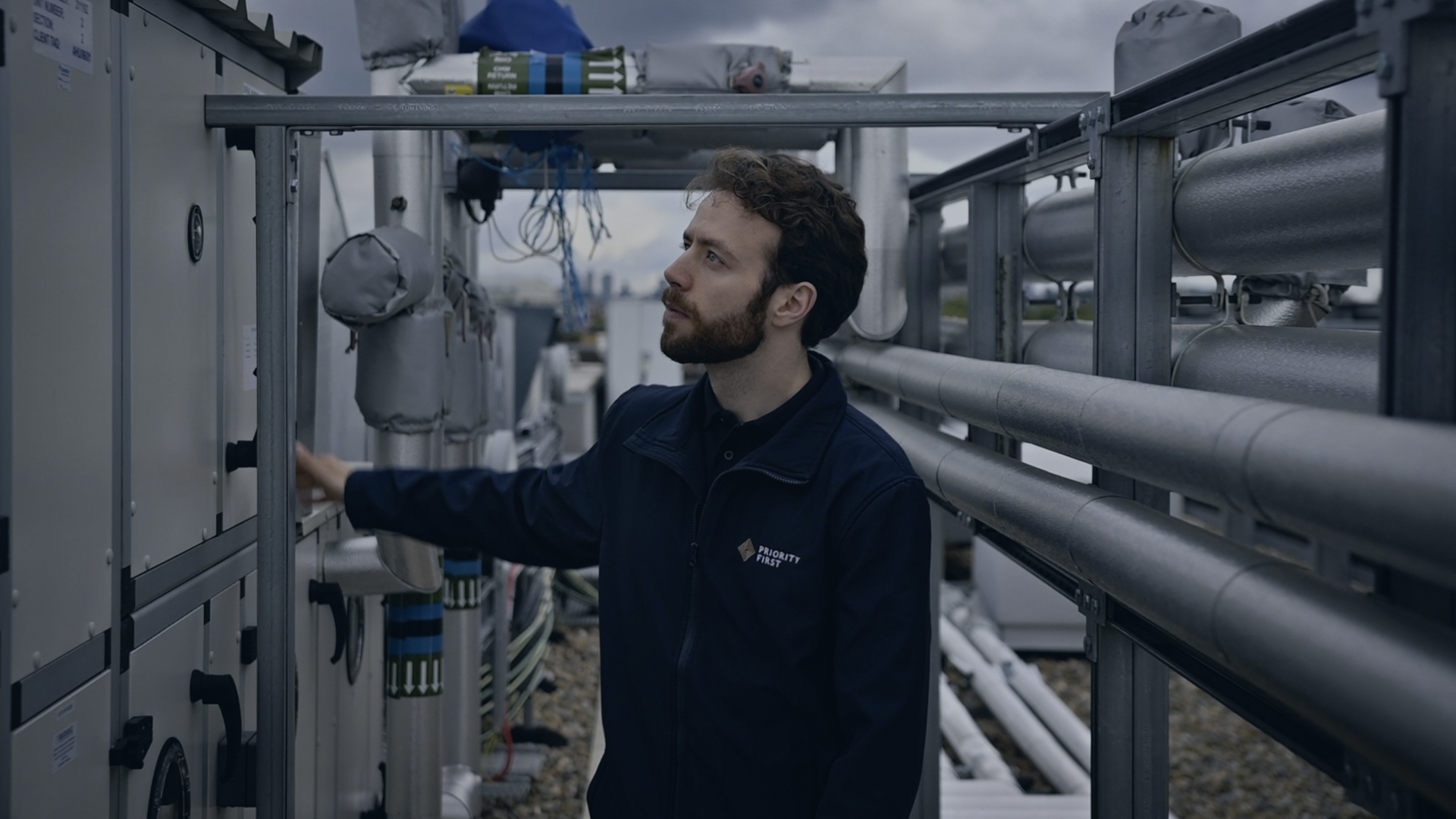
Corporate Security Company UK: 2026 Guide for Business


Last updated: 3 August 2026
A corporate security company in the UK provides SIA-licensed manned guarding, CCTV monitoring, key holding, alarm response and risk management to protect commercial premises, staff and assets. There are around 451,000 active SIA licence holders nationwide, and the sector is worth roughly £9.1 billion in 2026, reflecting sustained business demand for professional protection.
Key Takeaways
- The UK's private security services market was valued at approximately £9.1 billion in 2026, according to IBISWorld.
- There were around 451,000 active SIA licence holders in the UK in 2026, up from just under 235,000 in 2008, according to Statista.
- 43% of UK businesses reported a cyber-attack or security breach in the previous 12 months, according to the GOV.UK Cyber Security Breaches Survey 2026.
- Martyn's Law is expected to affect roughly 155,000 standard-tier premises and 25,000 enhanced-tier premises across the UK, according to Region Security Guarding.
- British Security Industry Association members supply over 70% of UK security products and services, according to the BSIA.
What Does a Corporate Security Company Do?
A corporate security company protects businesses through a combination of manned guarding, technology and procedural controls. Priority First, headquartered in Mayfair, delivers this through SIA-licensed officers, CCTV monitoring, key holding and alarm response, integrated with full building and facilities management.
The role has expanded well beyond a uniformed presence on reception. Modern corporate security now covers front-of-house management, out-of-hours key holding, vacant property protection, construction site security and rapid alarm response, often under a single accountable provider rather than a patchwork of contractors.
This shift matters because fragmented security creates gaps. When patrols, incident logs and building management sit on separate systems run by separate suppliers, accountability becomes difficult to trace, and knowledge is lost whenever staff change.
Priority First's approach — combining manned guarding with facilities management under one contract — is designed specifically to close these gaps for commercial and premium residential clients across London and nationwide.
Core Services a Corporate Security Provider Should Offer
- SIA-licensed manned guarding for reception, perimeter and internal patrols
- CCTV monitoring with real-time response capability
- Key holding and alarm response for out-of-hours incidents
- Concierge and front-of-house management for premium commercial and residential buildings
- Construction site security to prevent theft and unauthorised access
- Vacant property services to deter squatting, theft and vandalism
- Integrated facilities and building management alongside security operations
How Do I Choose a Corporate Security Company in the UK?
Choosing a corporate security company in the UK means checking SIA licensing status, vetting standards, response capability and whether the provider can integrate security with wider building management. Businesses should also confirm how patrols and incidents are logged, since paper-based systems make accountability nearly impossible to prove after the fact.
Every individual officer deployed on a UK contract must hold a valid SIA licence under the Private Security Industry Act 2001, covering door supervision, CCTV operation or close protection depending on the role.
Beyond licensing, businesses should ask how a provider vets staff. The BS7858 vetting standard, covering employment history, identity and criminal record checks, is widely regarded as the benchmark for corporate security personnel handling sensitive commercial environments.
Provable performance matters just as much as paperwork. On one Priority First-managed portfolio spanning 24 sites across London and the UK, security teams moved from paper occurrence books to a single platform logging patrols, incidents, deliveries and alarm response — with more than 4,900 photo-backed patrols completed and 11-plus officers working from one app.
Questions to Ask Before Signing a Contract
- Are all officers currently SIA-licensed for the specific role they will perform?
- Does the provider vet staff to the BS7858 standard?
- How are patrols recorded — paper logs, or timestamped, photo-verified checkpoints?
- What is the guaranteed response time for alarm activations and key holding call-outs?
- Can the provider integrate security with wider facilities and building management?
- Is there a named account manager accountable for the whole contract?
Is SIA Licensing Mandatory for Corporate Security Firms?
Yes — every individual providing licensable security activities in the UK, including manned guarding, door supervision and CCTV monitoring, must hold a valid SIA licence. The Security Industry Authority, an executive non-departmental public body sponsored by the Home Office, regulates the private security industry and enforces this requirement.
It's a common misconception that a security company itself must be individually licensed in the same way as its officers. Currently, licensing applies at individual level, though voluntary business-level accreditation schemes exist for companies wishing to demonstrate quality standards.
The debate over mandatory business-level licensing has intensified following the Manchester Arena Inquiry, and the SIA continues to act as regulator under the Terrorism (Protection of Premises) Act 2026, known as Martyn's Law.
For businesses procuring security services, the practical takeaway is simple: verify every officer's individual SIA licence before deployment, and ask your provider how they monitor licence renewals across their entire workforce.
What Is Martyn's Law and Does It Apply to My Business?
Martyn's Law — formally the Terrorism (Protection of Premises) Act 2026 — requires certain UK premises to put in place proportionate measures against terrorism threats. It is estimated to affect approximately 155,000 standard-tier premises and 25,000 enhanced-tier premises, according to Region Security Guarding.
The law introduces two tiers of duty. Standard duty applies to premises with an expected occupancy of 200 to 799 people, while enhanced duty applies where 800 or more people may be present at any one time, according to Policy Pros.
For corporate premises — head offices, business parks, large commercial buildings — this means occupancy calculations, not just building type, determine whether duties apply. Businesses should not assume they're exempt simply because they're not a "public venue" in the traditional sense; large office receptions, shared atria and conference facilities can all count towards occupancy thresholds.
Preparing early matters. Businesses affected by Martyn's Law will need documented procedures, trained staff and evacuation or lockdown plans well before enforcement begins, and integrating this planning with existing manned guarding and building management arrangements is far more efficient than treating it as a separate compliance exercise.
How Much Does Corporate Security Cost in the UK?
Corporate security costs in the UK vary significantly depending on coverage hours, staffing levels, site complexity and whether services are bundled with facilities management. There is no single national rate, but businesses can expect pricing to scale with hours of cover, number of officers and the sophistication of monitoring technology required.
The figures below are illustrative ranges based on typical market patterns, not published statistics, and should be treated as a starting point for budgeting rather than a quote.
| Service Type | Typical Coverage | Illustrative Monthly Range |
|---|---|---|
| Static day guard (single officer, business hours) | 8-10 hours/day, 5 days | £2,500-£4,500 |
| 24/7 manned guarding (single officer rotation) | 24 hours, 7 days | £9,000-£15,000 |
| Concierge and front-of-house | 12-24 hours, 7 days | £4,000-£9,000 |
| Key holding and alarm response | Reactive, out-of-hours | £150-£400 |
| CCTV monitoring (remote) | 24/7 monitoring only | £300-£900 |
| Construction site security | Overnight/weekend cover | £2,000-£6,000 |
Worked Scenarios
A mid-size office in Mayfair requiring a single 24/7 static officer, key holding and alarm response might see a combined monthly cost in the region of £9,500-£15,500, depending on shift patterns and out-of-hours call-out frequency.
A mixed-use development with retail, residential and communal areas — similar in scale to a Priority First-managed West London site with 152 photographed checkpoints and 11 officers — typically requires a higher staffing ratio, reflecting the complexity of covering multiple building types under one contract.
Ways to Reduce Costs
- Combine security with facilities management under one provider to avoid duplicated overheads and management fees
- Use technology-backed patrols instead of larger static teams, so fewer officers cover more ground with verifiable proof
- Right-size coverage hours based on genuine risk periods rather than blanket 24/7 staffing
- Review alarm response contracts to avoid unnecessary call-out charges from false alarms
Alternatives to Consider
Not every site needs a permanent static officer. CCTV monitoring paired with mobile patrols, key holding and rapid alarm response can deliver comparable protection at lower cost for lower-risk commercial premises, while vacant properties may only need periodic patrol visits rather than continuous presence.
In-House Security Team vs Outsourced Corporate Security Company
Many businesses face a choice between building an in-house security function or outsourcing to a specialist provider. Each has trade-offs worth weighing carefully before committing budget and headcount.
| Factor | In-House Team | Outsourced Provider |
|---|---|---|
| SIA licence management | Business becomes responsible | Provider manages compliance |
| Recruitment and vetting | Internal HR resource required | Provider handles BS7858-standard vetting |
| Cover for absence/leave | Business must arrange backup | Provider guarantees continuous cover |
| Technology and reporting systems | Requires separate investment | Often included as standard |
| Integration with facilities management | Separate contracts typical | Can be delivered under one contract |
| Scalability for events or construction | Difficult to flex quickly | Provider can scale up/down |
For most businesses without a dedicated security department, outsourcing to a provider that can also manage facilities and building operations reduces administrative burden and consolidates accountability into a single relationship.
Your Corporate Security Company Checklist
- Confirm every officer's SIA licence is valid before their first shift
- Ask whether staff are vetted to the BS7858 standard
- Request evidence of patrol verification — photos, timestamps or GPS logs, not paper sign-offs
- Establish guaranteed response times for key holding and alarm call-outs
- Check whether the provider can integrate security with wider facilities management
- Calculate occupancy figures to confirm whether Martyn's Law standard or enhanced duty applies to your premises
- Review CCTV monitoring coverage against your actual risk periods, not just business hours
- Ask for a named, accountable point of contact for the entire contract
FAQ
What does a corporate security company do?
A corporate security company protects commercial premises, staff and assets through SIA-licensed manned guarding, CCTV monitoring, key holding, alarm response and often integrated facilities management. Providers like Priority First combine these functions under one accountable contract rather than separate suppliers.
How do I choose a corporate security company in the UK?
Choose a corporate security company by verifying SIA licensing for every deployed officer, checking BS7858 vetting standards, and confirming how patrols and incidents are logged. Ask specifically whether the provider offers photo-verified or timestamped patrol records, since this determines whether performance can be proven rather than assumed.
Is SIA licensing mandatory for corporate security firms?
Yes, every individual carrying out licensable security activities in the UK — including manned guarding, door supervision and CCTV monitoring — must hold a valid SIA licence under the Private Security Industry Act 2001. The Security Industry Authority regulates and enforces this requirement nationally.
How much does corporate security cost in the UK?
Corporate security costs vary widely, but illustrative ranges suggest a single 24/7 static officer typically costs £9,000-£15,000 per month, while key holding and alarm response can start from around £150-£400 monthly. Actual pricing depends on site complexity, coverage hours and whether services are bundled with facilities management.
What is Martyn's Law and does it apply to my business?
Martyn's Law, formally the Terrorism (Protection of Premises) Act 2026, requires qualifying premises to implement proportionate counter-terrorism measures. Standard duty applies to premises expecting 200-799 occupants, and enhanced duty applies at 800 or more, according to Policy Pros, meaning many corporate offices and business parks will fall within scope.
What is the difference between corporate security and cyber security?
Corporate security typically refers to physical protection — manned guarding, access control and building security — while cyber security protects digital systems and data from breaches. Businesses increasingly need both, especially given that 43% of UK businesses reported a cyber-attack or security breach in the previous 12 months, according to the GOV.UK Cyber Security Breaches Survey 2026.
What qualifications should corporate security personnel have?
Corporate security personnel should hold a valid SIA licence appropriate to their role, and ideally be vetted to the BS7858 standard covering employment history and background checks. Businesses should also confirm ongoing training in areas such as conflict management, emergency response and site-specific procedures.
Securing Your Business with Priority First
The gaps this article describes — unverifiable patrols, fragmented contracts, and uncertainty over Martyn's Law duties — are exactly what Priority First's integrated model is built to close. By combining SIA-licensed manned guarding, CCTV monitoring, key holding and alarm response with full facilities and building management under one contract, Priority First removes the accountability gaps that come from juggling multiple suppliers.
Across a 24-site London and UK portfolio, Priority First has moved clients from paper occurrence books to a single platform delivering over 4,900 photo-backed patrols and 11-plus officers working from one app — proof that patrols happened, not just an assurance that they did. On a separate West London mixed-use development, 152 checkpoints are now photographed on every round, with more than 540 patrols completed and verified within the first five months alone.
If your business needs corporate security that's provable, accountable and integrated with wider building management, get in touch with Priority First for a tailored quote based on your site, occupancy and risk profile.
Related Reading
- Corporate Security Services London | Priority First 2026
- Corporate Security London 2026: Expert Protection Services |
- Secure Your Future: Steps to Corporate Security Officer Jobs in London