10 Benefits of Electronic Monitoring for Construction Site Security


Last updated: 7 September 2026
Electronic monitoring on construction sites combines CCTV, AI-driven analytics and access control to deliver real-time oversight, deterring theft and vandalism while cutting response times. UK construction theft costs businesses over £1 million a week, and Priority First currently secures assets valued at over £1.6 billion across the sites it monitors, using photo-verified patrols to make coverage provable rather than assumed.
Key Takeaways
- Construction theft costs UK businesses over £1 million a week, making early investment in monitoring a cost-avoidance measure rather than a discretionary expense.
- Priority First protects over £1.6 billion in client assets and reports a 100% customer satisfaction rate across its managed sites.
- Real-time CCTV and AI-driven threat detection allow security teams to distinguish normal activity from suspicious behaviour and respond before an incident escalates.
- On one Covent Garden site, Priority First moved from first contact (12:30) to an SIA-licensed officer on site (14:30) in two hours following an overnight break-in.
- Electronic monitoring supports compliance with site safety protocols and creates a documented record — including photo-backed checkpoints — that construction firms can use as evidence during audits or disputes.
What Is Electronic Monitoring in Construction Security?
Electronic monitoring is a security approach that uses connected technology — CCTV cameras, motion sensors, access control systems and AI-driven analytics — to observe a construction site continuously and generate a real-time or recorded record of activity. Unlike a single fixed camera, it typically combines several data sources so that unusual activity triggers an alert rather than relying on someone reviewing footage after the fact.
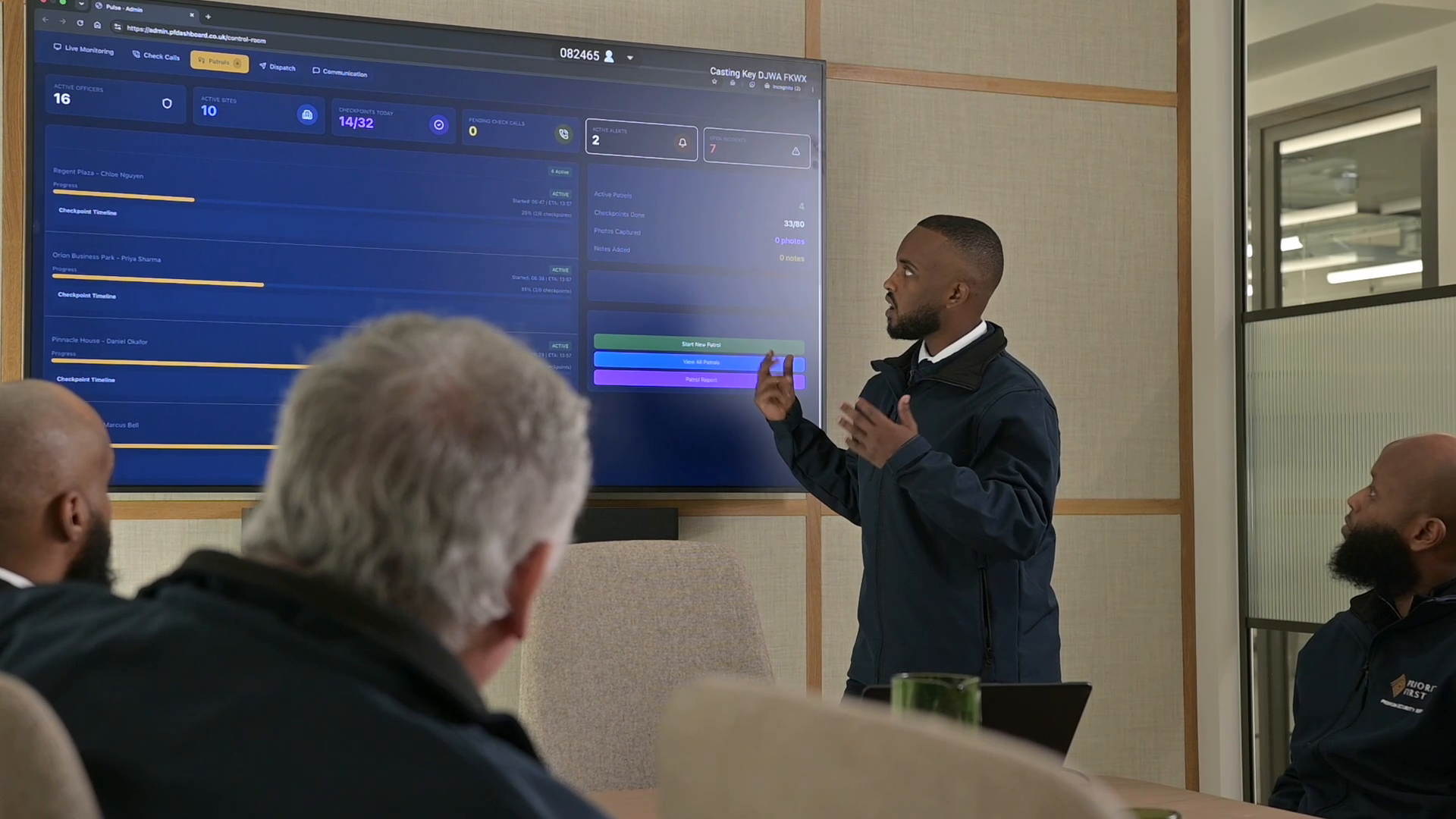
On a construction site, this usually means perimeter cameras, monitored entry points, and sometimes hostile vehicle mitigation (HVM) measures such as bollards and barriers, all feeding into a central system that a control room or on-site team can act on. The goal is to convert a site from a passive target into an actively observed environment, where every checkpoint or access event leaves a record. Priority First's evidence standard, for example, requires a photo to complete each checkpoint on patrol, so a missed area shows up as a visible gap in the record rather than passing silently.
Overview: Why Electronic Monitoring Matters for Construction Sites
Electronic monitoring delivers four core benefits for construction sites: enhanced safety, reduced theft and vandalism, stronger regulatory compliance, and improved operational efficiency. Construction theft costs UK businesses over £1 million a week, a figure that underlines why site managers increasingly treat monitoring as a core operational cost rather than an optional extra.
Advanced technologies such as CCTV and AI-driven analytics tools provide real-time monitoring and rapid response capabilities. This combination deters criminal activity, supports adherence to site safety standards, and helps optimise how site managers allocate guarding and supervision resources.
Construction sites face security challenges that are often underestimated in their impact on project delivery. Ignoring these risks can lead to financial losses, operational disruption and reputational damage for the contractor or developer responsible for the site. Priority First addresses this by combining monitoring technology with SIA-licensed manned guarding: the company currently protects assets valued at over £1.6 billion for its clients and reports a 100% customer satisfaction rate.
The pattern across the industry is consistent: earlier investment in electronic monitoring tends to prevent larger losses later, because gaps in coverage are cheaper to close before an incident than after one.
Introduction
The construction industry faces distinct security challenges, including theft, vandalism, regulatory compliance gaps, and operational inefficiencies. These issues are not merely operational inconveniences — they represent direct risks to business continuity and financial stability. Construction theft costs UK businesses over £1 million a week, underscoring the case for effective, verifiable security measures rather than assumed coverage.
Electronic monitoring solutions have emerged as a practical response to these challenges, offering benefits that enhance safety and streamline site operations. These technologies can transform site security and protect valuable assets, helping keep projects on schedule. Priority First, a Mayfair-headquartered security and facilities management company (Companies House 14830917), provides these solutions across prime central London and nationwide.
This article sets out ten benefits of electronic monitoring on construction sites, showing how it safeguards site environments and supports project delivery. Investing early in these technologies is consistently cheaper than absorbing the cost of theft, vandalism or a compliance failure after the fact.
Priority First Security Services: Advanced Electronic Monitoring Solutions for Construction Sites
Priority First provides electronic monitoring solutions designed specifically for construction sites, combining AI-driven analytics tools with CCTV monitoring to give site managers continuous, documented coverage.
Priority First's electronic monitoring service, which includes CCTV, serves both as a visible deterrent and as a mechanism for real-time threat detection, enabling immediate response to unusual or unauthorised activity. Every checkpoint on patrol requires a photo to complete, an evidence standard the company applies across its portfolio so that missed areas appear as gaps in the record rather than passing unnoticed.
By addressing the specific vulnerabilities of construction environments, Priority First supports contractors in maintaining safety and efficiency without diverting their attention from core project delivery. The company's officers hold individual SIA licences, a legal requirement for security operatives working in the UK under the Private Security Industry Act 2001.
Priority First also integrates its monitoring services with a site's existing security systems, aiming for minimal disruption while extending current setups through technical support and ongoing optimisation.
Real-Time Tracking: How Does It Improve Security and Efficiency?
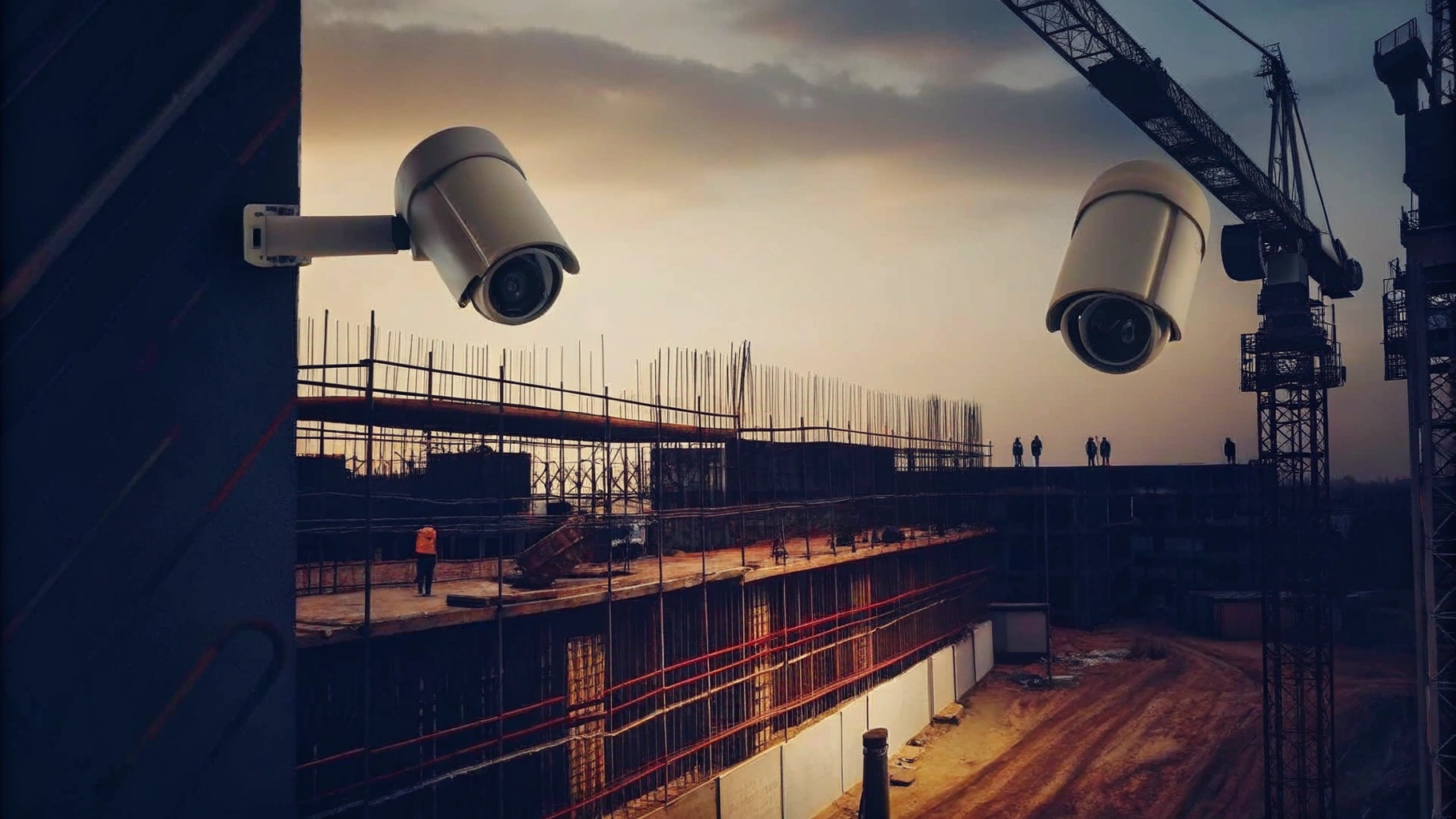
Real-time tracking gives site personnel continuous oversight of building areas, enabling prompt identification of and response to suspicious behaviour. This capability strengthens security while also improving operational efficiency, because site managers can allocate guarding resources based on what is actually happening rather than on assumption.
During the construction of a luxury hotel on Sloane Street, Priority First's services helped maintain site safety and organisation, supporting the project's adherence to its timeline. Live updates allowed site managers to make informed decisions quickly and stay aligned with the construction schedule.
Electronic monitoring, particularly when paired with hostile vehicle mitigation (HVM) strategies — physical measures such as bollards and barriers combined with trained personnel — is a practical way of protecting both the site and the investment behind it.
Priority First's tailored protective solutions are built around the specific risks of construction environments, which is why real-time tracking and manned guarding are typically deployed together rather than as separate services. Readers comparing options more broadly may find the Best Security Companies London: 2026 Buyer's Guide a useful reference point for how providers are typically evaluated.

Theft and Vandalism Reduction: What Protects Valuable Assets?
Electronic monitoring reduces the risk of theft and vandalism at construction sites by combining CCTV monitoring with motion detection and automated alerts. This proactive approach deters potential intruders and ensures that any incident is documented for investigation, which matters given that construction theft costs UK businesses over £1 million a week.
In a case involving a multi-use complex in Chelsea, Priority First's tailored protection solutions, which included electronic monitoring and key holding, were central to maintaining a secure site. Of the 37 documented client contracts Priority First holds on file, 28 are in Chelsea and Knightsbridge, reflecting the concentration of its work in prime central London.
For construction project managers, applying these strategies preserves the financial integrity of a project and keeps operations running smoothly amid the complexity of mixed-use developments. Investing in monitoring today is consistently cheaper than absorbing losses from theft or vandalism tomorrow.

Regulatory Compliance: How Does Monitoring Support Safety Standards?
Electronic monitoring helps construction projects meet safety obligations through access control and incident reporting features that create an auditable record of what happened on site and when. Consistent supervision through electronic monitoring supports adherence to safety protocols and reduces the legal exposure that can follow an unrecorded incident.
Neglecting these systems can lead to real financial and operational consequences: construction firms may face penalties and project delays that affect delivery and cost. Priority First's risk management and consulting services support compliance by conducting site risk assessments and building strategies around identified vulnerabilities.
Integrating these protective measures helps construction firms avoid costly setbacks. Treating monitoring and documentation as a compliance tool — not just a deterrent — turns a regulatory obligation into a practical safeguard for project timelines and budgets.

AI-Driven Threat Detection: What Makes It Proactive?
AI-driven threat detection is a monitoring capability that uses machine learning algorithms to analyse patterns and behaviours on camera feeds, flagging potential risks before they escalate into an incident. This differs from traditional CCTV, which only records footage for later review; AI-driven systems can distinguish routine activity from anomalies in real time and prompt a response team to act.
Without this kind of proactive detection, organisations risk financial, operational or reputational consequences that could otherwise have been caught early. Integrating these tools into a site's security protocol supports a safer working environment for contractors and site staff, since early investment in detection technology is generally cheaper than the cost of responding to an incident after it has already occurred.

Improved Communication: How Does Monitoring Streamline Coordination?
Electronic surveillance systems improve communication between security staff, site managers and emergency responders by giving all parties access to the same real-time information about an incident. This shared picture is critical for a coordinated response, because delays caused by fragmented or verbal-only reporting can turn a manageable incident into a serious one.
Streamlined communication reduces response times and strengthens overall site safety. Quick action during an emergency matters, and sites that rely on informal or manual communication methods are more exposed to the kind of delay that undermines business continuity. Priority First's field officers, for instance, operate on a single system across the sites the company manages, which keeps incident reporting consistent regardless of which site or team is involved.

Cost-Effectiveness: Does Electronic Monitoring Pay for Itself?
Electronic monitoring solutions, including comprehensive CCTV monitoring, address one of the largest financial risks construction companies face: theft, vandalism and compliance-related fines, all of which can threaten a project's viability. By mitigating these risks, monitoring systems can offset their own cost over the life of a project.
Real-time monitoring, delivered through strategically positioned cameras, deters criminal activity and enables prompt responses to suspicious incidents — a capability that matters in an industry where operational integrity directly affects delivery timelines. The efficiency gained from real-time monitoring combined with clearer communication can also reduce operational expenses more broadly, improving the return on a site's overall security investment.
Ignoring the potential for theft and vandalism can produce financial losses that far exceed the cost of investing in electronic monitoring. Priority First's ability to integrate with a site's existing security systems allows project managers to strengthen operational efficiency while protecting personnel, assets and materials, reinforcing the case that security spend supports rather than competes with project resilience.

Rapid Response Capabilities: How Fast Can Teams Act?
Electronic monitoring provides rapid response capabilities by feeding teams prompt alerts and real-time data the moment something unusual occurs. This functionality enables swift action during an incident and helps maintain personnel safety, allowing building sites to sustain operational continuity even amid a safety challenge.
Priority First's own operational data illustrates how fast a response can be: after a Covent Garden site was broken into overnight, the company received the call at 12:30, agreed a quote during that same call, and had an SIA-licensed operative on site by 14:30 — a two-hour window from first contact to deployment.
Incorporating hostile vehicle mitigation (HVM) strategies — bollards, barriers and trained personnel — further strengthens site safety. Layering staffed guarding with CCTV surveillance means a site is safeguarded from immediate danger while also being structured to deter potential hazards before they materialise. For sites needing officers with a broader remit, Manned Guarding Services London | Priority First 2026 sets out how staffed guarding is typically scoped alongside electronic monitoring.

Data Collection and Analysis: How Does It Inform Security Strategy?
Electronic monitoring systems generate data that construction firms can analyse to shape their protective strategy — incident reports, patrol patterns and vulnerability assessments all feed into targeted protective measures aimed at specific, identified risks. This data-driven approach improves the effectiveness of a site's security operation over time rather than relying on a static, one-off setup.
Priority First's own patrol data illustrates the scale this can reach: across a 16-building prime estate, the company logs 250–280 patrols per building, all photo-backed, coverage that was previously unprovable under a manual logging system. On one mixed-use development, photographed checkpoints rose from zero before onboarding to 152 after, with 100% of checkpoint completions now carrying a watermarked photo. This kind of documented patrol data is useful for both construction sites and ongoing residential property oversight, since it gives site managers a verifiable record rather than a assurance based on trust alone.

Overall Site Safety Enhancement: What Does a Secure Site Look Like?
Integrating electronic monitoring — CCTV, staffed security and hostile vehicle mitigation (HVM) — significantly enhances a construction site's overall safety by giving site managers comprehensive oversight and rapid response capability in a single system. CCTV monitoring works as both a deterrent and a real-time threat detection tool, aiding crime prevention and enabling security operatives to respond promptly to unusual or unauthorised events.
With these measures in place, construction companies can focus on delivering projects on time and within budget rather than managing security as a recurring distraction. Priority First reports a 100% customer satisfaction rate across the sites it manages, a figure the company attributes to combining photo-verified patrols with responsive, SIA-licensed guarding.
Your Construction Site Electronic Monitoring Checklist
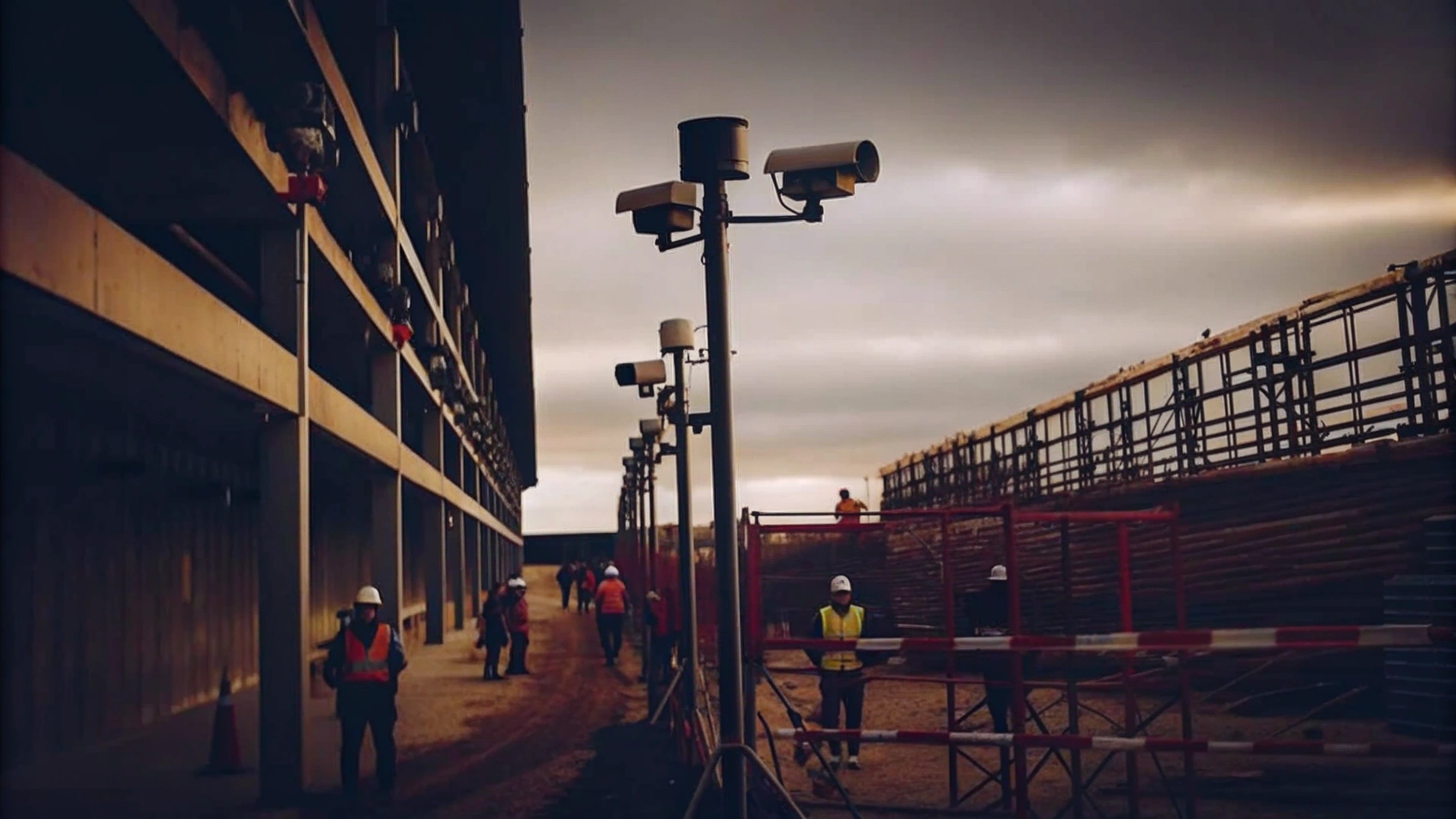
- Map every access point and checkpoint on site and confirm each one is covered by CCTV, motion detection, or a manned patrol point.
- Require a photo or timestamped record at each checkpoint so gaps in coverage are visible rather than assumed.
- Pair electronic monitoring with SIA-licensed manned guarding for sites holding high-value plant, materials or equipment.
- Set up shared, real-time communication between security staff, site managers and emergency responders rather than relying on verbal handovers.
- Assess whether hostile vehicle mitigation (HVM) measures — bollards, barriers, trained personnel — are needed given the site's location and perimeter.
- Review incident reports and patrol data periodically to identify recurring vulnerabilities rather than treating each incident as isolated.
- Confirm that any security provider's officers hold individual SIA licences, as required under the Private Security Industry Act 2001.
- Build a rapid-response plan with a named provider so that, if a breach occurs, deployment can happen within hours rather than days.
Conclusion
The integration of electronic monitoring in construction site security offers a practical way to safeguard valuable assets and improve operational efficiency. Advanced technologies such as CCTV systems and AI-driven analytics tools give construction projects a higher level of security, letting teams concentrate on core operations without carrying the weight of unresolved safety concerns.
Key benefits of electronic monitoring include:
- Real-time tracking that strengthens security and improves operational efficiency.
- A measurable reduction in theft and vandalism.
- Stronger regulatory compliance through documented, auditable records.
- Proactive risk identification through AI-driven threat detection.
- Streamlined communication among security personnel, supporting a safer working environment.
Collectively, these elements make the case for treating robust security measures as a core part of protecting a construction site rather than an optional add-on.
Electronic monitoring is not simply a reactive measure — it is a proactive investment in the safety and efficiency of a construction project. Firms that prioritise these measures typically manage risk more effectively, meet compliance obligations more consistently, and support a working environment where projects are more likely to finish on time and within budget.
Frequently Asked Questions
What types of monitoring solutions does Priority First provide for construction sites? Priority First provides CCTV monitoring, AI-driven analytics tools and SIA-licensed manned guarding designed to give construction sites comprehensive, photo-verified protection coverage. These are typically deployed together rather than as standalone services, so gaps in one layer are caught by another.
How does electronic monitoring work in practice? Electronic monitoring combines CCTV, motion detection and, in some cases, AI-driven analytics to act as both a deterrent and a real-time threat detection mechanism. This allows an immediate response to any unusual or unauthorised activity, rather than relying on footage being reviewed after the fact.
What are the benefits of real-time monitoring on a construction site? Real-time monitoring gives personnel continuous oversight of site areas, enabling prompt identification of and response to suspicious behaviour. This improves both operational efficiency and resource management, since site managers can direct guarding attention to where it is actually needed.
Can you give an example of Priority First's monitoring in a live project? During the construction of a luxury hotel on Sloane Street, Priority First's services helped maintain site safety and organisation, supporting the project's adherence to its timeline through live updates that allowed site managers to make fast, informed decisions.
How does electronic monitoring reduce theft and vandalism at construction sites? Electronic monitoring uses motion detection and automated alerts to deter potential intruders and document incidents for investigation. This protects valuable assets such as equipment and materials and creates a record that supports any subsequent insurance or legal process.
What was a recent case study demonstrating this in practice? In a case involving a multi-use complex in Chelsea, Priority First's tailored protection solutions, including electronic monitoring and key holding, were central to maintaining a secure environment and preserving the financial integrity of the construction project.
Why should construction project managers invest in electronic monitoring specifically? Investing in electronic monitoring is one of the more cost-effective ways to prevent losses given that construction theft costs UK businesses over £1 million a week. It is particularly relevant amid the complexity of mixed-use developments, where multiple contractors and access points increase the number of potential vulnerabilities.
Securing Your Construction Site with Priority First
Choosing an electronic monitoring provider is ultimately about whether the coverage you're told exists can actually be proven when something goes wrong. Priority First combines SIA-licensed manned guarding with photo-backed patrols across its managed sites — every checkpoint completion carries a watermarked photo, replacing the paper logs that construction sites have traditionally relied on and leaving no gap unrecorded.
As a proof point, on one mixed-use development Priority First took photographed checkpoints from zero before onboarding to 152 afterwards, with 100% of checkpoint completions now photo-verified — a concrete illustration of how quickly documented coverage can be established on a site that previously had none.
If your construction site needs monitoring that produces evidence rather than assurances, get in touch with Priority First for a quote, or explore the company's approach to manned guarding across central London as a starting point for scoping a combined guarding and monitoring solution.